Boat Scan to Replacement Part
A boat scan digitises a fitting nobody makes any more, so it can be remade. We come to the boat, or you post it in. From £120, quoted in 2 working hours.
A UK boat scan service that turns a marine fitting into a replacement part.
This is where to get a broken boat part remade in the UK when the manufacturer has stopped making it, the model is out of production, or the builder no longer exists. We capture the original, rebuild what is missing, and produce the replacement. Want the scan as an editable model instead? That is our reverse engineering service, alongside the wider 3D scanning service and obsolete and discontinued parts.
Obsolete boat parts, and the fittings nobody stocks
A boat scan is how a fitting gets reproduced when there is no drawing left to work from. Bring the original, however tired it is, and we work from the object rather than from paperwork that no longer exists. That is what 3D scanning boat parts for reproduction looks like in practice. Discontinued boat parts are the everyday version of the problem.
Hatch, window and locker hardware
Catches, stops, vents and handles from a model the builder stopped supporting years ago.
Trim, mouldings and interior fittings
The plastic and trim pieces a yacht refit needs and no chandlery can source.
Helm panel and console parts
Bezels, blanks and mounts around a helm panel, captured from what is left of the original.
Upgrades and one-off adaptations
New parts modelled against the real boat, so they fit the hull you have rather than a generic drawing.
On site scanning: we come to the boat
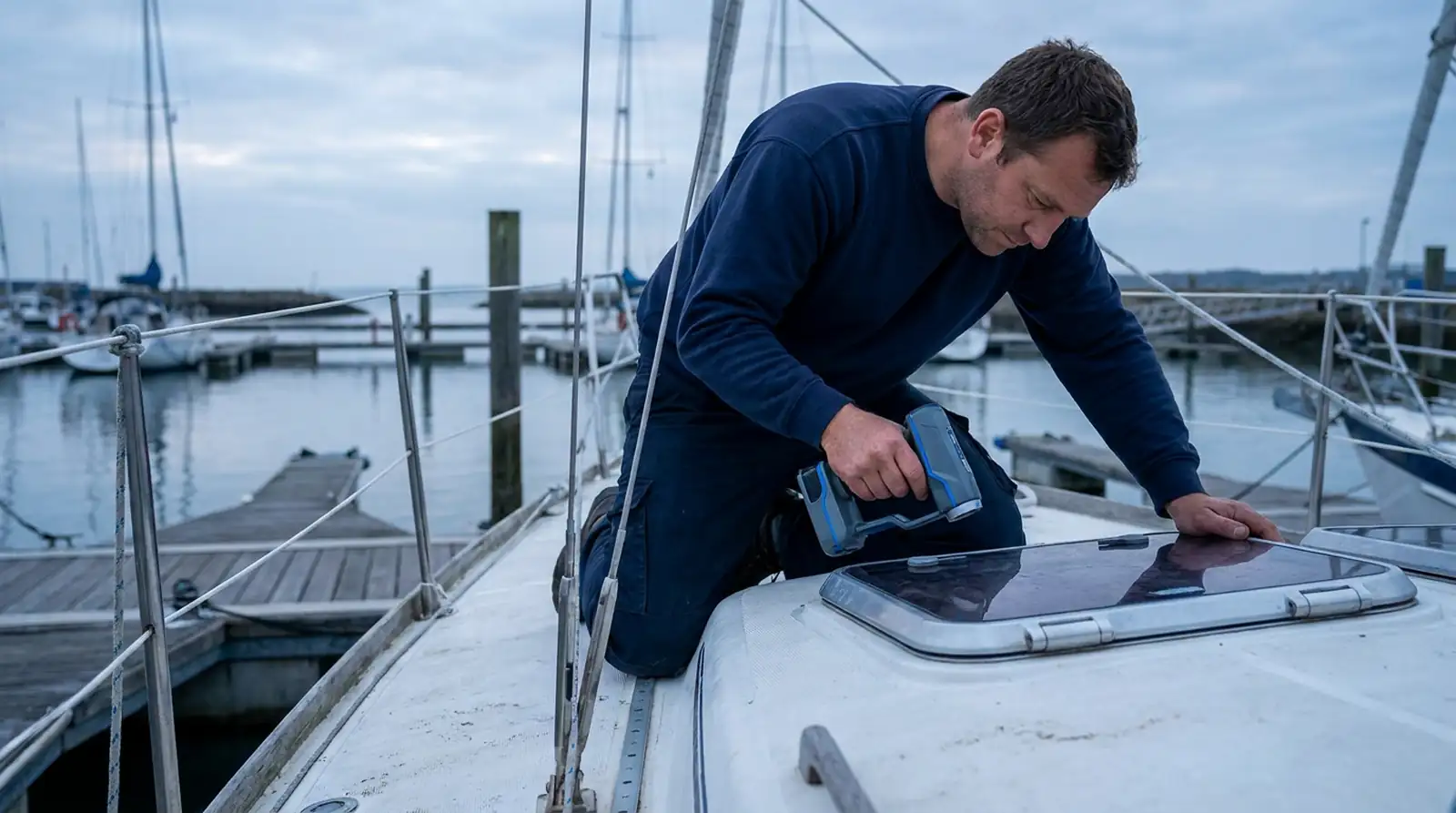
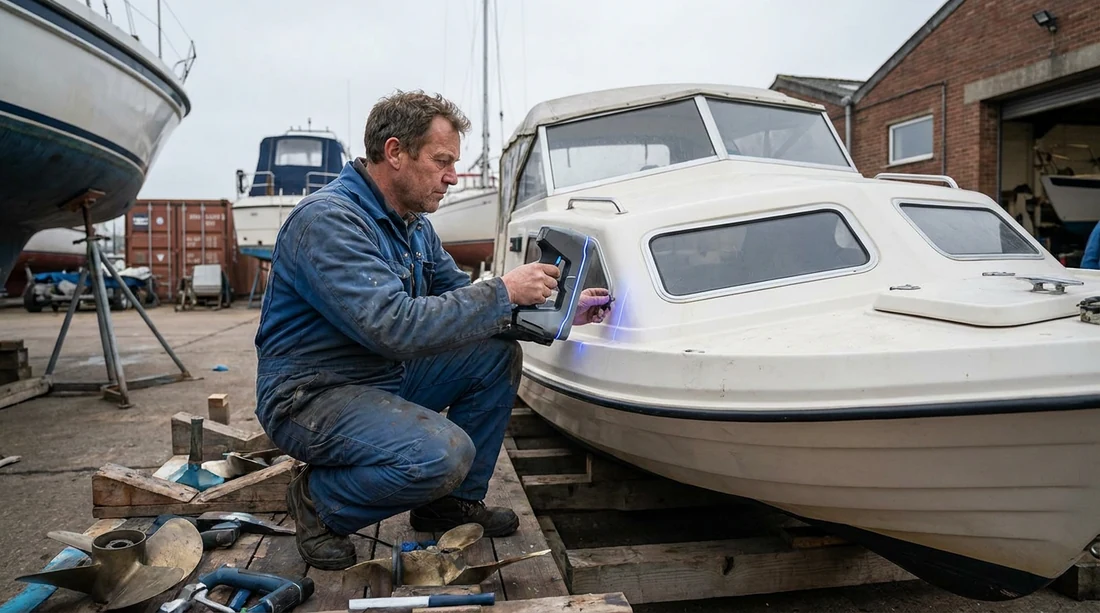
Plenty of marine parts cannot be posted anywhere. They are bonded in, they are part of a moulding, or removing them is a bigger job than the repair. For those we bring the handheld scanner to the boat and capture the fitting where it sits, in the yard, on the hard or on the pontoon.
Small, removable parts are simpler and cheaper: post them to us in Poole, Dorset and we scan them in the workshop. If you are not sure which yours is, send a photo through the quote form and an engineer will tell you before you take anything apart.
We capture on a Shining 3D EinScan Rigil, a professional handheld blue-laser scanner, the same one behind our wider 3D scanning service. For most fittings it works markerless, tracking off the part's own features. Wet, very shiny or glossy-black surfaces need a light washable spray or a few reference dots to read cleanly, and on something the size of a hull we add reference markers for a solid track.
For the trade: boatyard, chandlery, marina workshop and refit
A customer has been told the fitting is unavailable, and the job has landed on you anyway. The way out is to work from the object rather than the paperwork, because the paperwork is exactly what nobody kept. That is how discontinued parts get reproduced once the catalogue is gone, and it is work we can take on for your yard. If your yard needs an obsolete fitting remade for a customer, we can sit behind you as the UK supplier: you keep the relationship, we make the part, and it can arrive plain so it reads as your work.
Quantity is worth settling early. A yacht refit company needs the same obsolete interior fittings again on the next boat; a marina workshop wants a small batch of custom plastic parts rather than one. Either way the run size belongs in the quote rather than turning up later as a surprise, and repeats are what small batch production is built for. Tell us what you expect over the next two seasons, not just the part in front of you, because it changes how it is made as well as what it costs.
We come to your yard
Scanning on site means the customer's boat does not have to move and you do not have to strip a fitting out to find out if it is copyable.
One engineer, one thread
A real engineer reads the enquiry and quotes within 2 working hours, so you can answer your customer the same day.
The model stays on file
Once a fitting is modelled, the second and tenth are quick. Useful when a fleet or a class of boat all fail the same way.
Nothing is a black box
A written quote before anything is made, the material named on it, and the rebuilt geometry confirmed with you before the first one is printed.
Clients who let us put their name next to the work: Whale Tankers, Bournemouth University, Beryl and Pebbl Innovations. Read them and judge for yourself.
How a boat part gets remade
- 1
Send a photo
A clear photo through the quote form, with something for scale. Say whether the part comes off the boat or not.
- 2
We scan it, here or there
Post the part to Poole, or we bring the scanner to the boat. We capture the geometry and hand-measure the features that decide whether it fits.
- 3
We rebuild what is missing
Cracked, warped and half-perished originals are normal. We reconstruct the intended shape and confirm what we inferred with you before anything is made.
- 4
You get the part, the model, or both
Take the finished fitting, keep the model so you can re-order, or both. The geometry stays yours.
Which route your broken boat part actually needs
A broken boat part has four routes out: 3D print it, scan it and have it machined or fabricated, track down a used original, or scan it once and run a batch. Not everything should be 3D printed, and saying so is cheaper than finding out later. A scan earns its keep in three of the four, because it is what turns your one surviving original into something anyone can work from. Marine 3D printing is the right answer in two of them and the wrong answer in the other two.
| Your part | Best route | Where the scan comes in |
|---|---|---|
| Trim, a catch, a vent, a bezel, an interior fitting | Scan and 3D print with us | The whole job, from original to finished part |
| Structural, load bearing or below the waterline | Machined or fabricated by a marine engineer | We scan it and hand over the model, so your fabricator works from real geometry |
| A common part still in production, or one widely broken up for spares | Buy the original or a used one | None needed. We will say so rather than sell you a scan |
| One fitting now, and probably ten more later | Scan once, produce in small batches | The model is kept on file so repeats are quick |
Are 3D printed parts ok for boats? The honest answer
Yes for a great deal of what fails on a boat, and no for some of it, and you should know which. Where the answer is no, we can still scan the part and hand the model to a marine engineer or fabricator to machine, so nobody is measuring a worn original by hand. Either way our engineers specify the material for the job and the conditions the part lives in, and confirm it with you before it is made.
What we will make
- Non structural fittings. Catches, stops, vents, bezels, blanks, trim, mouldings, interior and console parts.
- Parts where the original is the only drawing. We work from the object, including cracked and worn ones.
- Upgrades and adaptations modelled against the real boat rather than a generic dimension.
- Repeats. Once it is modelled, the next one is quick.
What we will not 3D print
- Structural parts. Anything load bearing, anything holding rigging, steering or a person. We will not print it, and the quote will say so.
- Below the waterline or safety critical. Same answer, for the same reason.
- Anything we are not sure about. If the honest answer is that the part should be metal, that is the answer you get.
If we would not put the part on our own boat, we will tell you that at the quote.
A boat scan we have done
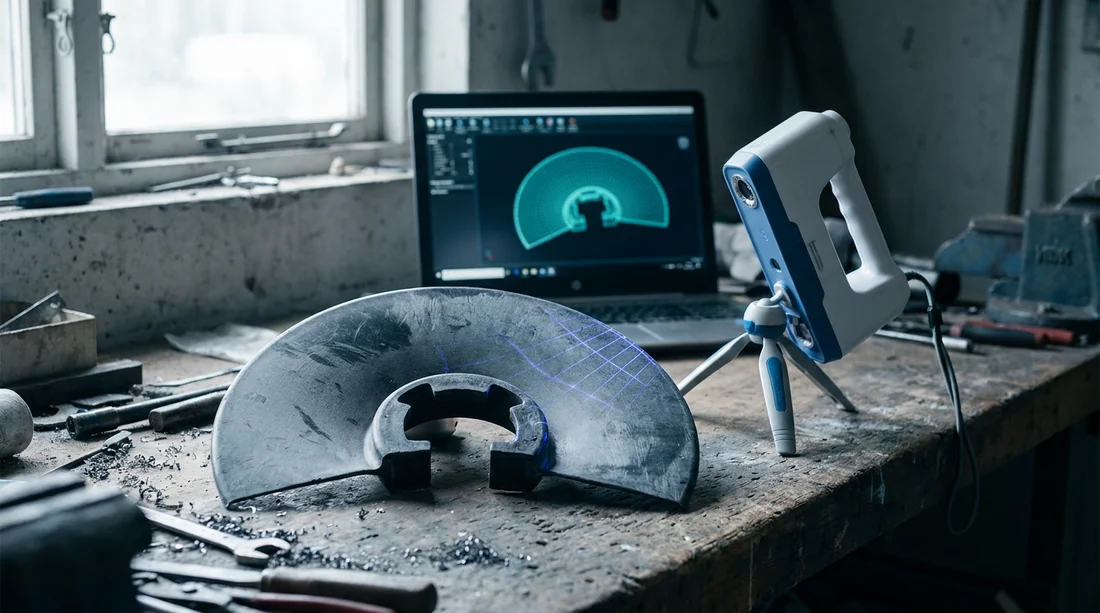
An obsolete headsail furler side plate
Nothing left to buy, and one worn original to work from
The part. A side plate from the headsail furler on a sailing boat, part of an obsolete manual reefing system on the forestay.
The problem. No longer available anywhere. The only reference left was the original itself, scuffed and worn.
What we did. Scanned the original, rebuilt the geometry from the capture, and printed the replacement in ASA.
The result. A replacement made from the one thing that still existed. No drawing, no catalogue, no supplier, just the part.
A real 3D Printing Express job on a sailing boat. The owner asked not to be named, so there is no client name and no photograph of the part here. For a scan of a large moulded surface rather than a fitting, see our jet ski project.
Is it legal to have a discontinued fitting copied?
Reproducing a part for your own boat, where the original is obsolete and you are not passing it off as the manufacturer's, is ordinary repair work. What we will not do is put someone else's branding on a part, reproduce a current catalogue item to undercut the maker, or supply anything described as an original equipment part when it is not. If you are trade and reselling, that distinction matters more to you than it does to us, so we will be straight about it on the quote.
Got a fitting that is no longer made?
Send a photo of it, or tell us where the boat is. An engineer will review it and come back within 2 working hours with what it needs, what it costs, and whether 3D printing is the right answer for that part at all.