01 · Raw input
A sketch on a napkin. A broken part. A photo.
Send what you've got. No CAD file? Fine. A scribble, a phone photo, a measurement, the broken thing itself - we've worked from all of them.
3D printed prototypes and product development, from a napkin sketch to a part on your desk. No CAD file? We build it with you. Half-broken prototype? Send it. Rapid prototyping for the idea a moulder said was impossible · that's usually where 3D printing earns its keep.
Scroll down. The page locks and pans sideways through each stage of the journey. Same product, six steps, real client work.
Send what you've got. No CAD file? Fine. A scribble, a phone photo, a measurement, the broken thing itself - we've worked from all of them.
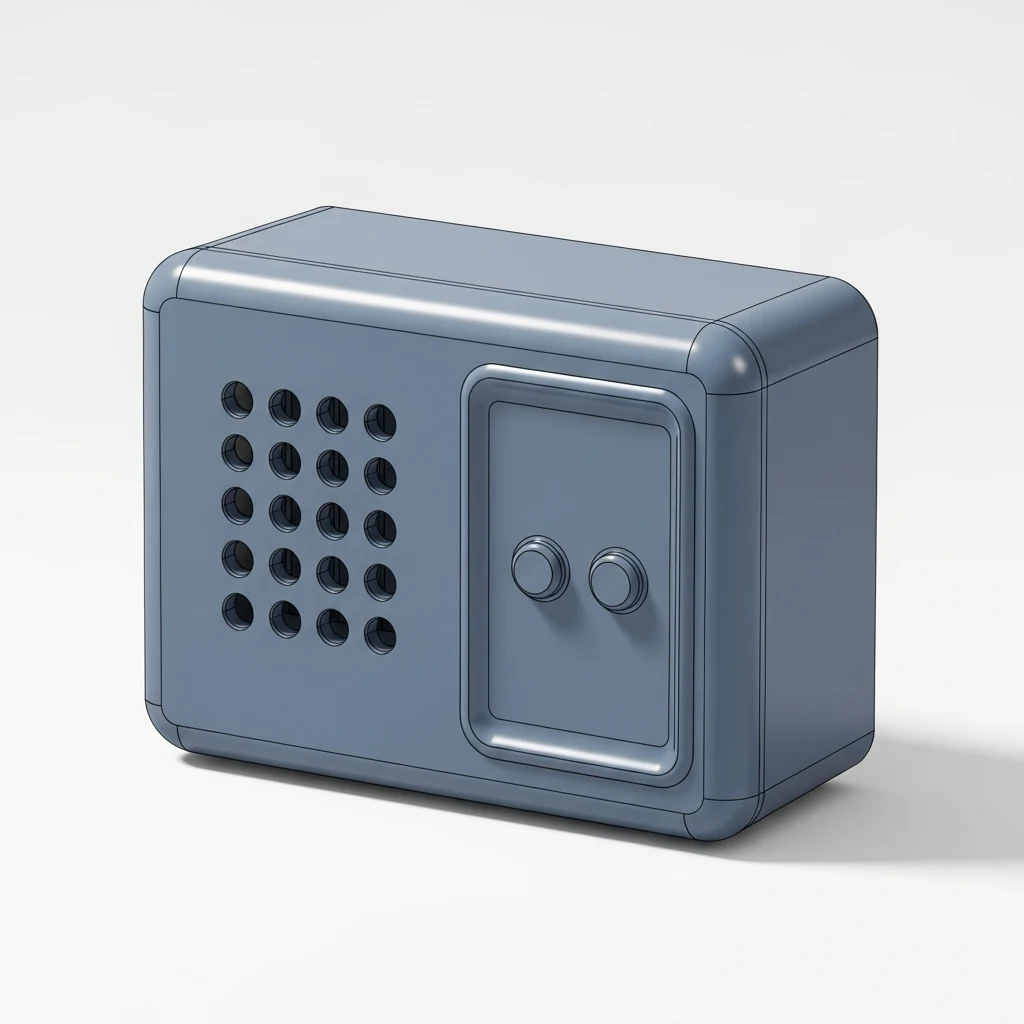
Fusion 360 or SolidWorks-compatible parametric workflows. We model the part from your inputs, you steer the design calls, we do the heavy lifting between rounds.
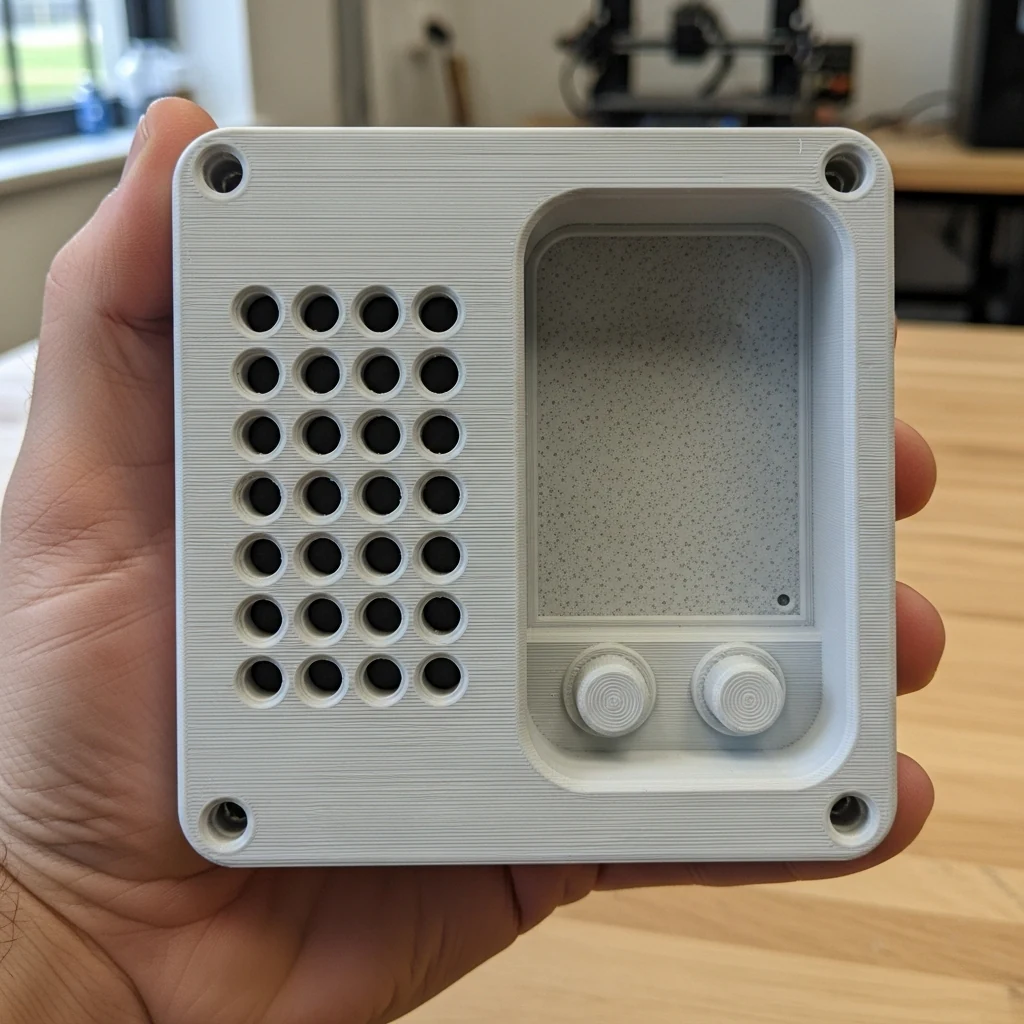
Form, fit, function - a real thing you can hold. Not a render. Most "this won't work" gets solved when you've got V1 in your hand.
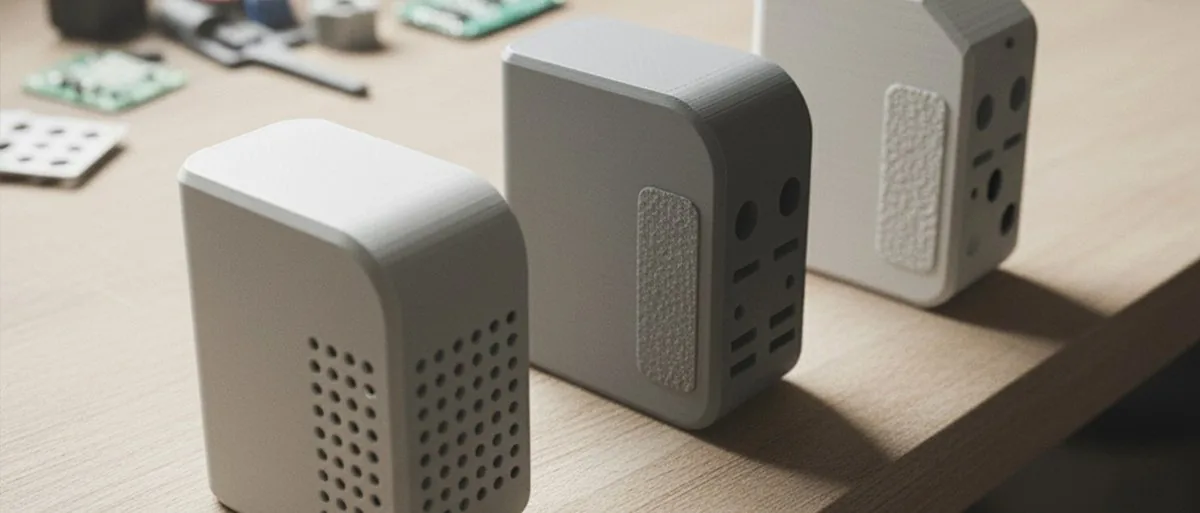
Most projects settle in V2 or V3. We don't itemise every tweak - revisions inside the original scope are included.

Most of what we build goes to market under NDA - so we can't show you the polished hero shot. You walk away with the production STEP / 3MF / native files at handoff. Next time you see the product, it's on someone's shelf.
A complete rapid prototyping and product development service for engineers, founders and in-house R&D teams. We take you from a sketch on a napkin to a first article - without tooling, without a CAD file, and without the usual lead times.
 Telesoft
 Durable
 Beryl Bikes
 Bournemouth University
 Whale Tankers
 F1
F1
 Hasbro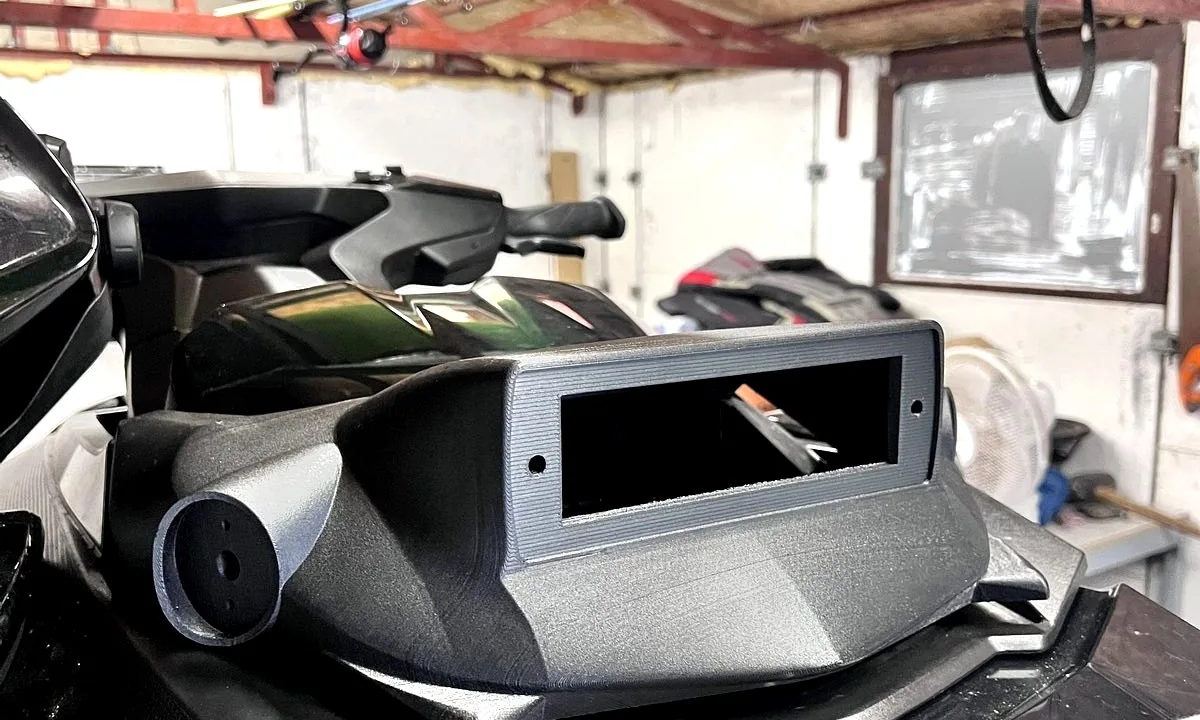
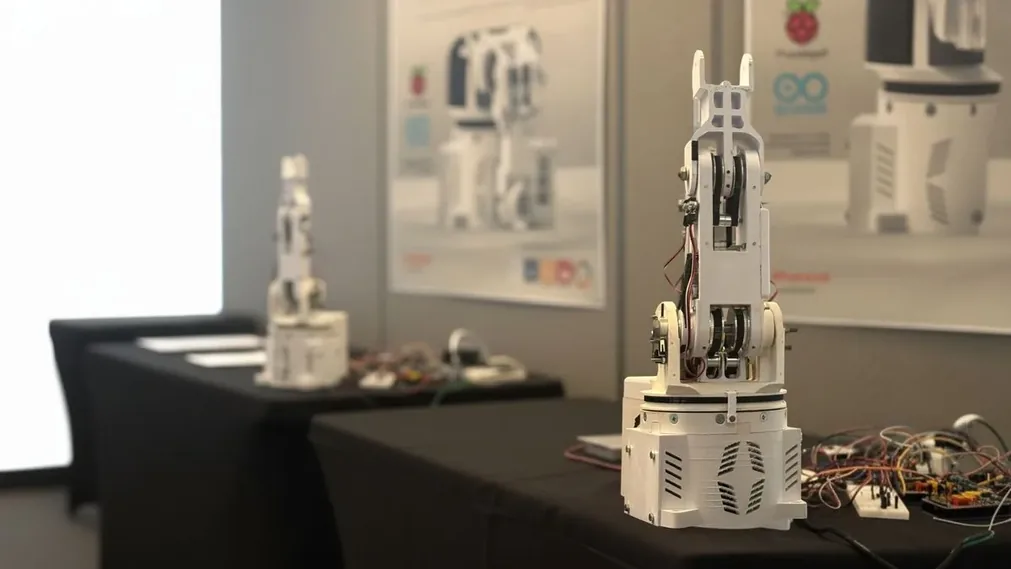
Injection moulding needs every part to release from a cavity. That one physical rule rules out a huge chunk of modern product design · interlocked mechanisms, sealed internal channels, lattice structures, one-piece flexures, variable wall thicknesses, per-unit customisation.
None of these are exotic. We design and print these parts every week for product developers whose original brief included "a moulder told us this isn't possible".
If your design has any of the features below, you're not choosing between 3D printing and moulding. You're choosing between 3D printing and not making the product.
Wondering when to graduate to tooling? See 3D printing vs injection moulding. Worried a printed part won't survive use? See is 3D printing strong enough for functional parts.
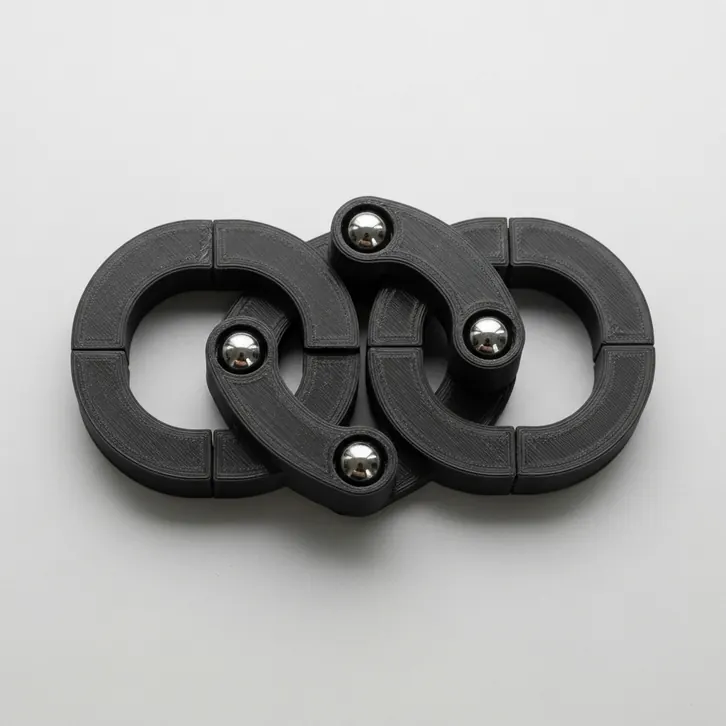
Chains, hinges, ball-joints, mesh structures printed as a single assembled piece. No assembly time, no post-processing. Moulding literally cannot produce parts that never separated.
Moulding equivalent: ✗ not possible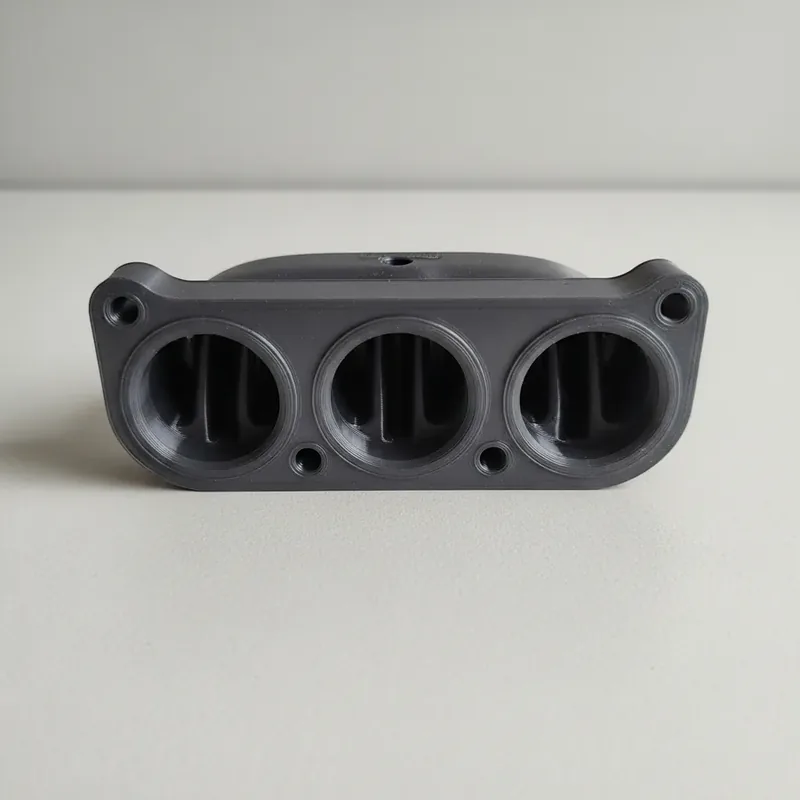
Fluid paths, air flow, sealed cable routes, conformal cooling channels for tooling inserts. A mould tool can't form geometry inside solid material; a printer just doesn't print where the void is.
Moulding equivalent: ✗ requires multi-part assembly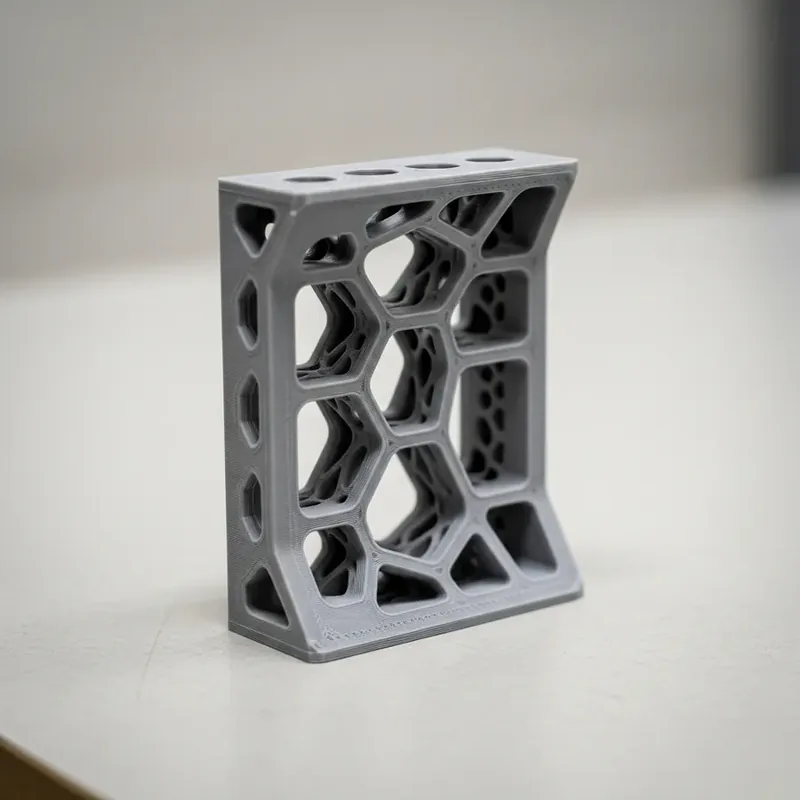
Internal gyroid infill, honeycomb structures, stress-led rib geometry. Half the weight, most of the strength · common on aerospace, bike, and sports-equipment parts. Impossible to demould.
Moulding equivalent: ✗ not possible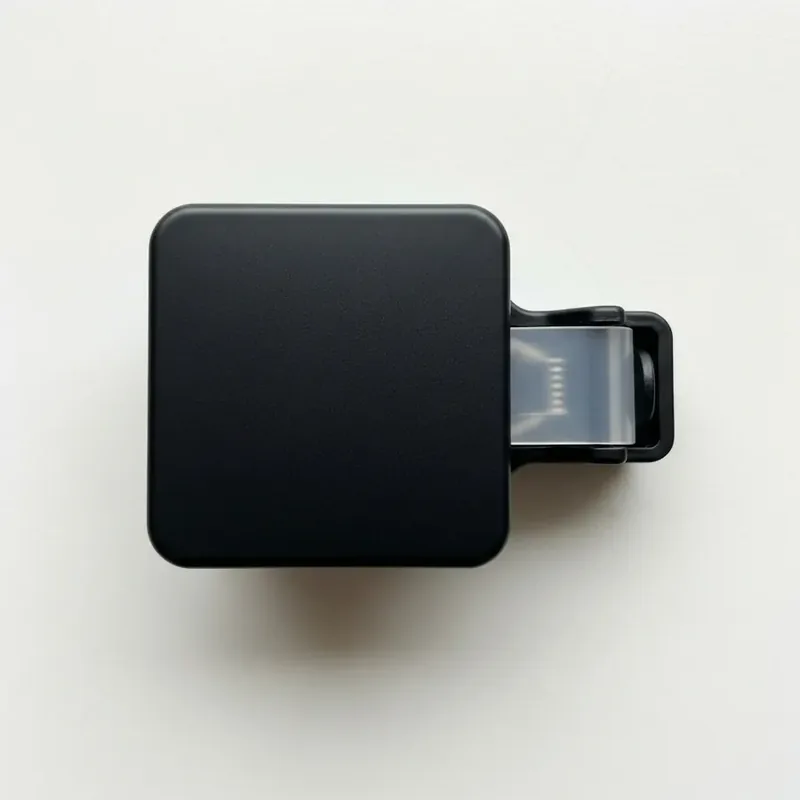
Single-material springs, snap-fits, clip housings with compliant zones, living hinges. 3DP holds tight tolerance and lets us tune stiffness zone-by-zone; moulding forces two parts and a pin.
Moulding equivalent: ~ limited material geometry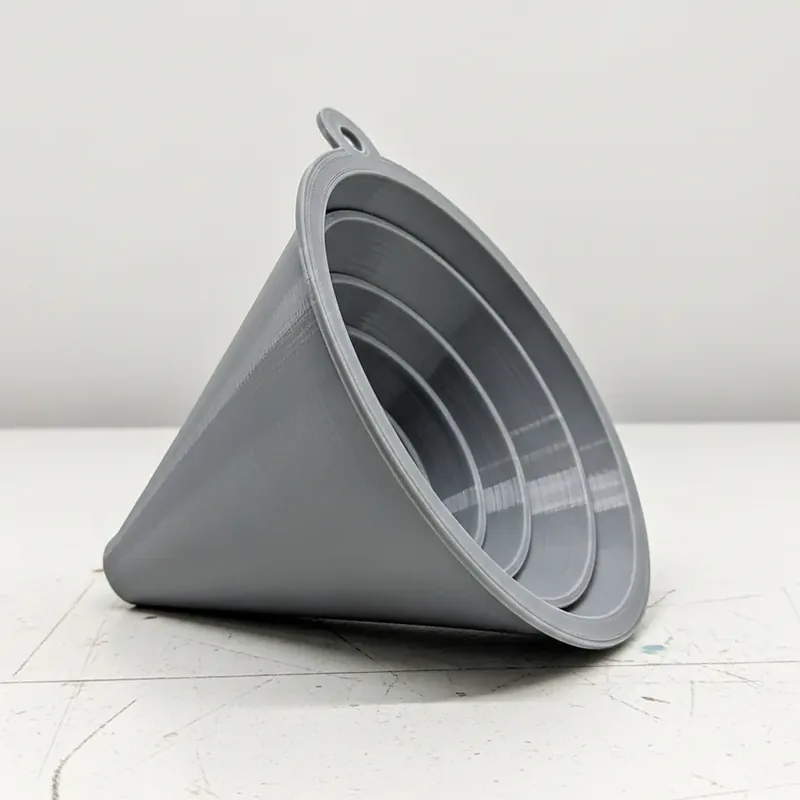
Thin where it can be, thick where it has to be · in the same wall. Moulding needs uniform thickness for flow and cooling; 3DP couldn't care less what the cross-section looks like.
Moulding equivalent: ✗ causes warping + sink marks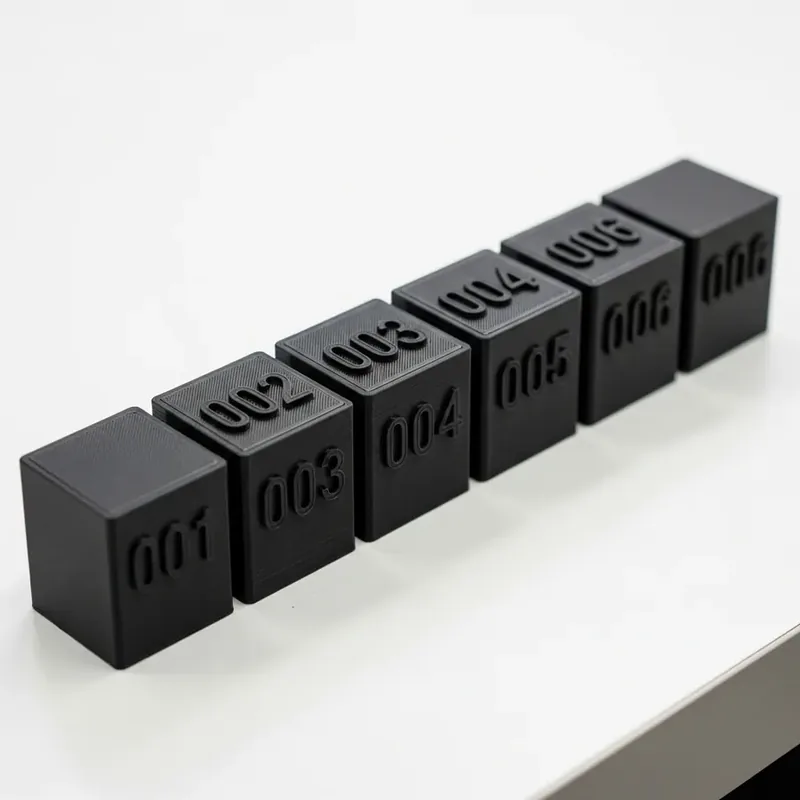
Every unit in a 500-piece batch can be uniquely serialised, sized, numbered, or subtly altered without changing tooling. One mould makes 500 of the same thing · no exceptions.
Moulding equivalent: ✗ one tool per variantBring a sketch, a photo, a CAD file, or a broken part. We'll work the design with you and print V1 on us as a test sample · or the full first prototype on smaller parts (roughly fist-sized for FDM). Larger pieces or experimental one-offs we quote the print up front, always agreed in writing first.
Project pricing beyond CAD
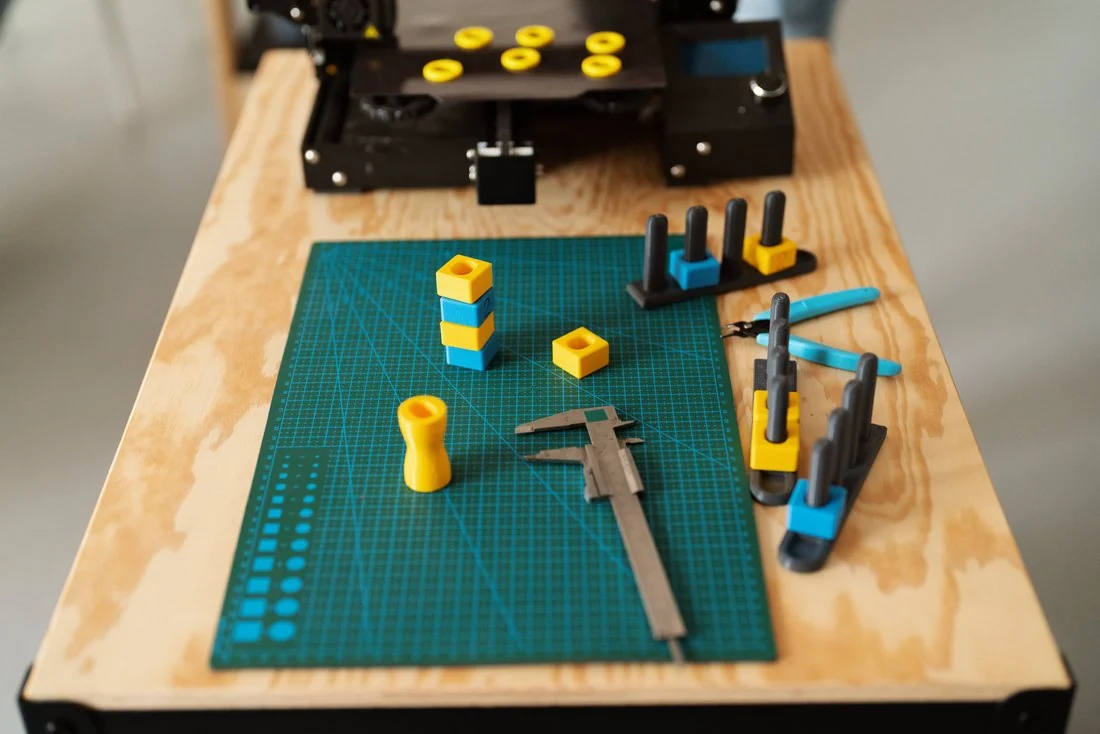
If you're designing a new product · or unsticking an old one · and you've hit either the "moulder says no" wall or the "freelance CAD quote was wild" wall, this is the page for you. We run rapid prototyping and product development from our main Bournemouth and Poole workshop - designed and printed in-house, with a full range of engineering materials and a direct path into small-batch production when the design is signed off.
Every revision goes back through an engineer, not an algorithm. You stay in the design decisions · we just do the heavy lifting between calls.
Small changes. Fast prints. £0 tooling cost means a V3 costs about the same as a V1. You don't pay to be wrong in the early rounds · that's how good products get built.
When the design is right, we transition you to small-batch or print-and-fulfil without handing you off. Same files. Same engineers. Same QC. Zero relearning.
Sketch, photo, CAD file, broken part, a napkin drawing · genuinely anything. We've worked from all of them.
15 minutes with one of our engineers. We scope the work, clarify the use case, flag what's printable and what isn't.
We work the CAD with you and print V1 as a test sample so you can hold it · that first print is on us when you commit to the build.
Revisions are part of the scope. We don't stop printing until you approve. Most projects settle in V2 or V3.
Once the design is right, we either hand you the production files (yours to keep) or roll straight into small-batch or print-and-fulfil. No re-quoting, no relearning.
Then the discovery call is where we find out · before any money changes hands. Sometimes we'll tell you the shape needs a rethink; sometimes we'll suggest a material you hadn't considered; sometimes we'll save you 6 weeks by pointing out one feature that can't be 3D-printed reliably at scale. Honest answers save more projects than clever ones.
Revisions are part of the scope we agree in step 2. We don't itemise you into the ground · V2, V3, V4 within the original scope are included. If the design direction changes mid-project (you want a different product, not a different version), we rescope openly before any new hours go on.
NDAs signed before the file lands. Your drawings, CAD, and physical prototypes never leave 3D Printing Express · no outsourcing, no overseas subcontracting. Every part printed on our UK floor by our own team. We've worked with pre-launch DTC brands since we started trading in 2023, without a leak.
A freelance CAD engineer charges for design time in isolation. We charge for design in the context of actually printing the thing · which usually means fewer iterations because we can test geometry, tolerance, and material choice as we design. Plus the V1 sample print is on us when you commit to the build · most freelance CAD engineers can't offer that because they don't print.
That's what we're for. Between our design consultants, engineers and 3D printing specialists we've designed for automotive, events, consumer goods, obsolete industrial parts, and one genuine prop for a Vogue-cover runway show. If we can't help, we say so on the discovery call · cheaper than finding out three weeks in.
Yes · same files, same engineers, same floor. Once the design is approved, transition to small-batch (10-1,000+ units) or print-and-fulfil (we print, pack, drop-ship to your customers) without a re-quote cycle. See the fulfilment teaser below.
V2 or V3 revisions within the original scope are included. We rescope openly if the direction genuinely changes · not every tweak.
Bring an idea, we work the design with you. The first V1 sample print is on us when you're going through with the build.
Send a brief, you'll have an engineer-reviewed quote within 2 working hours.
A napkin drawing, a phone photo, a broken clip you need a replacement for. No CAD required. You'll hear from our team within 2 working hours.
The questions product developers ask us most. If yours isn't here, email hello@3dprintingexpress.co.uk · we reply same-day during UK business hours.
3D printing cost in the UK is project-based, not per-hour. Design hours are quoted separately from print costs · driven by scope, iterations expected, and complexity. Print costs are driven by unit count, material, and post-processing. The V1 sample print is on us when you commit to the build · so you only pay design hours and the production run, never the test print. No published £/hour rate · everything is quoted against the actual brief, agreed in writing first.
Send a sketch, a phone photo, a measurement, or the broken part itself. We've worked from all of them. We'll work the CAD with you from whatever you have. No CAD experience needed on your side. You stay in the design decisions, we do the heavy lifting between calls · and the V1 sample print is on us when you commit to the build.
Once the V1 design is signed off, it prints in our standard 5-7 working days, with full product development from sketch to production-ready files settling in 4-8 weeks for most projects. Most projects iterate through V2 or V3. Sometimes V1 prints fine and we're straight into production · sometimes we end up at V4 because a real-world test surfaces something the CAD couldn't predict. Revisions inside the original scope are included · we don't itemise every tweak. Where the design direction genuinely changes mid-project, we rescope openly before any new hours go on.
Yes · routinely. Send a photo with a ruler in the shot, a measurement or two, and the broken part itself if you have it. We build the CAD from those inputs in Fusion 360 or SolidWorks-compatible parametric workflows, then print the V1 sample on us when the build follows. Photos alone get us 80% of the way; the broken part in hand gets us to 100%.
STL, STEP, OBJ, 3MF, IGES · anything industry-standard. STL vs STEP: we prefer STEP for production work because it carries parametric geometry - we can adjust wall thickness or tolerances without remeshing. STL is fine for one-off prints where you just need the surface. We also accept Fusion 360, SolidWorks-compatible, and Inventor native files. No file? Send a sketch, a hand-drawn dimension, or a phone photo · we'll work from any of them.
Yes · same files, same engineers, same UK floor. Once the design is signed off we either roll straight into small-batch (10 to 1,000+ units) or full print-and-fulfil (we print, sand, assemble, pack, drop-ship to your end customers). No re-quoting, no relearning, no handing you off to a different team. The transition is genuinely a continuation of the same project.