Call Get a quote →
UK · POOLE, DORSET · COST DRIVERS

What Drives the Cost of 3D Printing? The Six Factors in Every Quote

Page sections

Details

Six things set the cost of a 3D-printed part: its size and print time, the material, the infill and wall strategy, the quantity, the finishing, and the turnaround you need. At 3D Printing Express an engineer reviews every file and returns a fixed UK quote within 6 hours — no calculator, no minimum order.

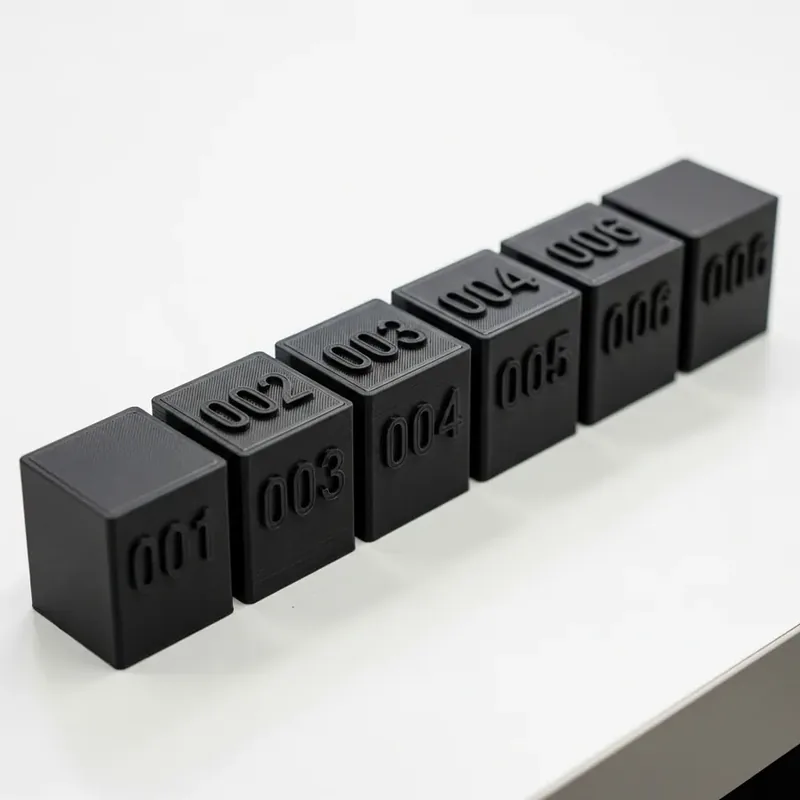
Macro photo of a 3DPE print run · identical small black parts laid out for quality control

How much does 3D printing cost in the UK? It depends on six drivers — and most of them are yours to control.

There is no single price, and any service that quotes you one before seeing your file is guessing. This page shows exactly what moves a quote up or down — across material choice, geometry, quantity and finish — so the number you get back makes sense and you can design to a budget. Then an engineer reviews your file and returns one fixed UK quote, free, within 6 hours.

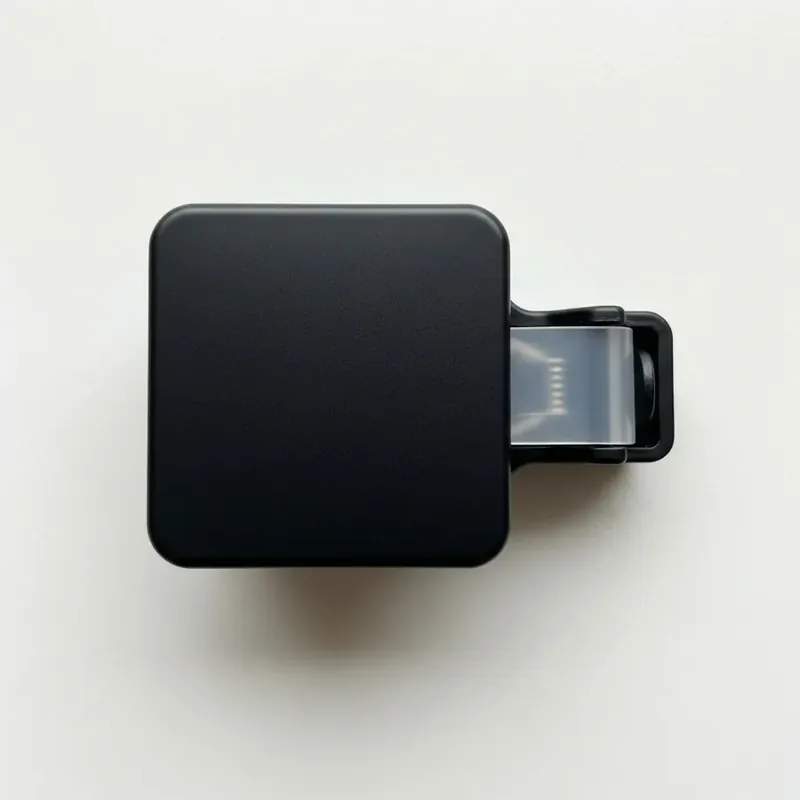
An engineer from 3DPE holding a finished 3D-printed part

The honest answer to "how much does 3D printing cost?"

There is no single price, and any service that quotes you one before seeing your file is guessing. A keyring and a load-bearing carbon-fibre bracket are both "a 3D print", and they are not remotely the same job. What we can do — and what this page is for — is show you exactly what moves a quote up or down, so the number you get back makes sense and you can design to hit a budget.

We don't run an instant-quote calculator, and that's deliberate. A calculator can't tell you that your wall is too thin to trust, that a different orientation would halve the support material, or that PLA would test the shape just as well as the carbon-fibre nylon you selected. An engineer can. Every file we quote is read by one before you get a price — the review is the value, and it's free.

The six cost drivers — an engineer's honest breakdown

Everything below is true of FDM 3D printing at any bureau, not just ours. The difference is that we're telling you plainly.

  1. 1

    Size and print time — the part itself

    Your part costs money in two currencies: grams of filament and hours on the machine. The grams are the volume of your walls, infill and any support the geometry forces. The hours are mostly a function of how many layers the printer draws — set by the part's height, the layer height we run, and how much area each layer covers. On a typical small part the plastic is the cheap bit; machine-hours and hands-on time are the larger share — which is why the time levers matter more than the material scales suggest.

    We keep it down · coarsest layer the job allows, smart orientation, hollow what can be hollowed
  2. 2

    Material choice — the PLA-to-PA12-CF spectrum

    Material is a spectrum, and the price climbs as you go up it. PLA is the most economical rung. PETG, ABS and ASA sit higher and buy toughness, heat tolerance and UV resistance. At the top, the carbon-fibre nylons — PA12-CF and PA6-CF — cost several times what PLA does per spool, because they replace machined metal. They also cost more to run: nylons need drying, carbon-filled filaments run on hardened nozzles, and they print slower under stricter control. We print Polymaker and Fiberon filament exclusively — one supply chain, consistent results.

    We keep it down · we right-size the material and tell you when a cheaper rung answers your question
  3. 3

    Infill and wall strategy — strength per gram

    3D-printed parts aren't solid by default. Inside the outer walls is a lattice — the infill — and its density is a direct cost lever: material and print time climb with the percentage. What most people don't know is that the walls, not the infill, carry most real-world loads. Adding perimeters puts material exactly where the stress runs; pushing infill towards solid mostly adds grams, hours and diminishing returns.

    We keep it down · walls-first strength tuning — the single most common saving our reviews find
  4. 4

    Quantity and batch packing — the per-unit curve

    The engineering review, file preparation and machine setup are paid once per job — so the more parts that job covers, the less each part carries. Multiple parts also pack onto shared build plates and run back-to-back, including overnight. That's why quoting 50 parts once always beats quoting a handful five separate times, and it's the core saving behind our small-batch production service. Two honest limits: the per-unit curve flattens, and at some volume — roughly 500 to 1,000 units, geometry depending — injection moulding starts to win. We'll tell you when you're near the crossover.

    We keep it down · one quote for the whole run, packed plates, a test sample before the batch
  5. 5

    Finishing and post-processing — paying for hands, not plastic

    As-printed is the cheapest a part will ever be, and for jigs, fixtures, prototypes and plenty of end-use parts it's exactly right. Every step after the printer stops is hands-on labour: support removal on complex geometry, sanding, smoothing, painting, fitting threaded inserts. None of it is hidden — each step you ask for is a line in the quote, so you can see what the finish is costing and drop what the part doesn't need.

    We keep it down · finishing is itemised — you pay only for the steps the part actually needs
  6. 6

    Turnaround — standard pace or jumping the queue

    A standard turnaround is the baseline price because it lets us schedule your parts efficiently into the print farm alongside everything else. A rush job jumps the queue — it displaces other scheduled work, so it costs more. That's the whole mechanism. The honest advice: give us the real date, not "ASAP". With a genuine date we can often sequence plates to hit it at the standard rate — and if a deadline truly can't be met, we'll say so before you commit, not after.

    We keep it down · we schedule to your real date and flag when standard pace makes it anyway
The six cost drivers in a 3D printing quote, their effect on the price, and what 3D Printing Express does to keep each one down.
Cost driverEffect on your quoteWhat we do to keep it down
1 · Size & print timeThe biggest lever — more volume and more layers mean more grams and more machine-hours.Review checks orientation, layer height and support load; we run the coarsest layer the job allows.
2 · Material choicePrice climbs from PLA up to the carbon-fibre nylons — spool cost plus drying, hardened nozzles, slower running.We right-size the material and say when a cheaper rung answers your question. No upselling a grade the part doesn't need.
3 · Infill & wallsHigher density = more material and time, with diminishing strength returns.Walls-first strength tuning — perimeters where the stress runs instead of blanket high infill.
4 · Quantity & packingPer-unit price falls as the run grows; review and setup are paid once.One quote for the whole run, packed plates, continuous running — and a test sample before the batch.
5 · FinishingEvery post-processing step adds hands-on labour.Finishing is itemised — you pay only for the steps the part actually needs.
6 · TurnaroundRush work jumps the queue and costs more; standard pace is the baseline.We schedule to your real date, and tell you when standard pace will make it anyway.

The honest summary: size and print time dominate, material grade is next, infill is the silent multiplier, and finishing and rush are the add-ons you control last. Get those right and the quote follows.

Why we quote in 6 hours instead of instantly

An instant-quote widget reads your file's volume and bounding box and multiplies by a rate. It is fast, and for a load-bearing or finish-critical part it is often wrong — in the direction that costs you money or a failed part.

You wait a few hours instead of a few seconds, and you get a number you can build a budget on, from someone who read the file.

01

Catches the expensive mistakes before they're printed

Walls too thin to trust, an orientation that doubles support material, an over-specified material — all flagged with the quote, not discovered after.

02

Right-sizes the spend

We'll tell you when PLA will answer your question just as well as a carbon-fibre nylon, and save you the difference — and when extra walls beat extra infill (they usually do).

03

Gives you one fixed UK price

No surprises, no per-gram meter running, no minimum order. One part is a normal order here.

Send an STL or STEP file and tell us what the part has to do. If you only have a sketch, our CAD design service builds the model first — good CAD is itself a cost driver, because clean, print-ready geometry needs less support and less labour. We print in-house in Poole, Dorset — local to Bournemouth and the south coast, and a tracked parcel away from everywhere else. How it works walks through the full process from file to dispatch.

One part, three honest versions

Same part, three jobs — watch the drivers move the price, not a price list.

To make the drivers concrete, take one realistic part — a handheld, palm-sized enclosure — quoted three ways. The shape never changes. Only the engineering choices do — and each choice maps straight to a driver above.

How the drivers stack the cost

  • Version A — "Does the shape work?" PLA, low infill, draft layer height, as-printed, one unit, standard turnaround. This is the cheapest the part will ever be — you're testing geometry, not function. It sits at the low end of our range: cheap material, fewest layers, no finishing labour.
  • Version B — "Does it survive use?" The same part in PETG or ASA, more walls and higher infill, support removal and a light tidy-up. More material, more machine time, a little labour — so it costs more than A, and it tells you far more about how the part performs.
  • Version C — "Make me 50 for the field trial." Version B, but fifty units. The total goes up, but the per-unit price drops sharply versus quoting one part fifty times — the review and setup are paid once and the plates run back-to-back.

The lesson in one line: you are not at the mercy of the price — you steer it. Tell us what the part has to do, and the engineer reviewing your file will help you hit it for the least sensible spend.

NO CALCULATOR · NO MINIMUM ORDER · NO PER-GRAM METER

Get a real number from someone who read your file.

Send your part and an engineer will review it and return a fixed UK quote within 6 hours — and flag anything that could save you money before it prints. Rated 4.9★ across 36 Google reviews.

Get an Engineer-Reviewed Quote in 6 Hours Talk Your Part Through — Book a 15-Minute Design Call
There's no single price, because the cost depends on six things: the part's size and print time, the material, the infill and wall strategy, the quantity, the finishing, and the turnaround. A small PLA part testing a shape is inexpensive; a large, load-bearing carbon-fibre-nylon part costs considerably more · the same geometry can vary widely depending on those choices. An engineer reviews your file and returns one fixed UK quote within 6 hours.
Mostly size and print time · material volume and machine-hours are the biggest drivers, and on small parts the plastic itself is usually the cheap bit. Material grade is next: carbon-fibre nylons cost several times what PLA does and need drying, hardened nozzles and slower running. Infill density, finishing steps and rush turnaround then push the number further. Most of those are choices you control, which is why an engineering review usually finds savings.
At low volumes, usually yes. A mould tool is a four-to-five-figure upfront cost before the first part, while 3D printing has no tooling · you pay only for the parts. Below roughly 500-1,000 units, 3D printing is typically the cheaper route for a plastic part; above that the moulding maths starts to win, geometry depending. We'll tell you when your volumes are near the crossover rather than keep printing past it.
Because a calculator multiplies your file's volume by a rate and can't see that a wall is too thin to trust, that a better orientation would halve the support material, or that a cheaper material would test your design just as well. An engineer reads every file we quote and returns a fixed price within 6 hours · the review is free, and it routinely saves more than it costs.
Yes. The engineering review and setup are paid once, so the per-unit price falls as the run grows · parts pack onto shared build plates and run back-to-back. That's the core saving in small-batch production: quoting 50 parts in one run beats quoting a handful five separate times.
PLA is the most economical and is ideal for checking a shape or fit. PETG, ABS and ASA cost more and add toughness or heat and UV resistance. The carbon-fibre nylons, PA12-CF and PA6-CF, are the most expensive because they replace metal · and they carry running costs too, like drying and hardened nozzles. The most cost-effective choice is the lowest rung that genuinely answers your question, and the engineer review helps you find it.
Send an STL or STEP file through our quote form and tell us what the part has to do. An engineer reviews it · checking printability, material fit and the cost drivers above · and returns a fixed UK price within 6 hours. There's no minimum order; one part is a normal order. If you only have a sketch, our CAD design service can build the model first.