
3D Scanning Service: A Physical Part, Digitised and Made Again
Our 3D scanning service turns a physical part into digital data you can use: an editable CAD model, a printed replacement, or a dimensional record. It is how you remake a broken, worn or obsolete part when there are no drawings left. Engineer-reviewed quote in 2 hours, from £50.
A UK 3D scanning service, engineer-reviewed in Poole
Most jobs arrive as a broken, worn or discontinued part with no drawings. We capture it, and if you want it remade we rebuild the scan into an editable model through our reverse engineering service. Starting from a brief rather than an existing part is CAD design.
9,500+ parts shipped from 3D Printing Express this year · UK 3D scanning service, Poole
What 3D scanning actually gives you
3D scanning captures the real geometry of a physical part as digital data (surfaces, contours and key dimensions), so a part you can hold becomes a file you can measure, reproduce, modify or archive. A raw scan is a dense mesh: a faithful copy, but not yet something you can edit cleanly. What you do with it next is the decision, and we tell you which route fits before you commit.
The question that decides everything: do you need the shape captured, or captured and rebuilt into an editable model? The first is scanning. The second crosses into reverse engineering.
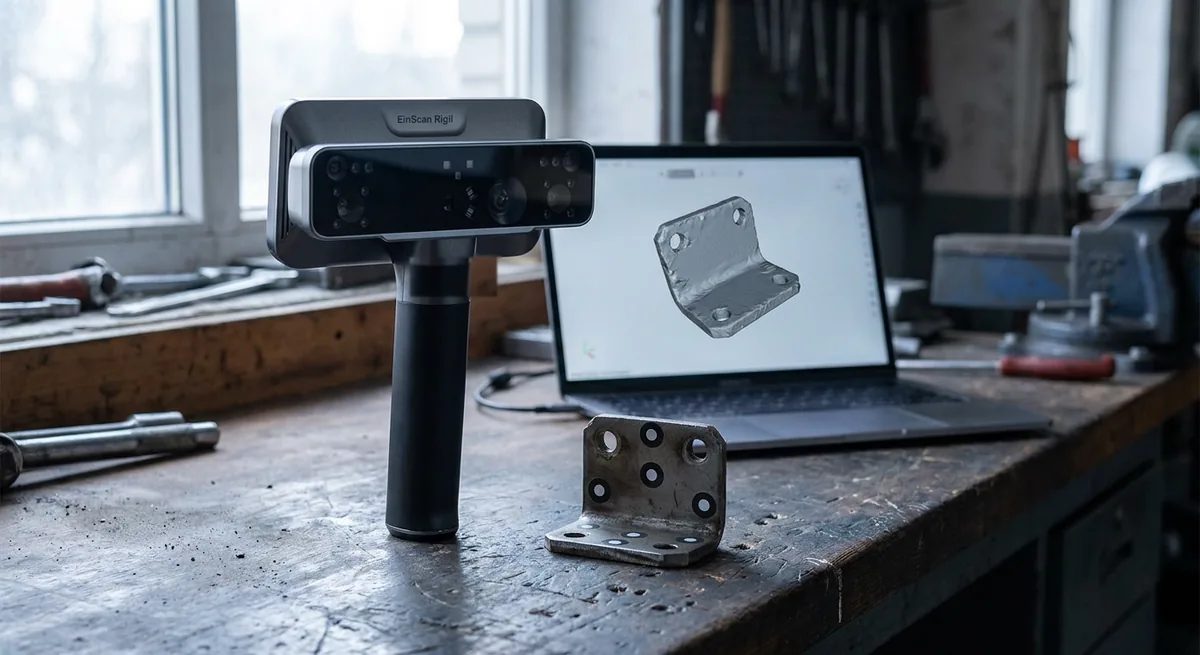
The scanner behind the service: a Shining 3D EinScan Rigil
We capture your part on a Shining 3D EinScan Rigil, a professional handheld blue-laser 3D scanner. It reads fine surface detail and full form in a single pass. For most parts it works markerless, tracking off the part's own features. Very shiny, dark or glossy-black surfaces need a light washable scanning spray or a few reference dots to read cleanly, and on large objects like vehicles we add reference markers for a rock-solid track.
- Blue-laser + infrared capture. Fine detail and larger objects in one tool.
- Markerless on most parts. Shining black and high-gloss surfaces take a light washable spray or reference dots; larger objects like vehicles use markers.
- Resolution up to 0.05 mm on Shining 3D's published figures. Faithful geometry for fit-and-function reproduction.
- Small parts to large objects. A trim clip and a body panel are both in scope, the large ones scanned on-site.
- Colour and texture capture. A true-to-life record, not just the shape.
The scanner does the capture; the judgement does the rest. Every critical fit feature is still hand-measured alongside the scan, because that dimension decides whether a reproduction fits, and it is checked, never assumed.
What you can get out of a scan
One capture, several possible outputs. Tell us which you need and we quote the route to it:
An editable CAD model
A clean, editable STEP model you can modify and remanufacture from. The reverse-engineering outcome.
A print-ready replacement
Straight from captured geometry to a finished printed part, in a material matched to the job.
A dimensional record
Measurements captured so a part can be checked, compared or reordered against spec. Inspection, QC, fit-checks and documentation.
A digital archive
The one surviving original stored as a file, so the geometry is never lost again.
Not sure which output you need? Send a photo and a sentence about what the part has to do. The engineer reviewing it will tell you the honest route.
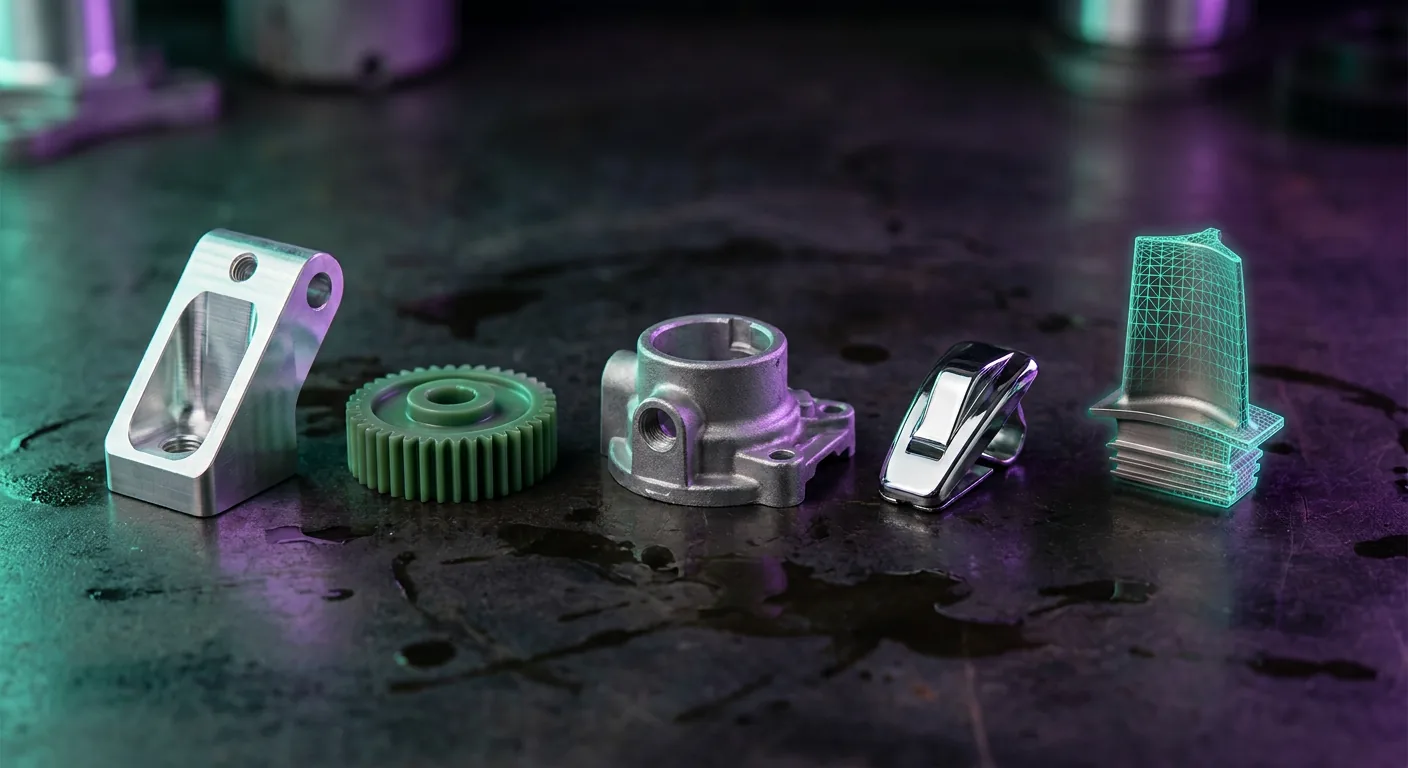
What we can scan
From a trim clip to a vehicle panel. If it fits in a parcel, post it in; for anything bigger, like vehicles, large assemblies or machinery in place, we scan it on-site. Tell us what it is and we will say honestly what is practical before you send anything.
Classic & automotive
Trim clips, knobs, brackets and badges long out of production.
Industrial & machinery
Legacy plant, guards, housings and spares with no drawings.
Domestic & appliance
Discontinued knobs, handles, clips and fittings.
Marine, agricultural & heritage
Weathered or one-off parts where the original is the only record.
What scanning can and can't capture: the honest version
Capturing a part well is a judgement call, not a magic button, so here is the honesty up front. We would rather set the right expectation at the quote than disappoint you at delivery.
What we capture reliably
- Overall form and external geometry. The shape, contours and proportions of the object.
- Critical fit features. Bolt patterns, mating faces, mounting points and bore positions, which we measure by hand as well as scan, because that is what decides whether a reproduction fits.
- Worn or partial originals. Where a feature is cracked or missing, we capture what survives and can rebuild the intended geometry, confirming it with you first.
- A clean, editable model at the end if you want one, not just a mesh, so the part can be modified and re-ordered later.
What it can't do, and we'll tell you up front
- Internal geometry we can't see. Hidden cavities or sealed assemblies may need sectioning, or may not be recoverable from a scan at all.
- Metrology-grade tolerances. A reproduced part is printed by FDM or SLA, geometry-dependent, and we confirm the tolerance achievable for your part. Good for the vast majority of fit-and-function work; not a substitute for inspected CNC datums.
- Highly worn surfaces. If the original is so degraded the true geometry is gone, we reconstruct from intent and flag exactly what we inferred.
- Material properties. A scan captures shape, not what the object was made of, so we recommend an FDM or SLA material suited to the job, which may differ from the original.
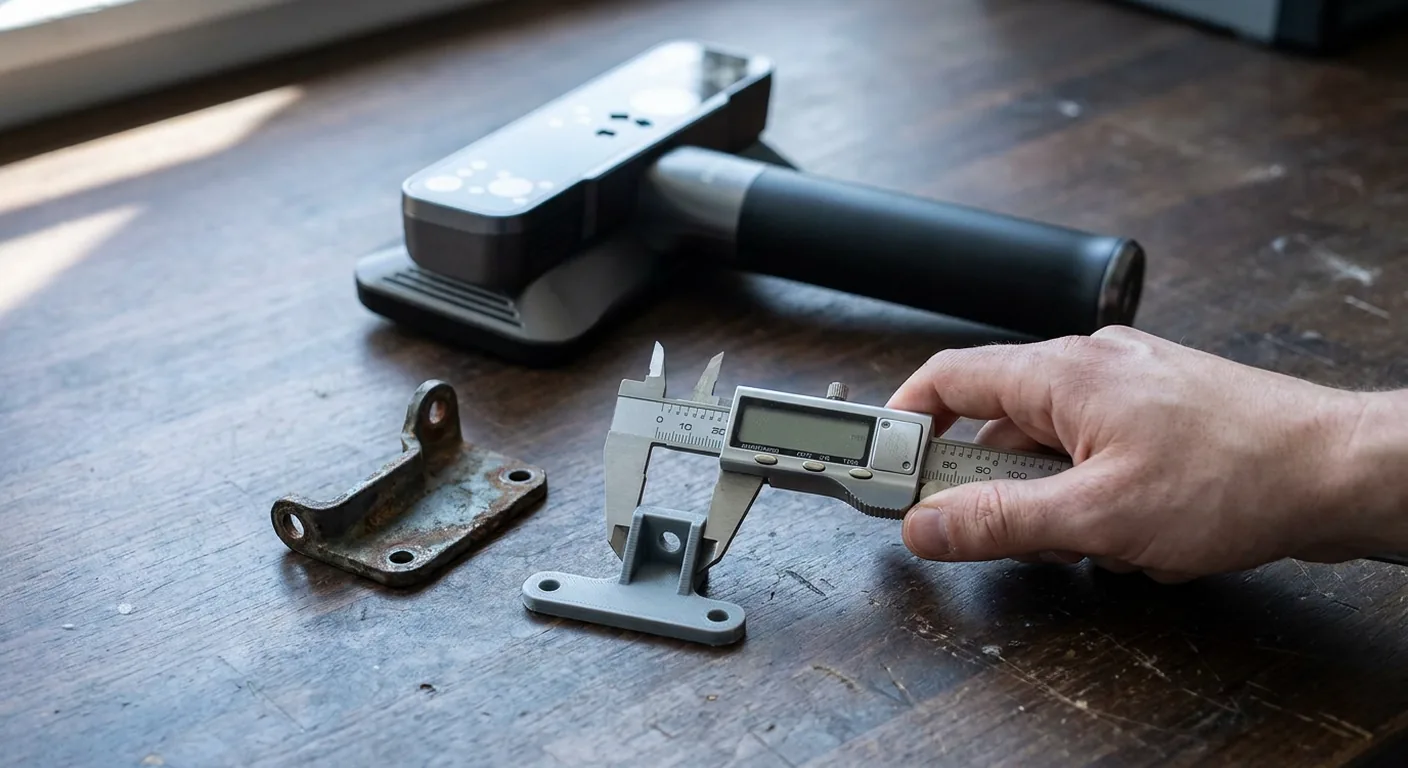
Tell us what the part has to do and which dimensions are critical when you send it, and the engineer reviewing it will tell you honestly whether scanning can capture what you need, before you post the part.
Scan it, reverse-engineer it, or design it from scratch?
Scanning is the right tool for some jobs and overkill for others. Here is how we decide which service you actually need:
| Your situation | Best route | Why |
|---|---|---|
| You need the shape captured as digital data (to reproduce, check or archive) | 3D scan | Scanning is the capture step: it turns the physical object into a file you can use, and is the only faithful route for freeform or organic geometry. |
| You need that scan rebuilt into an editable, dimensioned model | Reverse engineering | Rebuilding the mesh into clean parametric CAD is a separate engineering step on top of the scan. |
| Simple prismatic part with measurable features | Measure & re-CAD | Calipers and a photo can be enough for boxes, plates and brackets, often quicker than a full scan. |
| The part doesn't exist yet (idea, brief or sketch) | CAD design from scratch | There is nothing to capture. You are inventing geometry, not recovering it: a different job entirely. |
If you are not sure which row you are in, send a photo and a sentence about what the part has to do. The engineer reviewing it will tell you which row you are in, including when a scan isn't worth it.
How scanning works with us
Getting your object digitised shouldn't be complicated. Four steps:
- 1
Send a photo or the part
Start with a clear photo (a ruler or calipers in frame helps) through the quote form. For anything beyond simple geometry we'll ask you to post the original in.
- 2
We scan & measure
We digitise the geometry in-house and measure the critical features by hand. If you posted the original to us it comes back tracked, or we keep it for the print run if you prefer.
- 3
We build your output
Mesh, editable STEP model, a printed replacement, or a dimensional record, whichever you asked for. We confirm critical dimensions with you before anything is printed.
- 4
You get the file, the part, or both
Keep the model to re-order and modify yourself, take the finished part, or both. The geometry stays yours, archived so you can come back to it years later.
Every enquiry is read by an engineer before anything is quoted, and if a scan genuinely isn't the right tool for your part, we tell you when we review the enquiry and point you to a CNC or metrology specialist where that fits better. Everything is scanned, designed and printed in-house in Poole, local to Bournemouth and the rest of Dorset if you'd rather bring a part in person, and a tracked parcel away from everywhere else in the UK.
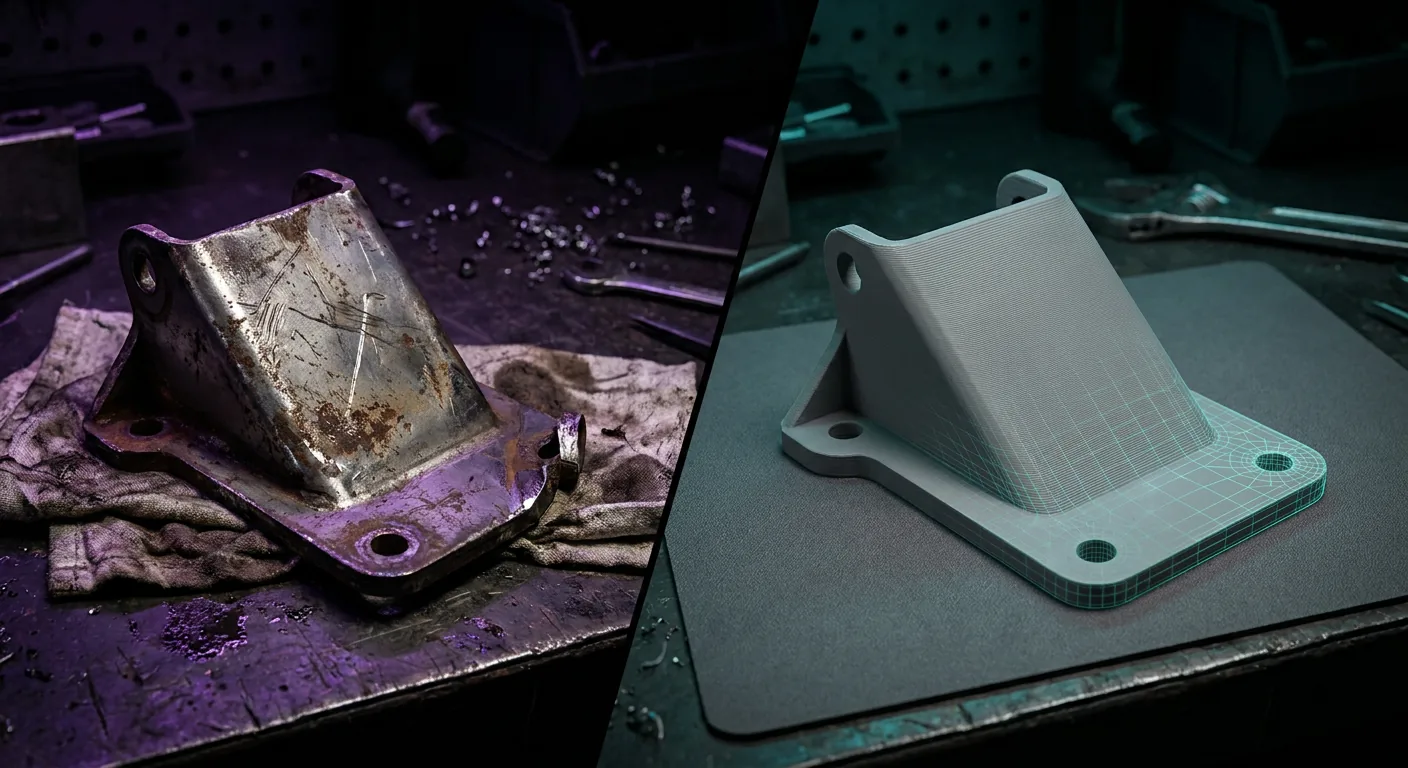
From a single scan to a production run
A scan doesn't have to stop at one part. Once the geometry is captured and a model exists, the same file, material and QC process carry straight into small-batch production if you need a run of 10 to 1,000+ units, with no re-validation gap, because the design is already proven against the real object.
The scan and the model are yours to keep. Ask for the file and you can re-order the part on demand, modify it as needs change, or archive it against the day the physical original wears out or goes missing.
And if the object you are capturing needs more than reproducing (a redesign, a material upgrade, a fix for the flaw that broke the original), that crosses into product development. We'll tell you when you are there.
Case study: scanning a jet ski to fit custom modifications
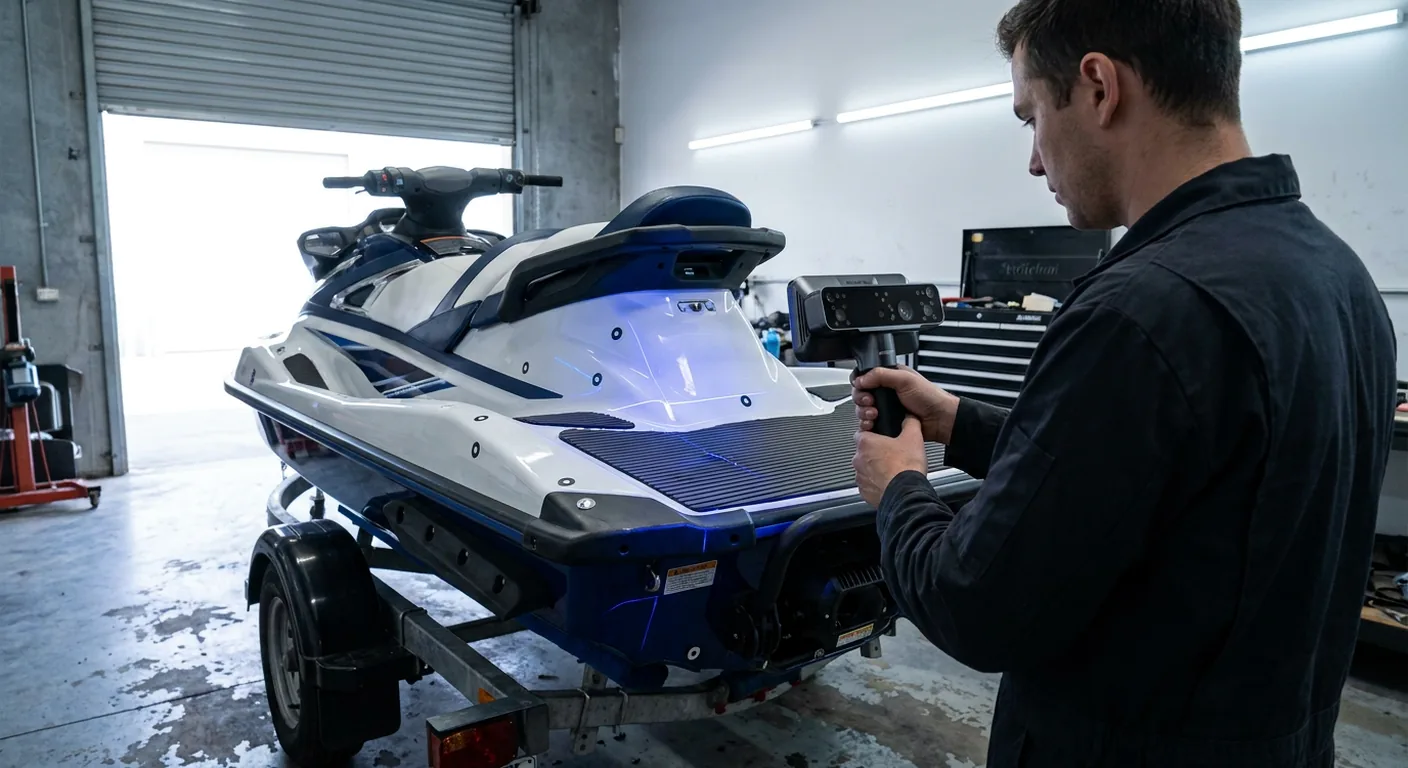
A jet ski with no drawings, and modifications that had to fit exactly
The part: a customer's jet ski, with no drawings for the original bodywork. The problem: they wanted custom modifications that had to fit its real, curved geometry. What we did: scanned the jet ski on the EinScan Rigil to capture its true form, then modelled the modification against the real scan so it fit the actual part, not a guess. The result: modifications designed to the jet ski's real geometry rather than to a measurement that might be out.
Why send your scan to 3D Printing Express
Four things about how this workshop runs a scan job.
One place, the whole job
We scan, reverse-engineer and 3D print in the same building, so you can leave with the finished part rather than a file to take elsewhere.
Genuinely local
Bournemouth and Poole. Walk a part in, or we bring the scanner to large objects on-site.
A 2-hour engineer-reviewed quote
A real engineer reads every enquiry and quotes within 2 hours, before anything is committed. Not a form-bot, not next week.
The file stays yours
Ask for the mesh or the STEP model and keep it: re-order, modify or archive the geometry later without coming back to us.
Got an object you need turned into digital data?
Send a photo or post us the part, and an engineer will review it and quote within 2 hours. Post it and it comes back tracked. There is a £50 minimum order, and one scan is a normal order here.