Small-batch production, 10 to 1,000+ units.
UK-shipped in days. A £50 minimum, no tooling cost, and a real sample to approve before the full batch runs.
50 Google reviewsSmall batch production in the UK: runs of 10 to 1,000+ identical units, no tooling to fund, shipped UK-wide.
A complete small-batch 3D printing service for UK product teams and DTC brands. Test sample first, full batch second, only once you've approved the unit. From product development and CAD design through to print-and-fulfil dispatch, in your choice of engineering materials.
Service details and case studies







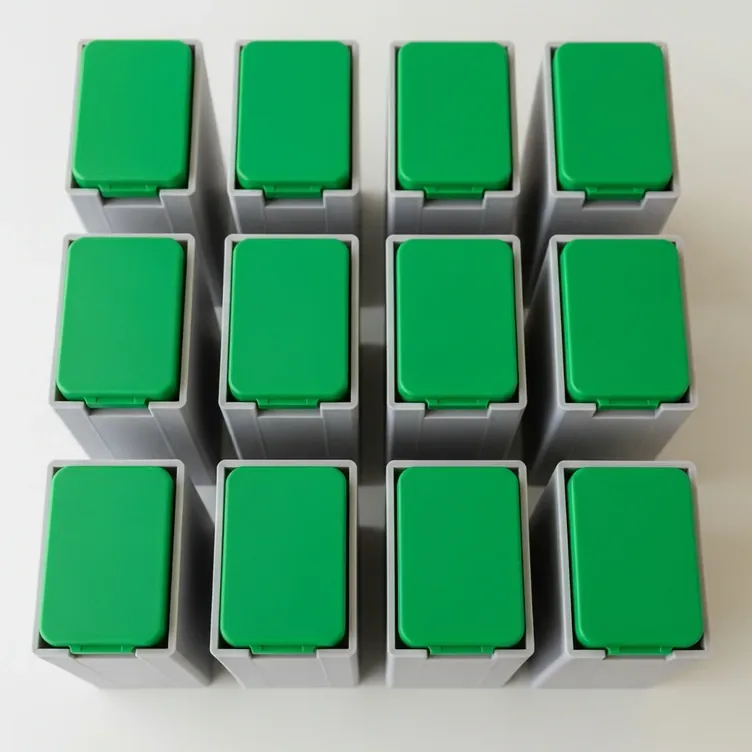
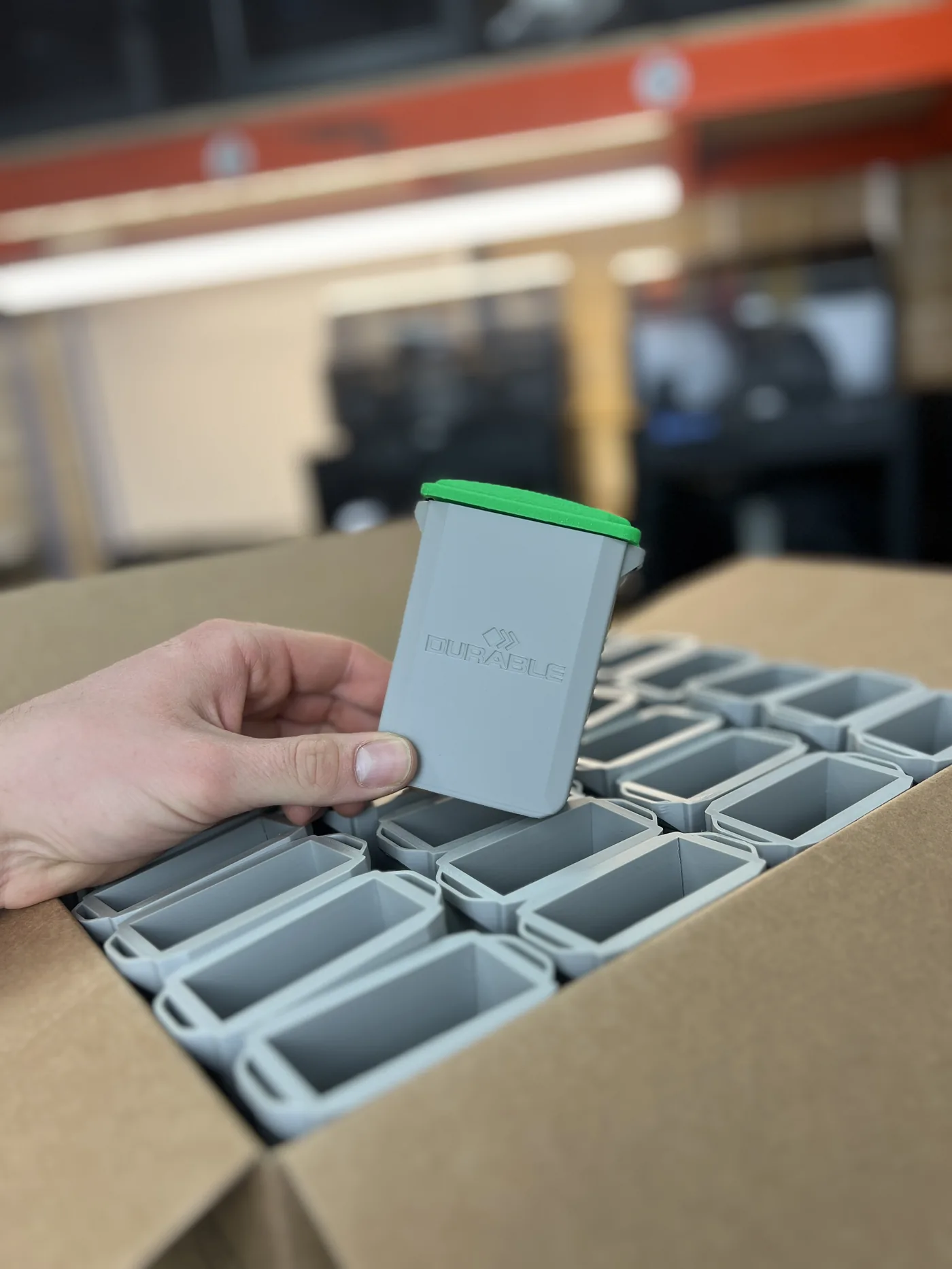
Grey storage bins with green snap-lids · batch run
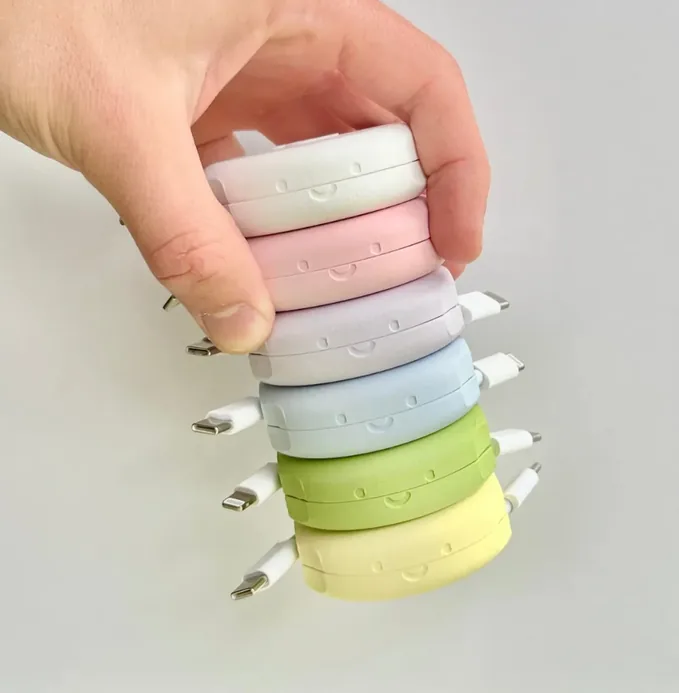
Retractable cable winders · pastel colourway run
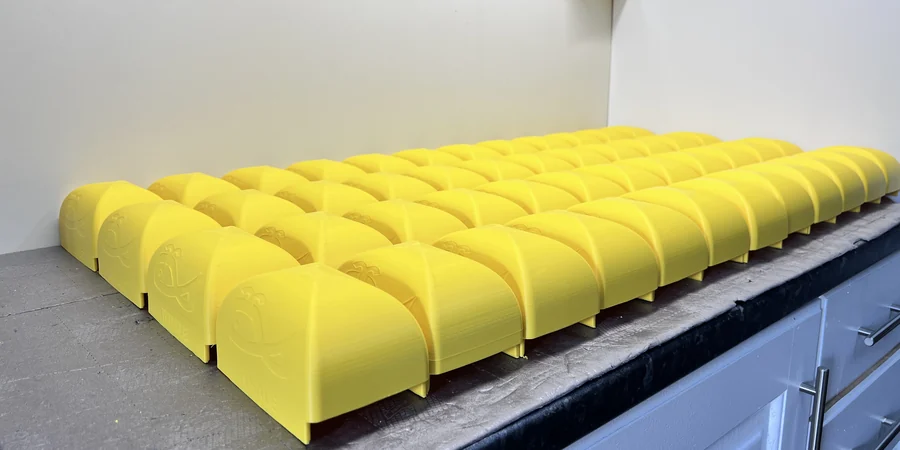
Branded yellow barrier caps · batch run
Small batch production vs prototyping and injection moulding
Three routes to the same finished part. Which one fits comes down to how many units you need and whether the design is settled.
| Prototype shop | 3D Printing Express small-batch | Traditional tooling route | |
|---|---|---|---|
| Typical order | 1 unit | 10-1,000+ units | 500+ units MOQ |
| Setup cost | None | £0 tooling | Paid in full before part one |
| Lead time | 2-5 days | 5-7 working days | 4-8 weeks |
| Design changes mid-run | Not typical | Yes, before batch goes | Expensive retooling |
| Complex geometry | ✓ one-off | ✓ at scale | ✗ mould-limited |
| Good for | Proving a concept | Units 10 to 1,000+ | 1,000+ identical units |
Is small batch production right for your quantity?
Answered at the number you are actually holding, before you commit to a production run. It includes the row where the answer is no.
| Your run size | Our honest answer | Why |
|---|---|---|
| 10 to 50 units | Print it | No tool to fund, so the run does not carry a mould that only pays back at thousands. You approve a test sample first. |
| 50 to 250 units | Print it | The sweet spot. Material, colour and finish are set once on the approved sample; batch consistency comes from repeating that setup, not rebuilding it. |
| 250 to 500 units | Print it | Still no tooling to pay back, and running across several machines keeps the lead time from multiplying with the unit count. |
| 500 to 1,000 units | Print it, and we will flag it if your part is the exception | Part size, geometry and finish now matter more than the unit count. A large or heavily finished part reaches the crossover sooner. |
| Around 1,000+ units | Ask us about a tool | Usually where injection moulding tooling starts to pay back and the unit price at volume beats printing. We would rather say so than take the run. |
Don't have a CAD file? We'll build it.
Send a sketch, a photo, a measurement, or a broken part, and our engineers build the print-ready model for your batch.
CAD design is costed case by case · always agreed in writing first.
How many units before injection moulding is cheaper than 3D printing?
Around 1,000 units, roughly and usually. That is the practical ceiling on low volume production. Below it, printing normally wins: there is no mould tool to pay off first. Above it, the tooling cost spreads thin enough that moulding takes over on unit price at volume.
What moves that number
- Part size & geometry
- Material and finish
- How much post-processing each unit needs
- Whether the design is settled or still moving
A large part with a lot of finishing hits the crossover sooner. A design that might still change pushes it further out, because a revision costs a new file rather than a new tool.
Most printing services will quote you a run at any quantity. That number is where we would tell you to stop and go and get a mould made instead. Close to it? Send the part and we will say which side of the line you are on.
Two shapes of repeat work, and the processes we place elsewhere
Bridge production
A new product being market-tested. You need real parts in customers' hands before committing to a tool, and the design may still move. Every revision costs a new file rather than a new tool.
Call-off supply
An established product, design settled, the same run repeated on a schedule. This is where the retained file earns its keep: a repeat run starts from the approved setup rather than from scratch. For ongoing supply at hundreds of units a month, read low-volume manufacturing, which covers the commercial side: approved supplier questionnaires, batch records and material traceability.
What we run, and what we place
In-house we print in filament and resin. We do not run SLS nylon or multi jet fusion, and we do not print metal. Vacuum casting is a different route again and not one we offer. Metal and powder work goes to a UK partner, and we say which parts are made where.

If you're scaling 20 to 1,000+ units a month
You've moved past prototyping, but injection moulding doesn't make sense yet. Maybe it never will. You want production-grade parts, repeatably, without funding a mould tool first. Not sure where you sit? Read 3D printing vs injection moulding for the crossover, or is 3D printing strong enough for functional parts if durability is the question.
- Product developers + DTC brands shipping 50 to 500 units a month, iterating on design month-to-month.
- Event and campaign buyers needing 200+ branded pieces to a fixed date.
- Bridge manufacturing · producing real units while a mould is being cut, so sales don't stall.
Consistency across the batch
One spool per batch. QC on unit 1, midpoint, and last unit, so drift is caught inside the run rather than after you have opened the box.
Parallel production capacity
Multiple printers running in parallel mean a batch lands far sooner than a single-printer shop could manage. You get the delivery date agreed before the batch starts, not after it.
No tooling tax
You pay per unit, not per project. Change the design between batch 1 and batch 2 with zero retooling cost. Try that with injection.
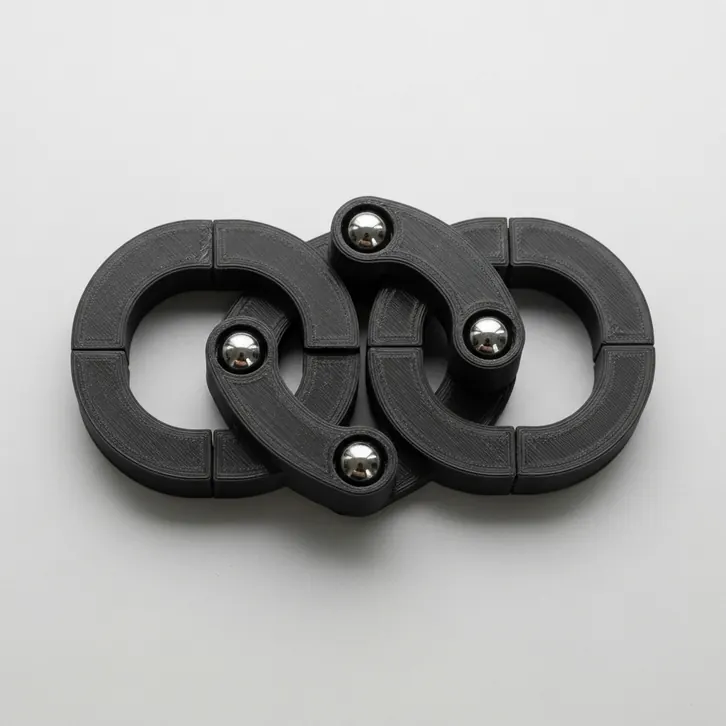
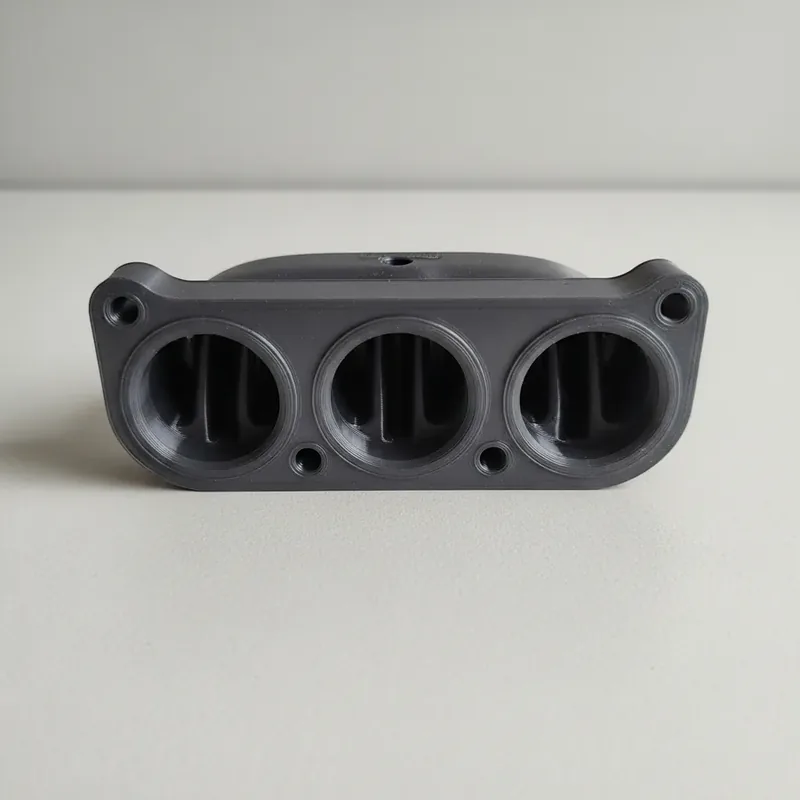
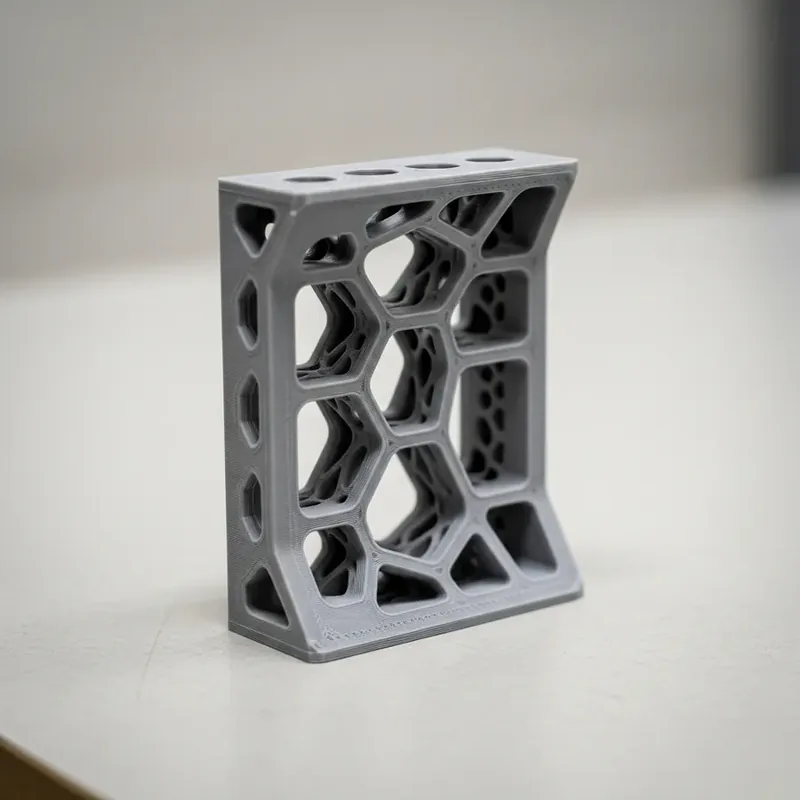
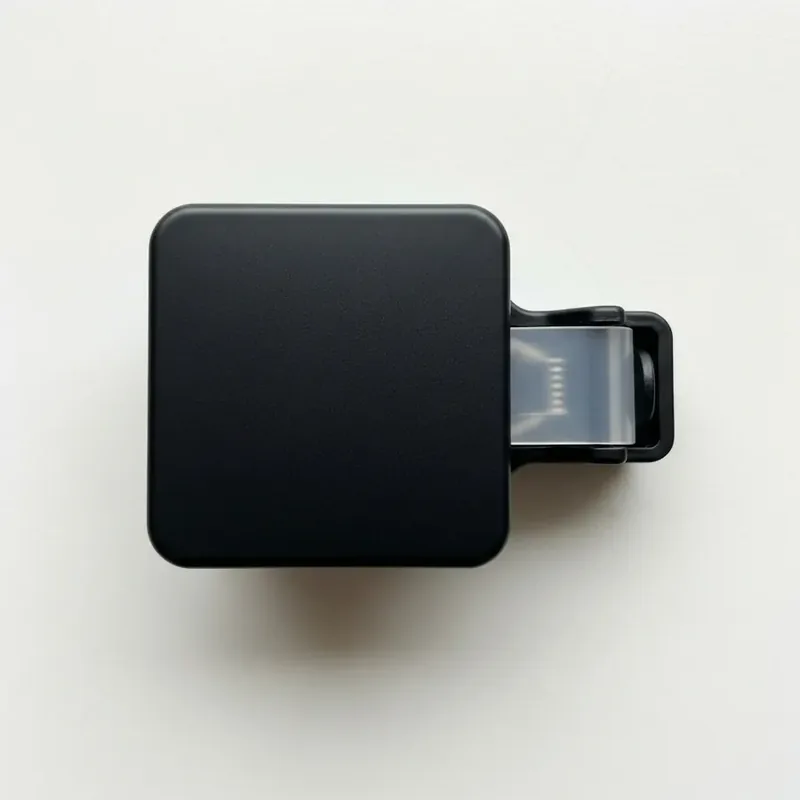
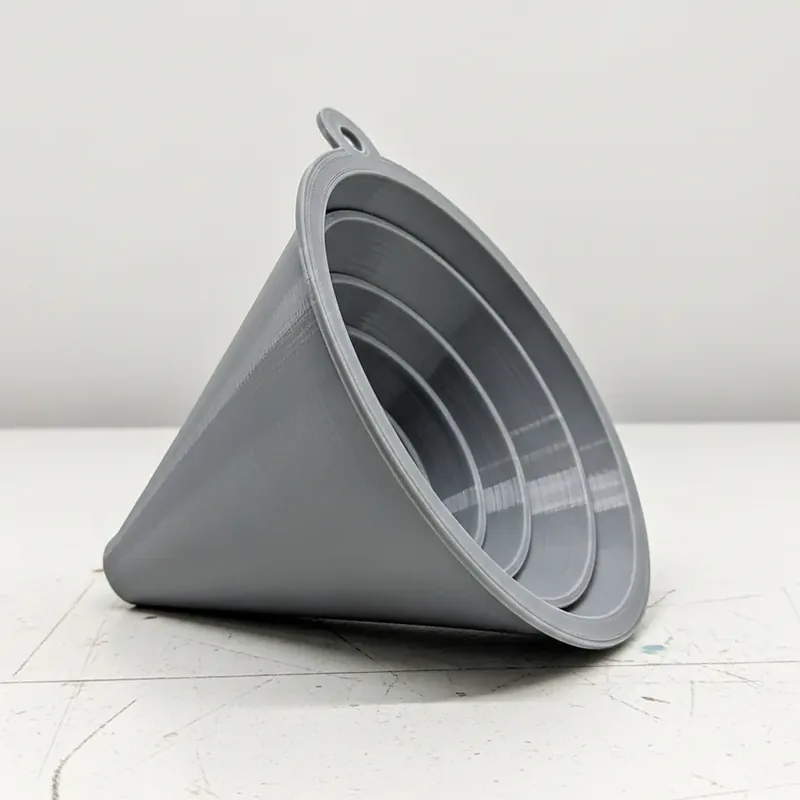
Some designs aren't a "cheaper mould" question. They're a "no mould can make this" question.
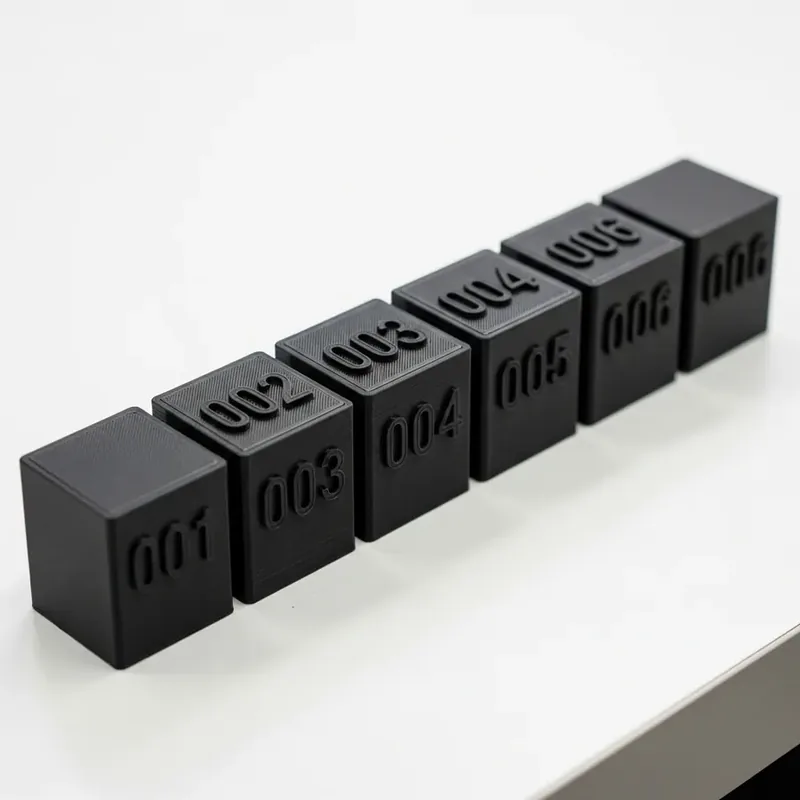
Injection moulding needs parts to release from a cavity. That single physical constraint rules out a huge chunk of modern design: interlocked mechanisms, sealed internal channels, lattice infills, variable wall thicknesses, one-piece flexures. The parts below aren't exotic. They are ordinary 3D printing, and they are the shapes a mould tool cannot release.
If your design has any of these features, you're not choosing between 3DP and moulding. You're choosing between 3DP and not making the product.
Parts injection moulding cannot make
- 1
Print audit & optimisation
We adjust your file for batch production · orientation, supports, wall tuning. No CAD yet? Send a photo, a sketch, or a sample part · we can work from any of them.
- 2
Spec confirmation
Colour, material, finish, tolerance. All locked in writing before we touch a printer. If any of it matters, we check with you.
- 3
Test sample out ASAP
One unit shipped to your desk. Hold it. Test it. Use it. Nothing else prints until you've approved.
- 4
Full batch & dispatch
Only after your green light. QC on first, midpoint, last unit. Free next-day UK delivery.
No mould tool to fund · the tooling route is paid for in full before the first part exists.
A £50 minimum order, no setup fee, no mould to pay for. You pay per unit, plus material and any post-processing.
What drives the final number
- Unit count (volume changes the rate)
- Material choice
- Part size & geometry
- Print quality + layer height
- Post-processing (sanding, paint, assembly)
- Deadline (rush = priority queue)
Standard
Our default lead time: 5-7 working days, whatever the order size. Every job gets engineer review, test sample, and QC.
Fast Track
Your job moves up the queue. Ready in 3-5 working days while still fitting around our regular schedule.
Priority
Your job takes priority over Standard work: 1-2 working days, and it can start printing the same day you sign off on the spec.
Express Delivery
We pause other work to get yours out first. As little as same day from brief to dispatch · the option for "it has to be there by Thursday" deadlines.
Every batch uses one spool across the run. QC on unit 1, midpoint, and last unit. Our test-sample step means you've already approved unit 1 before the rest are printed.
FDM holds practical, repeatable tolerances on most features · fine for the great majority of functional parts. We spec the tolerance target with you up front, and if a feature needs a tighter band than FDM can reliably hold we'll tell you straight before we take a penny.
Send it anyway. We re-engineer from a photo, sketch, or sample part in-house. We'll quote the CAD work separately: CAD design is costed case by case.
NDAs signed before the file lands, and they cover the whole job. Everything we print is printed on our UK floor by our own team. If a job needs a process we do not run in-house, the part goes to a named UK partner under that same NDA, we tell you before it happens, and nothing goes overseas.
Yes, and we'll hand over the files clean. Batch 3D printing is often the bridge while tooling's being cut. Nothing about our workflow locks you in.
We keep the print profile on file, so re-runs skip the audit step and come back faster and cheaper. If you want a standing retainer on monthly quantities, we'll set it up.
Test sample before the batch
You see, test, and approve one real unit before a single other part is printed.
We'll tell you when not to print
If your run is past the point where a mould tool wins on unit price, we'll say so rather than take the job.
A quote within 2 working hours
Send a brief and you'll have an engineer-reviewed quote within 2 working hours, read by our engineers, not a form reply.
Got a batch brewing? Send us a file, a target unit count, and a deadline. We'll come back within 2 working hours with a price or a price range and a plan.
You'll hear from our team · not a form reply. That's the whole process.