Which 3D Printing Process Should You Use — FDM, SLA or SLS?
Page sections
Details
Start from the job, not the machine. Choose FDM for tough functional plastic parts, prototypes and low-volume production; SLA for fine cosmetic detail and smooth surfaces; SLS for strong, complex nylon parts and nested batches. We run FDM — the best fit for most functional work — and tell you honestly when resin or powder is the right answer instead.
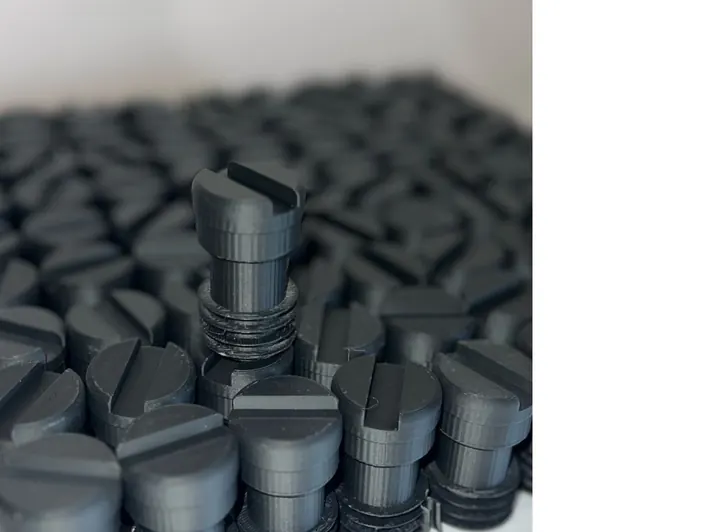
Which 3D printing process is right? The honest answer is "it depends on the part" — so here's exactly what it depends on.
The three main types of 3D printing you'll meet for plastic parts — FDM, SLA and SLS — are built for different jobs. This is an engineer's plain comparison of how each one works, a side-by-side table of cost, strength and finish, how to choose from what your part has to do, and an honest note on where FDM isn't the right tool. We run FDM and we'll point you elsewhere when we should.

The honest way to pick a 3D printing process
Most "which process" guides start from the technology and work towards your part. That's backwards. The right starting point is what the part actually has to do — carry a load, look perfect, survive heat, exist as one prototype or a thousand units — and the process falls out of that. Pick the technology first and you end up paying for capabilities you don't need, or printing a load-bearing part in a process that was never meant to carry load.
We run FDM only, so we have an obvious bias — and we'd rather be straight about it than pretend otherwise. For the large majority of functional plastic parts FDM genuinely is the best value and gives one of the widest engineering material ranges we can offer. But there are real jobs where SLA resin or SLS nylon is the better tool, and when your part is one of those, we'll tell you and refer you on. That honesty is the whole point of this page.
The three processes — how each one builds a part
FDM, SLA and SLS all build a part layer by layer from a digital file — but the way they do it gives each one a different set of strengths, weaknesses and costs.
- 1
FDM — melt and lay down filament
Fused deposition modelling melts a thermoplastic filament and draws each layer as a molten bead, building the part up from the bed. It's the workhorse: cheap to run, low setup per part, and — crucially — it runs true engineering plastics from PETG and ABS up to carbon-fibre nylons that replace machined metal. Parts are tough and functional with slightly visible layer lines. This is what we do.
Best for · tough functional and end-use plastic parts, prototypes, low-volume production - 2
SLA — cure liquid resin with light
Stereolithography cures a tank of liquid photopolymer resin layer by layer with a light source, giving extremely fine detail and a smooth, almost moulded surface straight off the machine. The trade-off is that standard resins are hard but brittle, many degrade in UV, and parts need washing and a UV cure afterwards. It shines where appearance and crisp detail matter more than mechanical load.
Best for · fine cosmetic detail, smooth surfaces, masters, dental and jewellery models - 3
SLS — sinter nylon powder with a laser
Selective laser sintering fuses fine nylon powder with a laser, with the surrounding loose powder supporting the part as it builds. That means strong, isotropic-ish nylon parts, full design freedom and no support marks — but at a high machine and setup cost, so it earns its keep when you nest many parts into one powder bed. A genuinely strong option for complex nylon parts and batches.
Best for · complex strong nylon parts, no-support geometries, nested batches
How to choose — four questions about your part
You don't need to know the technology to pick the right one. Answer these four questions about what the part has to do, and the process almost picks itself.
For the large majority of functional plastic parts these four questions land on FDM — and where they don't, we'll say so before you commit a penny.
Load or looks?
Does it carry a real-world load, or just need to look right? Load points to FDM or SLS; pure appearance and fine detail point to SLA. Most working parts carry load.
What material?
Tough engineering plastics and composites are FDM's home; fine detail in resin is SLA; strong complex nylon is SLS. The material need usually decides the process.
What volume?
One-offs and low volume favour FDM's low setup cost. Larger nested batches of nylon can favour SLS, whose per-part cost falls as you fill the bed.
What finish & tolerance?
Glass-smooth, ultra-fine detail straight off the machine is SLA's strength. FDM and SLS finishes are functional and can be post-processed where it matters.
FDM vs SLA vs SLS — side by side
The honest comparison at a glance. Use it to narrow down, then send us the part and we'll confirm the right call — including when it isn't FDM. We print Polymaker and Fiberon filament exclusively, FDM only.
| Factor | FDM (what we run) | SLA (resin) | SLS (powder) |
|---|---|---|---|
| How it works | Melts & lays down thermoplastic filament, layer by layer. | Cures liquid resin with light, layer by layer. | Fuses nylon powder with a laser; loose powder supports. |
| Strength & toughness | High — runs tough engineering plastics & carbon-fibre composites. Anisotropic, so orientation matters. | Hard but brittle; standard resins crack rather than flex and can degrade in UV. | Strong, fairly even strength in all directions; excellent for functional nylon. |
| Material range | Broad FDM engineering range — PLA, PETG, ABS/ASA, PC, nylon, PA12-CF, PPS-CF. | Many resins (tough, flexible, castable) but narrower true-engineering choice. | Mostly nylon (PA11, PA12) and filled nylons. |
| Surface finish | Functional; slight layer lines; post-processable. | Best of the three — smooth, fine detail straight off the machine. | Slightly grainy/matte; no support marks. |
| Cost profile | Lowest for one-offs & low volume; little per-part setup. | Mid — resin & wash/cure post-processing add cost. | High setup; cost falls when the bed is nested full. |
| Best for | Functional & end-use parts, prototypes, brackets, housings, low-volume production. | Cosmetic detail, masters, dental/jewellery models, fine miniatures. | Complex strong nylon parts, no-support geometries, nested batches. |
The honest summary: FDM is the best value and one of the widest engineering-material ranges for tough functional parts — which is most of what people actually need. SLA wins on cosmetic detail; SLS wins on complex strong nylon at batch. Pick from the job, and most functional jobs land on FDM. See our cost guide for what actually drives the price, and is 3D printing strong enough for how FDM strength really works.
Where FDM fits — bridging the gap to injection moulding
Choosing a process isn't only about one part — it's about where you are in a product's life. FDM is the process that lets innovators launch and iterate without the massive upfront cost of injection-mould tooling, then scale into low-volume production on the same parts.
Prototype and iterate, then produce
FDM is cheap and fast to change, so it's the right process while a design is still moving — every revision is a new file, not a new tool. The same process then carries you into small-batch production of 1 to 1,000 units with a £50 minimum order, and into product development cycles where you're proving a part before committing to volume.
When moulding finally wins
Once a design is frozen and you need many thousands of identical parts, there's a crossover where injection moulding becomes the better buy — and we'll flag it rather than print past it. See 3D printing vs injection moulding for where that line sits. FDM gets you to that decision having spent the least on the way.
When FDM isn't the right process — the honest limits
We run FDM, but it isn't the answer to everything — and we'd rather point you to the right tool than take a job it doesn't suit.
- 1
Ultra-fine cosmetic detail
If you need a glass-smooth surface or crisp, tiny detail straight off the machine — jewellery masters, dental models, highly detailed miniatures — SLA resin is the better tool. FDM finishes are functional, not flawless, so for appearance-critical work we'll point you to resin.
- 2
Complex strong nylon at batch
For many intricate nylon parts with no supports and full design freedom — especially in a nested batch — SLS often beats FDM on geometry freedom and even strength. When that's genuinely your part, we'll say so and refer you to a powder bureau.
- 3
Metal, and food-safe
Metal parts mean DMLS or machining, not any plastic process — that's a referral. And we do not offer food-safe printing, full stop. For tough functional plastic parts, prototypes, fixtures and low-volume production, none of these limits apply — and where they do, we say so up front.
Tell us what the part has to do — we'll tell you the right process.
That's the difference between sending a file to a print farm and sending it to us. An engineer reads what the part has to do, picks the process and material against that, and is honest when the answer isn't FDM. The review is free and comes back inside 2 hours.
What the engineer review decides
- Is FDM the right process at all? If your part genuinely needs resin detail, sintered nylon or metal, we say so and point you on — no upsell, no printing past the right answer.
- The right material rung. Within FDM, the lowest grade that survives your load — PETG for a working all-rounder, PA12-CF where it replaces metal. Browse the materials hub.
- Orientation and walls to the load. Because FDM is anisotropic, the part is oriented so the layers run the strong way, with walls where the stress concentrates.
- Where you are in the journey. Whether this is a prototype to iterate, a small-batch run, or near the moulding crossover.
The lesson in one line: choose the process from the job, not the job from the process. Tell us what the part has to do, and an engineer will pick the right one — even when that means sending you elsewhere.
Send the part and the job. We'll tell you which process fits — even if it's not ours.
An engineer reviews your file against what it has to do and returns a fixed UK quote within 2 hours — and tells you honestly if SLA, SLS or another process is the better answer. Rated 4.9★ across 48 Google reviews.