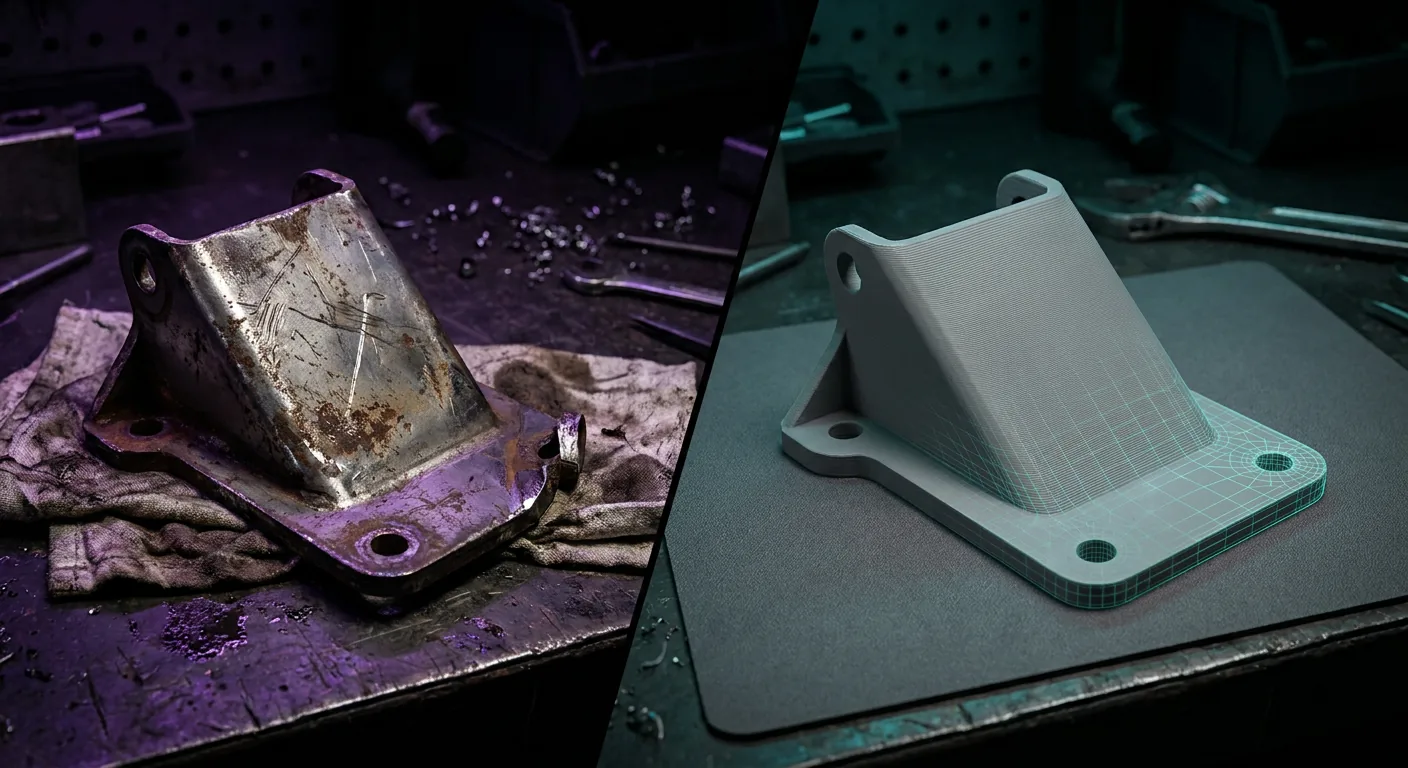
Reverse Engineering Service: From a Physical Part to an Editable CAD Model
Our reverse engineering service turns a physical part with no drawings into a clean, editable CAD model you can print, modify or re-order. Post the part or a clear photo and an engineer reviews it and quotes within 2 hours. Not every job needs a scanner: simple parts are often reverse engineered from measurements alone.
A UK reverse engineering service, engineer-reviewed in Poole
Built for a part with no drawings: obsolete, discontinued, or simply undocumented. Some people call this scan to CAD, others call it part to CAD; both describe the same thing, turning the physical object into a file you can use. We capture the geometry, by scanning, by manual measurement, or both, and rebuild it as parametric CAD you can print or re-order. Just need the shape captured rather than rebuilt? See our 3D scanning service. Nothing to copy yet? That is our CAD design services.
9,500+ parts shipped from 3D Printing Express this year · UK reverse engineering service, Poole
ACROSS THE BUSINESS
9,500+
parts shipped this year, all services
SPEED
72 hrs
time to receive your part
COMMUNICATION
1h 46 min
average first reply
Year-to-date, 3DPE internal data, updated daily, last verified .
Real enquiries: how we scope a reverse engineering job
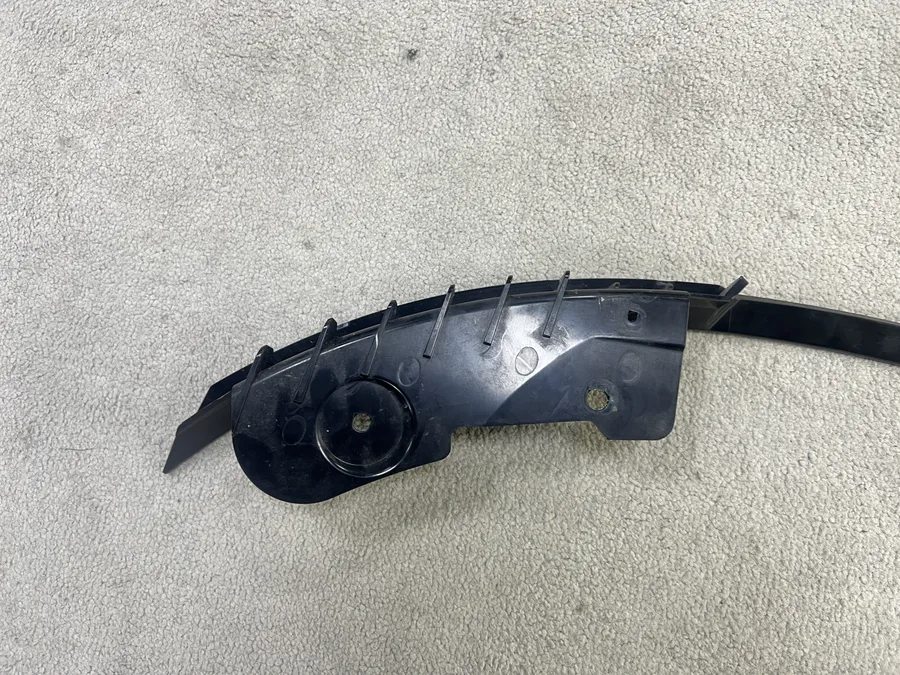
A Citroen Berlingo mirror trim, assessed for a hand-built mirror copy
The enquiry: a right-hand trim piece for a Citroen Berlingo, with no drawings to work from and the vehicle off the road waiting for it. The client had the intact left-hand original to copy from. Our assessment: at 59cm the part is too long for a single print, so it would need modelling in sections and bonding after printing. Scanning would have produced a messier mesh than it saved at this size and surface finish, so the recommended route was a hand-built mirror copy from photos and measurements against the real left-hand part, no scan involved.
CARAVAN
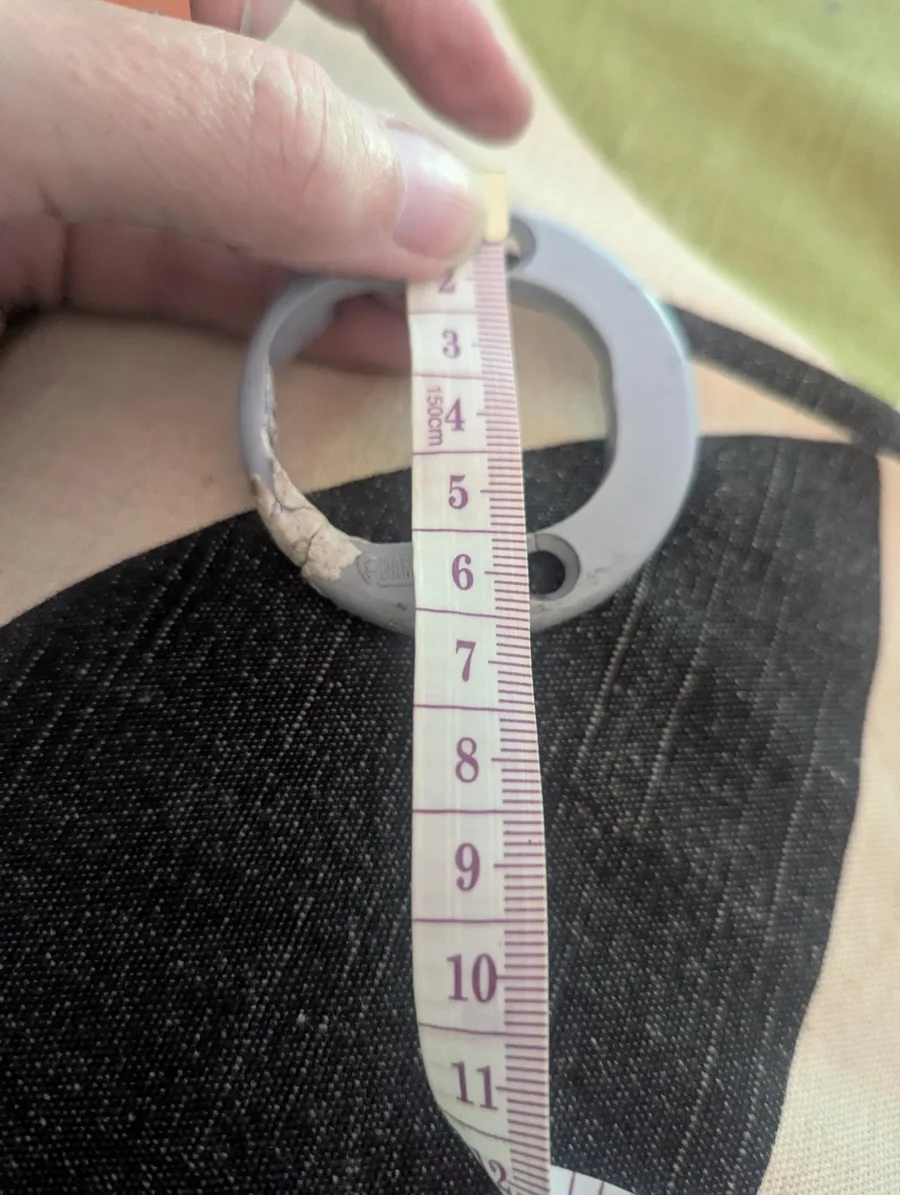
A Fiamma awning end piece, refined against the original
The end piece had cracked. We reverse engineered it and worked through several CAD variations, mirroring the geometry to match the original and adjusting each side in turn. Fit-testing each variation against the physical part is the next step once the prints are back.
CUSTOM PART
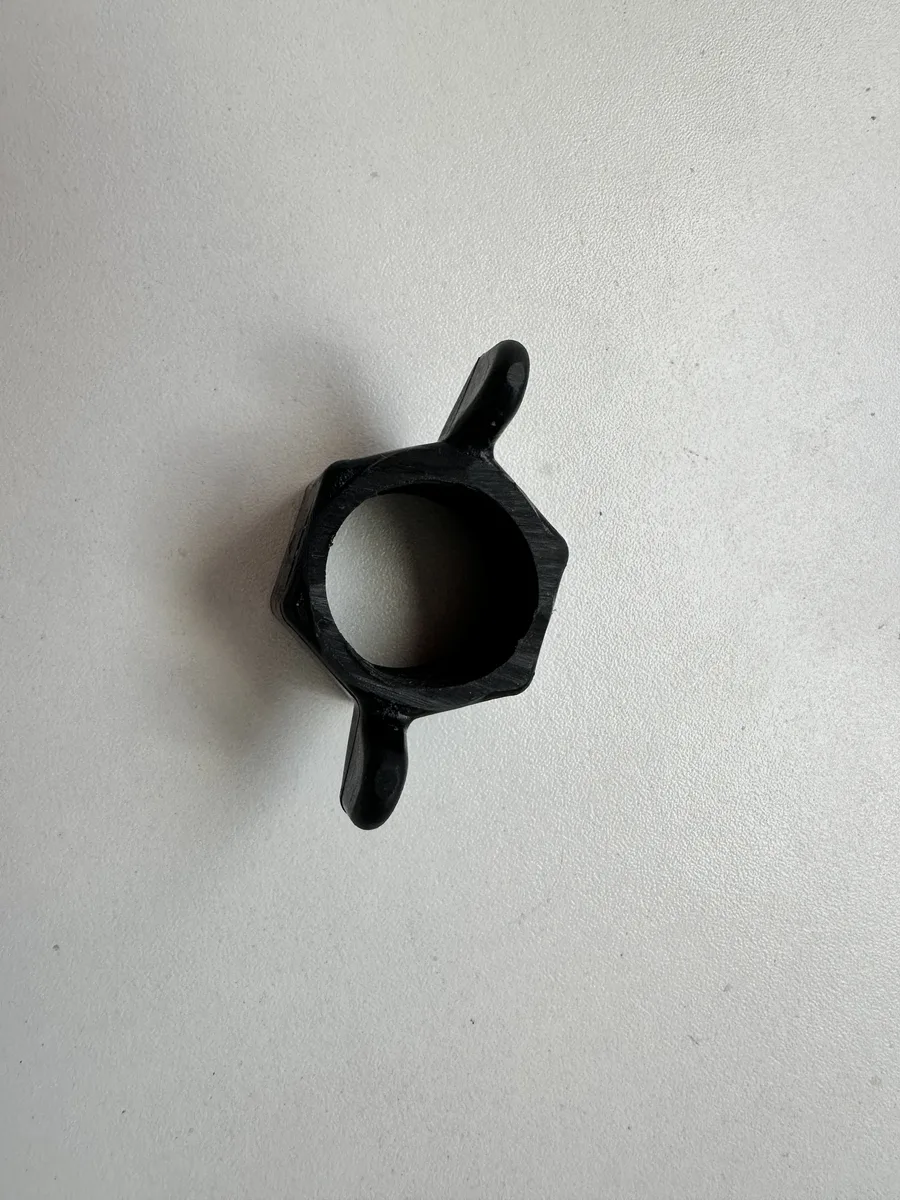
A wing nut for Aquatiere, redesigned for print
A batch of 100 custom wing nuts, replicating an existing OEM part. Copying the original's thin wings exactly would snap them under hand-tightening torque, so the design phase reverse engineers the profile from the client's photos and stated thread size, with the wings deliberately thickened in CAD to survive printing.
EVERYDAY
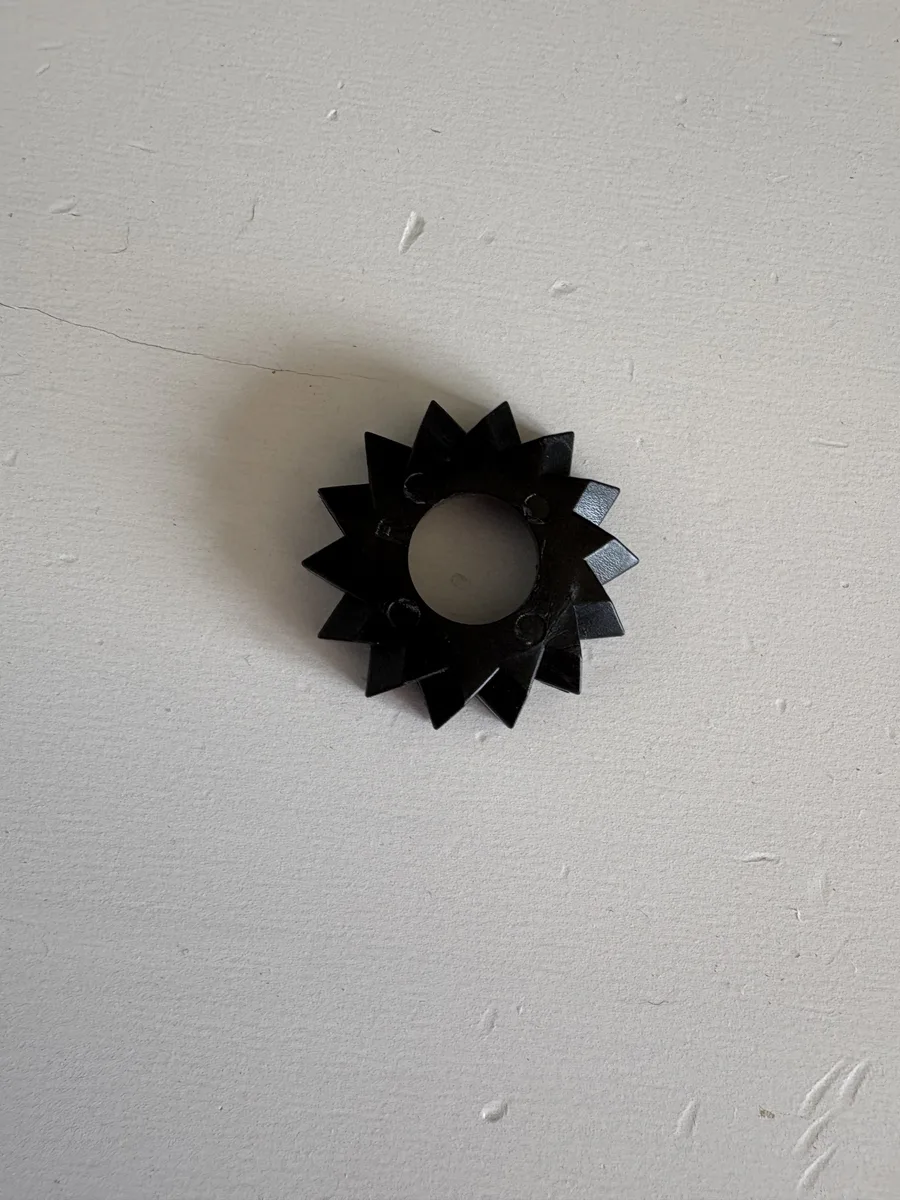
A pram fold cog, quoted from an intact twin
One folding-mechanism cog needed replacing, but an identical cog was still fitted on the pram's other hinge. Rather than guess at the damaged one, we quoted to reverse engineer it from the intact twin once posted to us: £175 for design and two printed units, one spare included.
What a reverse engineering service actually gives you
A reverse engineering service starts with the same problem every time: a part exists, but the drawings do not. The original maker is gone, the CAD was never kept, or the only record left is the worn component in your hand. We capture the object's real geometry, by 3D scanning, by hand measurement, or a mix of both, and rebuild it as a clean, editable CAD model an engineer can actually work with, not just a copy.
The deciding question is simple: are you copying or fitting to something that already exists, or inventing something new? If it is the former, you are reverse engineering.
Scanning, manual measurement, or design from scratch: how we choose
Not every job that involves an old part needs the same route, and the kit is only half the decision. For complex or organic shapes we scan on a Shining 3D EinScan Rigil (resolution up to 0.05mm on Shining 3D's published figures), markerless on most parts. For flat faces, straight edges and a handful of key dimensions, calipers and a clear photo are often faster than a full scan, and skip the mesh-cleanup step entirely. Some jobs use neither in isolation: even on a scanned part, bolt patterns, mating faces and mounting points are measured by hand, because that is what decides whether a reproduction fits.
When to reverse engineer by scanning versus by measurement versus designing from scratch.
Your situation
Best route
Why
Complex organic shape, must match exactly (trim, housing, contour)
3D scan + reverse engineer
Freeform geometry can't be captured accurately by hand measurement: scanning is the only faithful route.
Flat faces, straight edges, a handful of key dimensions
Reverse engineer from measurements
A bracket or plate built from planes and holes redraws faster by hand than it scans.
Part fits existing hardware you can't change
Reverse engineer the interface
The mating features must be captured from the real assembly so the new part fits first time.
Working from a brief or a sketch, no object to hand
There's no original to recover the geometry from: a design brief, not a reverse-engineering job.
The Citroen Berlingo mirror trim shown further up this page sits in row two: the recommended route was measuring and redrawing by hand, no scan at all, because scanning genuinely was not the faster or better fit for that shape. For a scanned part, deviation checking against the raw scan is what keeps the rebuilt model faithful before anything is printed; we don't issue a certificate of conformance as standard, but every critical dimension is confirmed with you first.
What we capture and rebuild reliably
Mirroring from an intact opposite-hand original. The Berlingo mirror trim above was scoped to be built from a good left-hand part, no scan and no right-hand reference needed.
Copying an intact twin instead of guessing at a break. The pram cog above was quoted on reverse engineering the identical undamaged cog still fitted on the pram's other hinge, once posted to us, rather than reconstructing the damaged one.
Iterating against the physical part. The awning end piece above is going through several CAD variations, each one mirrored or resized from the last and checked against the original.
A STEP file you can still edit, not a locked mesh: the difference between a scan and a model an engineer can dimension and change.
Where judgement is doing the work
Cavities and sealed assemblies. If a scanner or a caliper cannot reach a surface, it may need sectioning first, or may not be recoverable without the original drawing.
The print sets the final tolerance, not the capture. FDM suits most fit-and-function parts; our in-house Formlabs SLA printer holds a tighter tolerance where fine detail matters, and we tell you which your part needs.
A badly degraded original. Past a point, we are rebuilding what the part was designed to do rather than tracing what is left of it, and we flag exactly where that line was crossed.
Material is a separate decision from geometry. A scan or a measurement tells us shape, never what the original was moulded or machined from, so material is something we recommend, not something we copy.
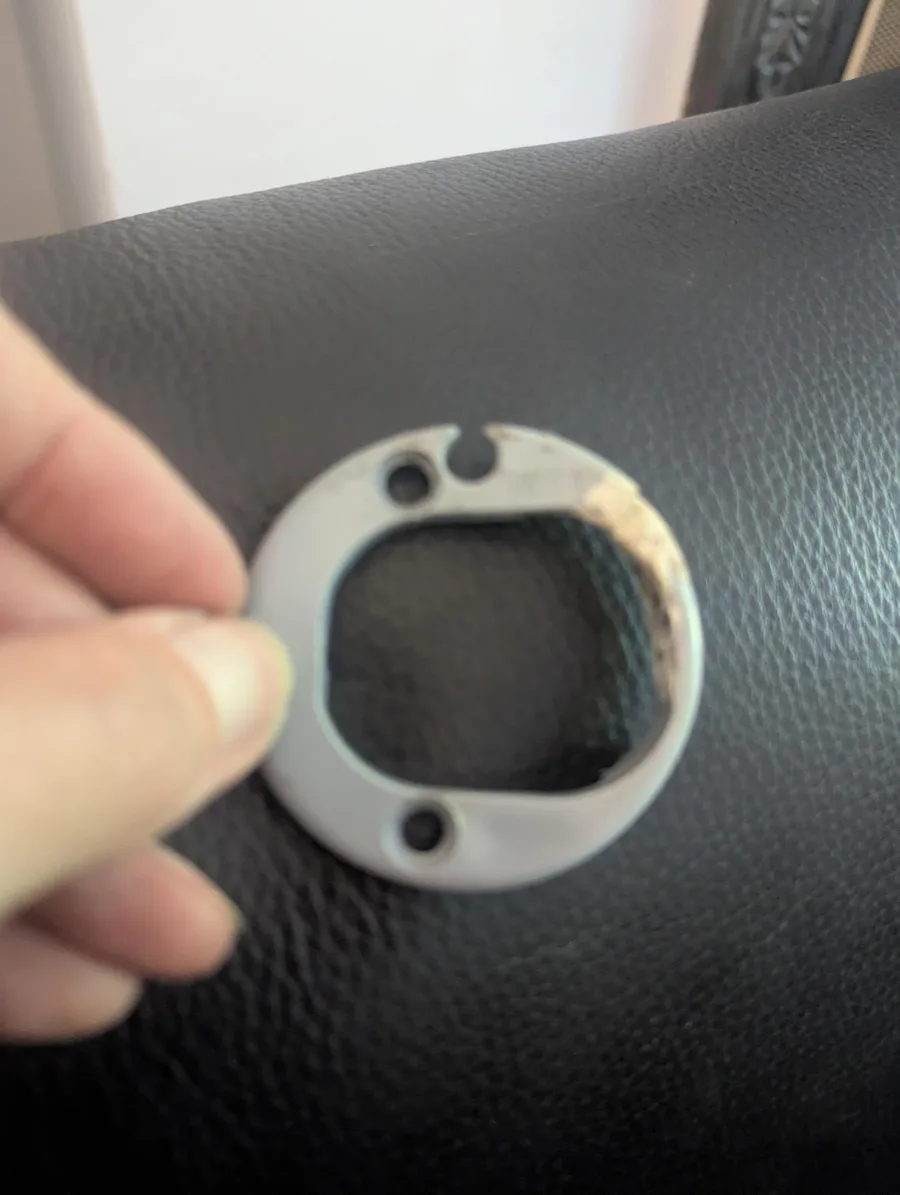
This is the awning end piece pictured further up this page: the chip in it is exactly the kind of gap our rebuild has to close, and why we show you the reconstruction before it goes anywhere near a printer.
When you need a reverse engineering service
Obsolete and discontinued parts
No longer made and no aftermarket supply. You have the broken or worn original: we recover the geometry and reproduce it, exactly what this service is built for.
Legacy components with no drawings
Industrial machinery, plant and equipment running on parts whose CAD was never kept, or never existed. We rebuild a model so the part can be reordered on demand instead of hunted down.
Fit-to-existing parts
A new part has to mate with hardware you cannot change: a bolt pattern, a housing, a mounting face. We capture those interfaces directly from the real assembly so the replacement fits first time.
Restoration and classic vehicles
Classic-car trim, knobs, brackets and interior fittings long out of production. Send the one surviving original; we reverse engineer it and reproduce the set, original returned tracked.
How reverse engineering works with us
Recovering a part you can't buy any more shouldn't be complicated. Four steps:
1
Tell us what the part has to do
Send a photo through the quote form along with what the part actually needs to achieve: what it bolts to, what it has to survive, and whether an intact mirror-image original exists. That decides the route before anything is measured.
2
We capture and measure
Scan, hand measurement, or both, depending on the part. The original goes back to you tracked.
3
We rebuild the CAD
An engineer turns the captured data into a clean, editable model, reconstructing any worn or missing geometry and confirming critical dimensions with you.
4
Print or hand over the model
We print the replacement in FDM or SLA, matched to the job, or deliver the STEP model so you can re-order and modify it yourself. Your call.
An engineer reads every enquiry first, and will say plainly if your part is a CNC or metrology job instead, usually within 2 working days. The work itself, scanning, measuring, modelling and printing, happens under one roof in Poole: a short drive if you are near Bournemouth or the rest of Dorset, a tracked parcel if you are anywhere else in the UK.
From a recovered part to a production run
A reverse-engineered model earns its keep beyond the first replacement. Once it exists as a proven, dimensioned file, the same tooling-free route into small-batch production is open for 10, 100 or 1,000+ units, because the design has already been checked against a real object rather than a drawing on paper.
The model is yours to keep, not ours. Nobody else has to lose the drawings on this part twice: hold the STEP file and re-order it whenever you need to, change it as the application changes, or park it in your own archive against the day the physical original finally gives out.
And if the part you're recovering needs more than reproducing, a redesign, a material upgrade, a fix for the flaw that broke the original, that crosses into product development. We'll tell you when you're there.
QUOTE IN 2 HOURS · PART RETURNED TRACKED · £50 MINIMUM ORDER
Got a part you can't buy any more?
Send a photo or post us the original, and an engineer will review it and quote within 2 hours. Your part comes back tracked. There is a £50 minimum order, and we will take on a single part.
If you have a part with no drawings and want a straight answer: this is exactly the job a reverse engineering service like ours is for. We are a UK company, based in Poole, that captures the part, rebuilds it as CAD, and prints the replacement, all in one place. Send a photo through the quote form and an engineer will tell you honestly whether we're the right fit and what it will cost, within 2 hours.
A reverse engineering service turns a physical part into a clean, editable CAD model, most often because the part has no drawings: it is obsolete, discontinued, or the original documentation was never kept. We capture the geometry, by 3D scanning, hand measurement, or both, then rebuild it as a dimensioned model you can print, modify or re-order from. It is the step that turns an object into something an engineer can actually work with.
Not every job needs a scanner. Complex or organic shapes are usually scanned and rebuilt. Simple prismatic parts, boxes, plates and brackets with measurable features, are often reverse engineered from calipers and a photo alone, which can be quicker than a full scan. We plan jobs both ways: for a Citroen Berlingo mirror trim enquiry shown further up this page, the recommended route was photos and measurements with no scan at all, because scanning was not the right tool for that part. The engineer reviewing your enquiry tells you honestly which route fits.
Scanning is the measurement step: it records a part's surfaces as a mesh, a shape with no engineering intelligence behind it. Reverse engineering is the redesign step on top: reading that mesh, or the part itself, and rebuilding it as a parametric model with real features, holes, fillets, wall thickness, that a CAD package actually understands. A mesh can be printed as-is; only a reverse-engineered model can be edited, dimensioned, or handed to a machinist.
It depends on the part: a simple bracket reverse engineered from measurements costs less than a complex organic shape that needs a full scan and rebuild. There is a £50 minimum order. Send a photo through the quote form and an engineer will give you a clear price within 2 hours, once they have seen what the part actually needs.
You get a quote within 2 hours of an engineer reviewing your enquiry. The reverse engineering and print itself typically takes a few days depending on complexity and whether the part needs posting to us first. If we genuinely cannot reproduce your part well, we tell you within 2 working days and point you to a CNC or metrology specialist where that fits better.
Yes, obsolete and discontinued parts are exactly what this service is built for. Post the broken or worn original and we choose a material suited to the job and print the replacement. When one side has failed but an identical part survives elsewhere on the same assembly, as with the pram cog on this page, copying that intact twin is often the more reliable route than reconstructing the damaged one.
Only for anything beyond a simple, flat-faced shape. Photograph it next to a ruler or calipers first and send that through the quote form; the engineer reviewing it will say plainly whether the photo is enough or whether the part itself needs to travel to Poole. When it does travel, it comes back to you tracked once we are done.
We print reverse engineered parts in FDM or SLA resin, whichever suits the job. FDM covers most fit-and-function parts; SLA on our in-house Formlabs printer gives a tighter tolerance for fine detail. Accuracy on the geometry side comes down to how the interface was captured: a gear tooth or a bore that has to mesh or seat correctly is often better measured by hand against a real reference part than scanned, and the engineer scoping your part will say which applies.
Both are available, and the default is a printed replacement part. Ask for the model too and you get a STEP file: drop it into Fusion 360, SolidWorks or whatever your team already runs, and it is yours to re-order, tweak or shelve. A formal engineering drawing can be produced alongside it if you need one. Say which you want at the quote stage.