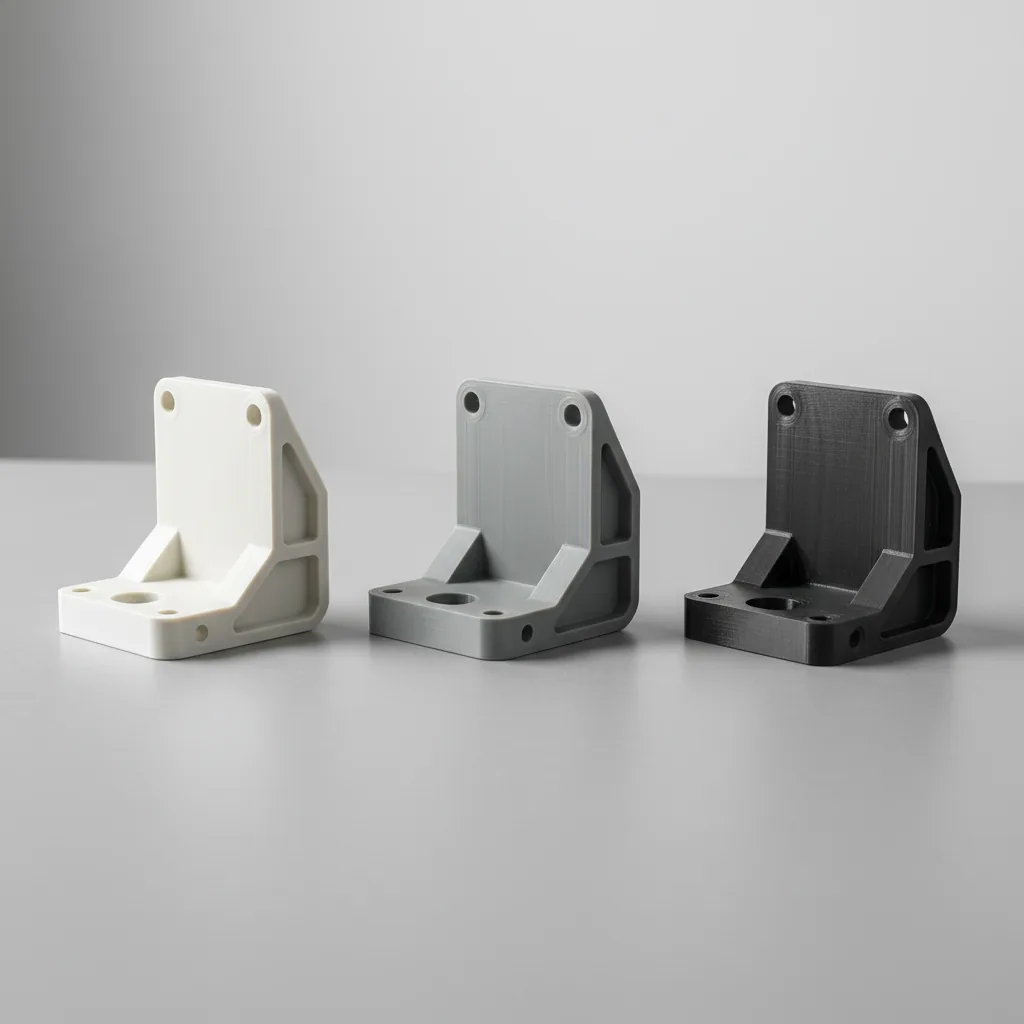
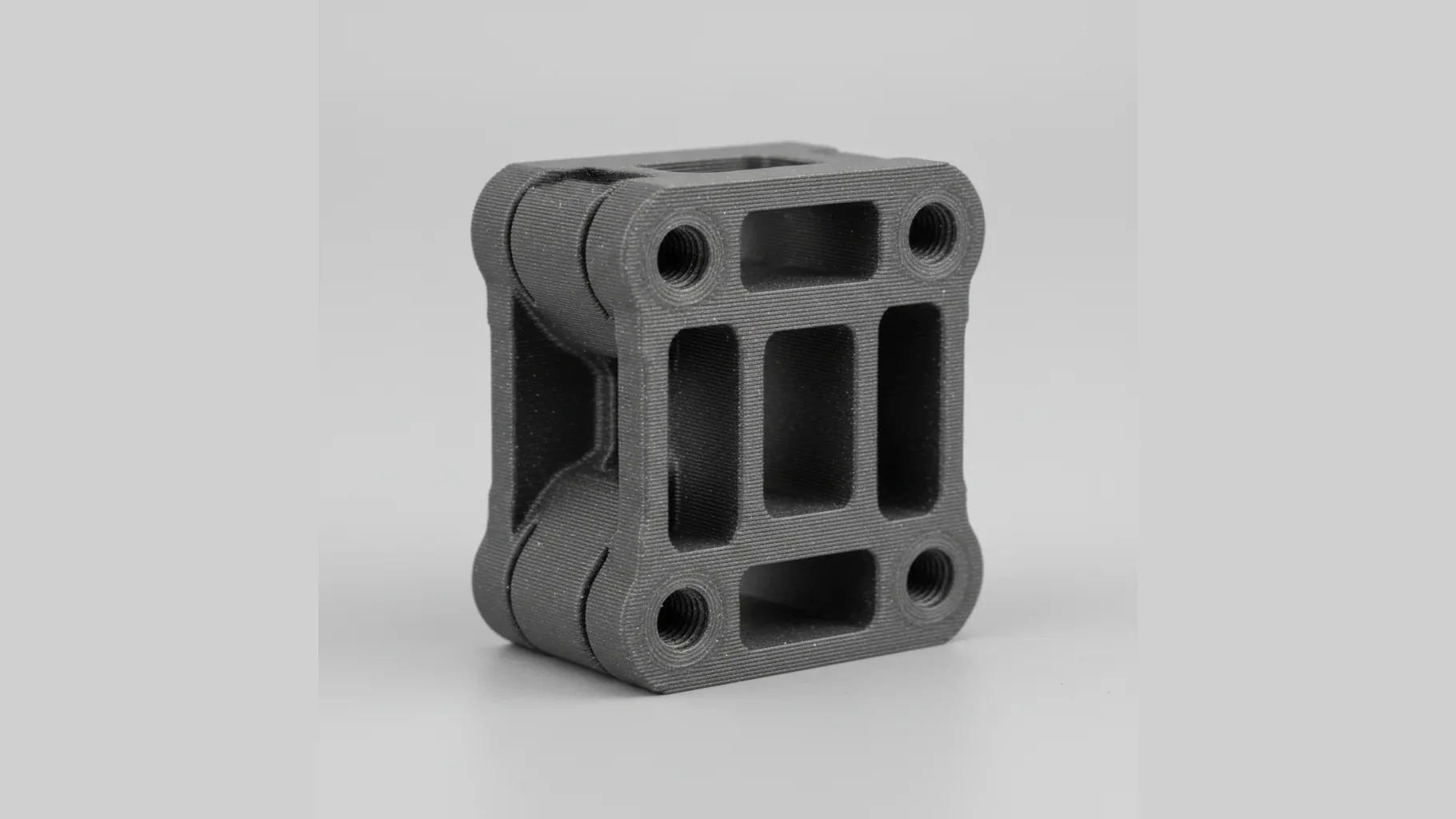
When is annealing mandatory vs optional for PET-GF?
PET-GF is unique in our composite range · the manufacturer explicitly publishes both as-printed (HDT 81.6°C @ 0.45 MPa, 71.8°C @ 1.8 MPa) and annealed (HDT 133.7°C / 87.3°C) properties. Skip the anneal for parts in service below 80°C · the as-printed properties are sufficient. Run the 120°C / 16h anneal for parts above 80°C service, parts in long-term load above ~60°C, or parts that need the full chemical resistance envelope. The phase change from amorphous to semi-crystalline is the same as for PET-CF, but PET-GF gives you the choice.
Why is PET-GF the LEAST anisotropic composite in the range?
PET-GF15 sits at 1.24× tensile XY/Z (59.9 / 48.2 MPa) · among the lowest anisotropy of any composite we ship (PA6-GF25 is near-isotropic in tensile at ~1.0×). PA12-CF is 1.48×, PA612-CF 1.90×, PET-CF 2.36×. Two factors: (1) glass fibre is shorter and stiffer in compression than carbon fibre, transferring Z-axis load through the matrix more effectively; (2) the 15% GF loading is lower than PET-CF's 17%, leaving more continuous matrix material to bridge layer interfaces. Practically, PET-GF is the composite we recommend when CAD load paths are ambiguous, when geometry forces Z-direction loads, or when a part needs to handle loads from multiple unpredictable directions.
Is PET-GF really moisture-insensitive?
Yes · 0.32% equilibrium water absorption per the TDS V1.0 absorption curve. That's second only to PPS-CF (0.225%) and far below every nylon · 3× drier than PA12-CF (1.5%), 4× drier than PA612-CF (2.2%), 6× drier than PA6-GF (3.33%). PET's polar ester linkages absorb far less water than nylon amide groups. The practical result: PET-GF parts hold dimensions and properties across UK ambient humidity cycles (30-80% RH) where nylon-CF parts swell and lose stiffness. For outdoor fixtures, marine brackets, humid workshops, and parts stored for months · PET-GF is the right CF composite.
How does PET-GF compare to PET-CF (the carbon-fibre sibling)?
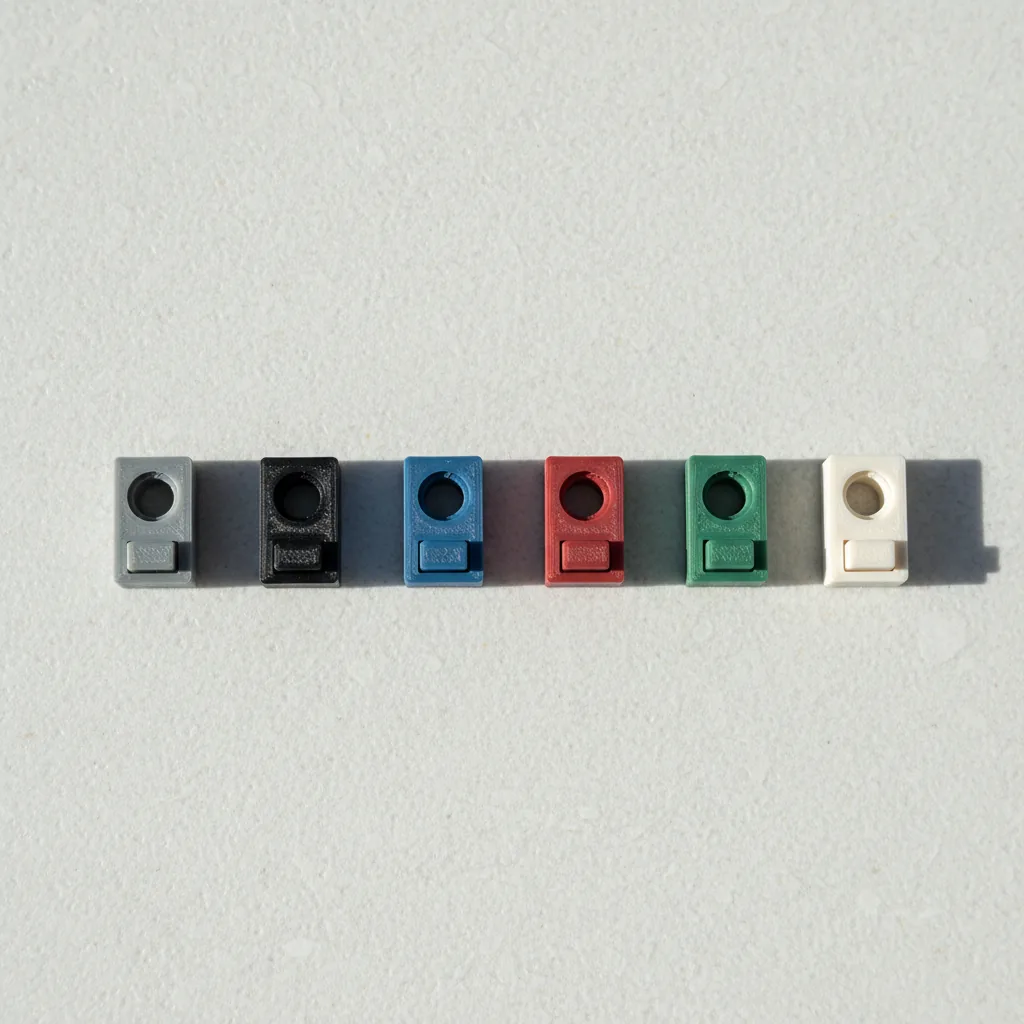
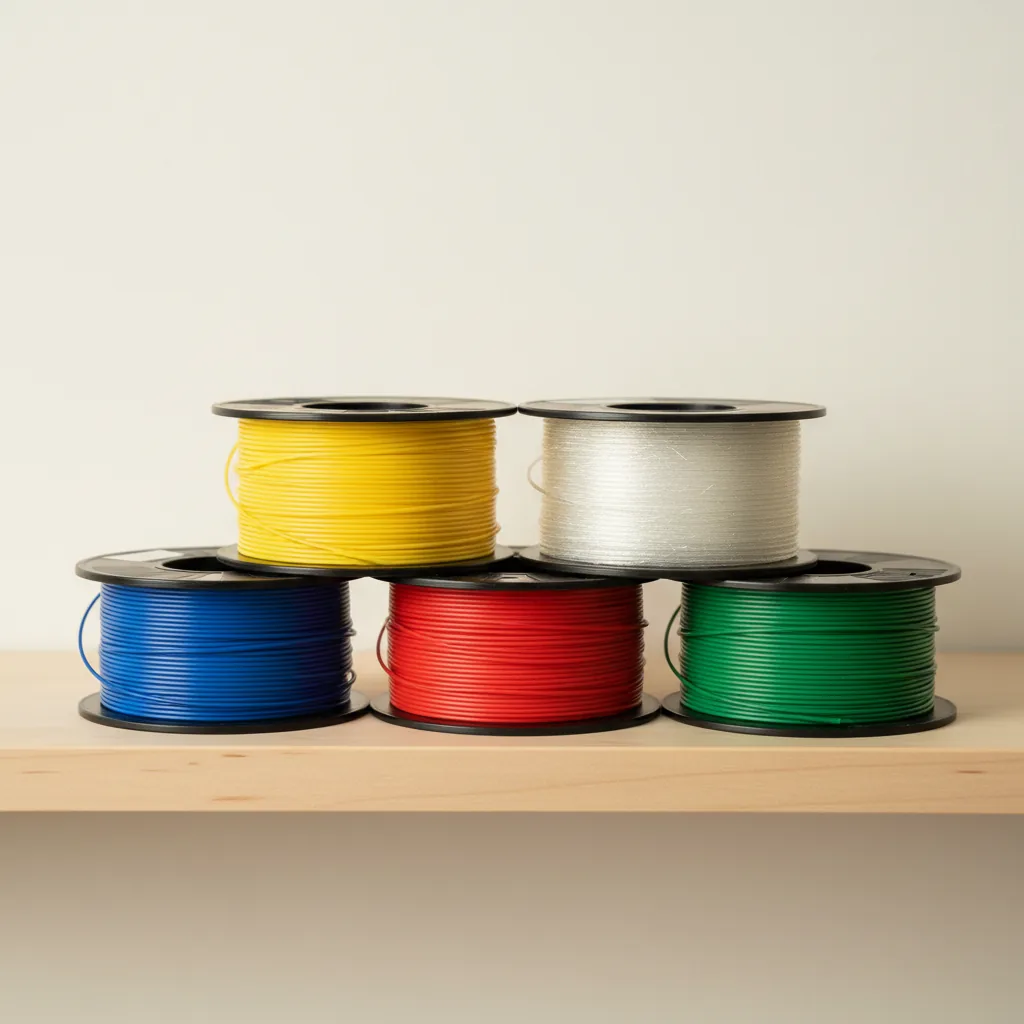
PET-CF wins on tensile strength (65.9 vs 59.9 MPa XY), stiffness (5481 vs 4144 MPa Young's modulus), HDT (147.5 vs 133.7°C at 0.45 MPa). PET-GF wins on anisotropy (1.24× vs 2.36× · half as directional), ductility (4.0% vs 2.4% elongation), Charpy notched impact (8.7 vs 5.1 kJ/m²), water absorption (0.32% vs 0.53%), and colour options (6 colours vs matt black only). Pick PET-CF for peak stiffness and HDT in a dimensional fixture. Pick PET-GF for colour-flexible engineering parts and near-isotropic load paths.
How does PET-GF compare to PA12-CF?
PET-GF wins on stiffness (4144 vs 3311 MPa Young's modulus XY · 25% stiffer), water absorption (0.32% vs 1.5% · 5× drier), and HDT (133.7 vs 131°C at 0.45 MPa). PA12-CF wins on tensile strength (77 vs 59.9 MPa XY), impact toughness (Charpy notched 9.9 vs 8.7 kJ/m²), and ductility (4.2% vs 4.0% elongation). For dimensional fixtures and near-isotropic load paths, PET-GF. For impact-loaded brackets and snap-fits, PA12-CF.
What is the glass transition temperature of PET-GF?
Tg is 59.5°C per the manufacturer TDS V1.0 (DSC, 10°C/min). This sits below the bulk PET literature range (67-81°C) and below PET-CF's 79.3°C · suggests a co-polyester PET base or a different DSC scan protocol. Above Tg, amorphous regions soften · but the as-printed PET-GF still holds HDT 81.6°C at 0.45 MPa, and the annealed semi-crystalline state holds 133.7°C. For unannealed parts, do not load above 60°C. For annealed parts, the HDT figures govern service.
Does PET-GF need a heated chamber?
No heated chamber required · the TDS specifies room-temperature chamber. However, PET-GF prints with a hotter bed (70-80°C) than the PA-CF nylons (40-50°C) to manage PET's crystallisation behaviour during cooling. Standard industrial FDM hardware with a 300°C-capable hotend and hardened nozzle handles the material · no PEEK-class equipment needed.
What nozzle is needed for PET-GF?
Hardened steel or ruby. Glass-fibre at 15 wt% destroys a brass nozzle in roughly 9 hours of print time. Ruby-tipped nozzles extend life to hundreds of jobs. We run hardened-steel on every GF print as standard, included in the quote · no surcharge.
Is PET-GF chemical-resistant? · 18-row compatibility table
Excellent against hydrocarbons (petrol, diesel, oils, greases), alcohols (IPA, ethanol, methanol), dilute acids, detergents, and cleaning products · PET is the bottle-grade polymer behind food and beverage packaging. Limited against strong alkalis (PET hydrolyses in hot caustic), sustained hot water above 80°C (hydrolysis), and phenols. Fails against concentrated sulphuric or nitric acid, chlorinated solvents long-term, and high-temperature steam.
| Chemical / family | Resistance | Notes |
|---|
| Petrol / gasoline | Excellent | PET fuel-rail return lines are OEM specification |
| Diesel | Excellent | Including biodiesel and E85 ethanol-blends |
| Engine oil, gear oil, hydraulic oil | Excellent | All standard service grades |
| Brake fluid (DOT 3 / 4 / 5.1 glycol) | Excellent | DOT 5 silicone also fine |
| Coolant / antifreeze (ethylene glycol) | Excellent | Including diluted service coolant |
| Methanol, ethanol, IPA | Excellent | Cleaning + assembly OK |
| Detergents, soap, weak alkalis | Good | Workshop wash-down OK · hot caustic hydrolyses |
| Sea water / saline solution | Excellent | PET marine-grade chemistry · long-term immersion OK |
| Hydrogen peroxide ≤ 6% | Excellent | Stronger H₂O₂ attacks long-term |
| Acetone | Good | PET more solvent-resistant than amorphous PETG |
| MEK, toluene, xylene | Limited | Brief contact only · long soak attacks PET |
| Strong alkalis (NaOH > 10%) | Fails | PET hydrolyses in hot caustic · alkali attack |
| Weak organic acids (acetic, citric) | Good | Cold + dilute is fine · hot conc. degrades over weeks |
| Hot water (sustained > 80°C) | Fails | Hydrolytic attack · PET hydrolyses progressively |
| Strong acids (sulphuric, HCl, nitric) | Fails | Concentrated acid attacks PET backbone |
| Chlorinated solvents long-term (TCE, DCM) | Fails | Solvent crazing + dissolution |
| Phenols | Fails | Strong PET solvent |
| High-temperature steam | Fails | Combined heat + moisture · hydrolyses repeatedly-autoclaved parts |
Ratings reflect long-term immersion / sustained exposure. Brief contact (cleaning wipes, splashes) is more forgiving. For mission-critical chemical service, request a 7-day immersion sample before committing the design.
Is PET-GF flame-retardant?
Standard PET-GF15 is rated UL94 HB at 1.5mm wall · the lowest horizontal-burn rating. For UL94 V-0 / V-2 self-certification (electrical enclosures, transportation, aerospace), step sideways to PPS-CF (V-0 at 1.5mm) or PA6-FR (flame-retardant nylon).
Is PET-GF ESD-safe?
No · standard PET-GF15 is insulative. Surface resistivity is >10¹² Ω/sq per the TDS (rated OL · overload, beyond ESD-safe range). The 15% GF loading is non-conductive · glass fibre itself is an insulator. For ESD-sensitive electronics handling jigs and PCB fixtures, use PETG-ESD or PA612-ESD (dedicated anti-static grades).
Can PET-GF be steam-autoclaved?
Short-cycle yes, repeated cycles no. 121°C steam sits above PET's Tg (59.5°C) but below the annealed HDT at 0.45 MPa (133.7°C). Single autoclave cycles are mechanically workable on annealed parts. However, PET hydrolyses under combined heat plus moisture, so repeated autoclave cycles progressively degrade the polymer chain. For routine repeat steam autoclave (clinical, lab), PEEK or PPSU are the correct materials. Dry-heat sterilisation, EtO, UV-C, gamma, and IPA wipe-down are all compatible with PET-GF.
What's the typical service envelope for PET-GF?
Continuous service (annealed): -20 to ~100°C (HDT 1.8 MPa is 87.3°C). Short-term load: up to ~147°C (HDT 0.45 MPa). Outdoor: moderate UV tolerance, better than PA-CF nylons but coat with 2K paint for multi-year exterior service. Humid environments: yes, the headline application · 0.32% water absorption means dimensional stability holds across humidity cycles. Not for steam autoclave (repeated), not for ESD service, not for flame-rated applications, not for sub-2mm thin-walled bending parts.