TPU 3D printing · the flexible one · stretches 330% and springs back where rigid plastics crack.

Rubber-like elastic recovery, gasket-and-seal hardness, printable from CAD without moulding tooling · cross-checked against the manufacturer's TPU95 TDS V5.1, written by the team that prints it.

Reviewed by the 3D Printing Express engineering team.

TPU flexible 3D printing service · UK · quoted in 6 hours.

Stretches 330% and springs back. Different mechanical regime to rigid filaments.

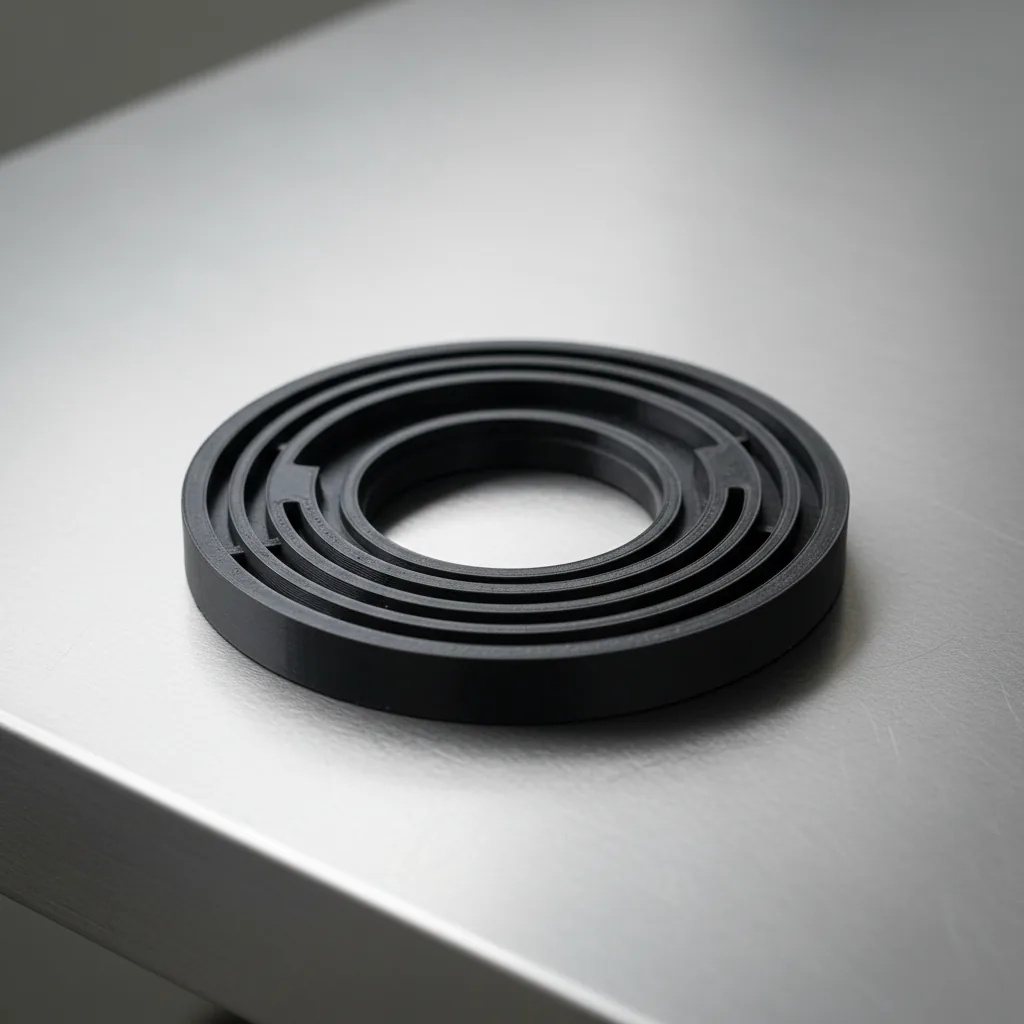
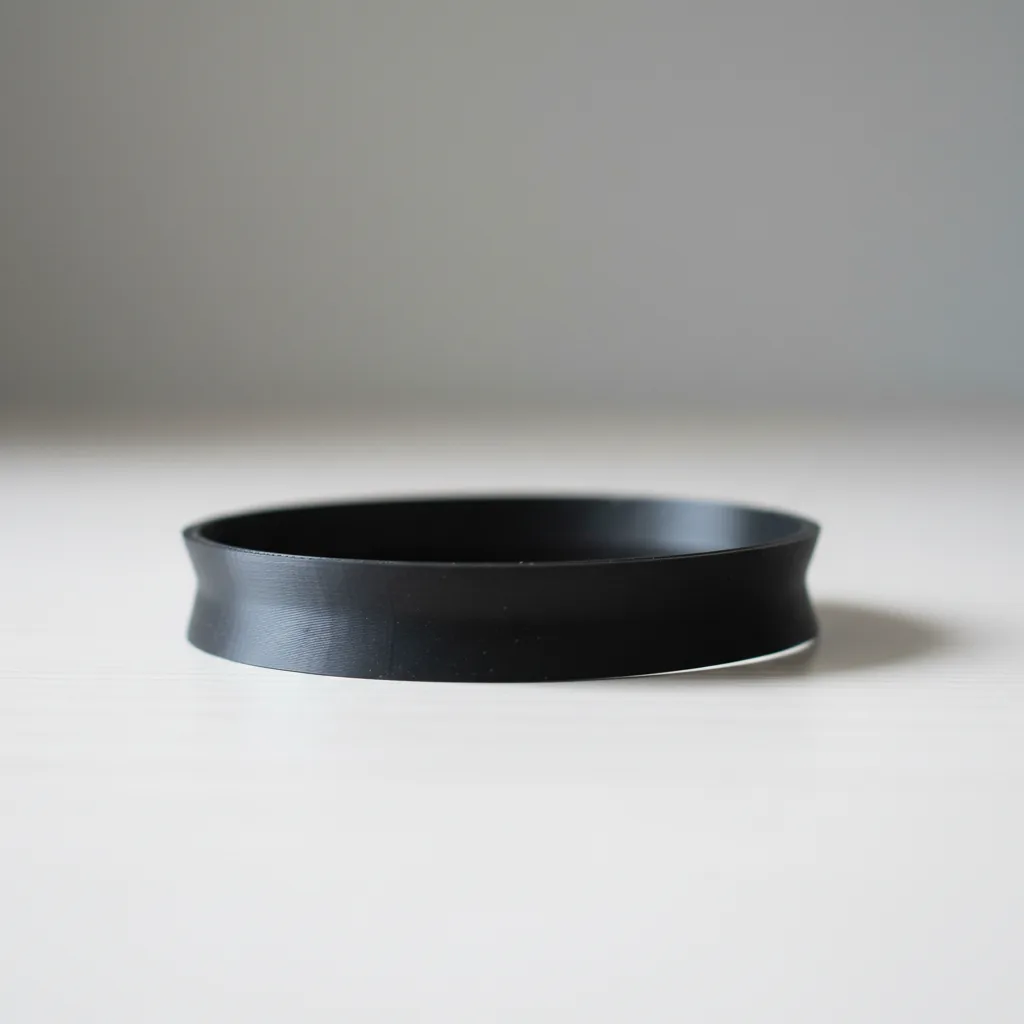
Macro photo of a matt black flexible 3D-printed TPU gasket with a soft rubbery finish on a clean light bench
Process · FDM
This page covers FDM TPU (Shore 95A) · the flexible engineering polymer · gaskets, seals, shock absorbers, soft-touch grips, vibration isolators. If you need lower-cost / cosmetic-only (PLA), tougher / heat-resistant (ABS / ASA), or engineering-grade (PA12-CF / PET-CF), send your brief and we'll match the right material.
The short version

TPU · the short version

Got 1 minute

The quick version.

Great for
  • Flexible, rubbery parts.Gaskets, seals, bushings, grips and protective inserts, where rigid plastics would crack.
  • Stretches and springs back.Elongates over 3× and recovers, absorbing impact and vibration.
  • Industrial-standard gasket hardness.Shore 95A, the same as moulded gaskets and phone-case inserts.
! Worth knowing
  • Creeps under sustained load.A compressed seal slowly takes a set over time, so design for the deformed state. Need rigid load-bearing? See PA12-CF.
  • Not a structural material.It's an elastomer, so it flexes rather than holds shape under load.
Not sure TPU is right for your part? Send your brief → and we'll match the right material.
Got 5 minutes

How TPU behaves, visually.

Four quick visuals. Start with which material to pick and where TPU works; the engineering detail is at the end if you want it.

Which to pick

When TPU, and when to switch.

Pick TPU95

Gaskets · seals · shock absorbers · soft-touch grips · vibration isolators · cable strain relief

Pick another

Ultra-flex hinges = TPU90 · sustained > 80°C or chemical service = silicone · load-bearing structural = PETG / PA12-CF

Where it works

Flexible across everyday temperatures.

  • Indoor room temp
  • Engine bay / under-bonnet
  • Workshop dampers / grips
  • Steam autoclave 121°C
  • Outdoor dynamic (months)
  • Direct dark-surface summer sun
What it is

Segmented flexible polyurethane.

Rigid urethane "hard" segments crystallise into physical cross-links at room temperature; flexible polyol "soft" segments contribute elasticity. The two phases phase-separate at the nanometre scale · this is what makes TPU both 3D-printable (melt the hard segments at 200°C) and elastomeric (springs back from large strains).

For engineers
Mechanical character

Stretches 3×, springs back.

TPU95 elongation at break is 330% (ISO 37 · rubber tensile) · two orders of magnitude more than rigid filaments. The 100% modulus is 9.4 MPa (stress required to stretch the specimen to 2× its length). Rigid filaments like PETG (8.4%) and PLA (6.3%) break before they stretch a tenth as far. Different mechanical regime, not a softer version of the same family.

What clients say about our UK 3D printing service on Google

4.9 based on 36 Google reviews
Read all 36 on Google →
Jonny Higgs
· 2 months ago · via Google

"James handled the 3D printing for a functional heat resistant component we needed in batch production. He helped dial in the prototype first with their design service, then produced the final batch with really consistent results. Super fast 3D print turnaround and great quality across all the 3D printed parts. Will 100% be coming back."

Matt Shutler
· 8 months ago · via Google

"We needed a sit-in F1-car for an exhibition to showcase our new racing game. 3D Printing Express took our CAD, optimised it for strength and weight as we had no idea how it all worked! Turned out beautifully. They colour matched the finish and was looking like the real deal. On show day the cockpit ran non-stop, adults and kids jumped in. Multiple visitors asked who built it."

Kayleigh Adams
· 7 months ago · via Google

"We ordered a batch of 100 PA-12 parts from 3D Printing Express and could not be happier. Every part arrived consistent, dimensionally accurate, and ready for use straight from the box. The PA-12 gave us the strength and stability we needed for functional testing, with minimal post-processing required. Delivery was on time, communication was excellent, and their QC clearly made a difference."

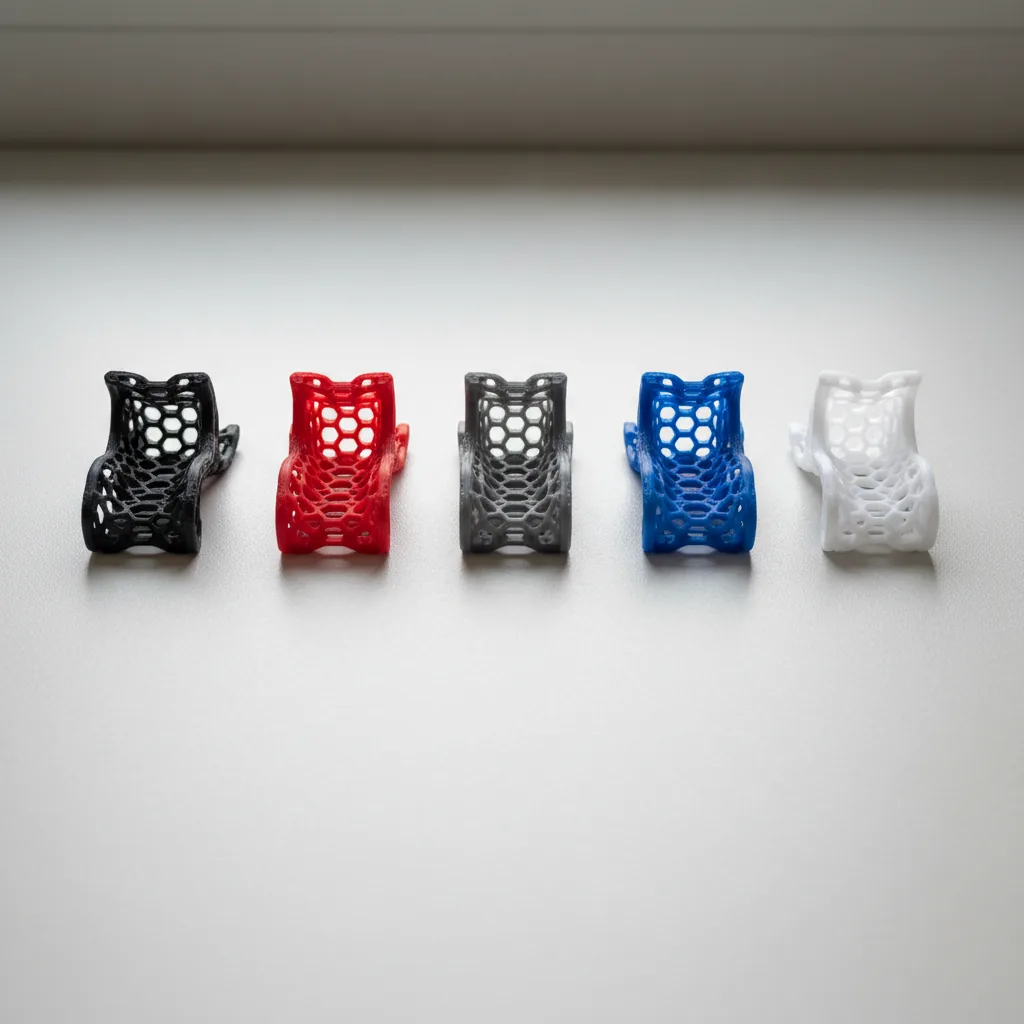
A product photo of five identical small flexible 3D-printed TPU parts in black
The four numbers worth knowing

The short answer before the spec sheet.

Shore hardness
95A

Industrial-standard flexible-service hardness · same as commercial moulded gaskets and phone-case inserts. Firm-but-compliant feel. Shore 90A on request for softer, more rubber-band-like service.

ISO 7619-1 · Shore A scale (rubber)
100% modulus · XY
9.4MPa

The stress required to stretch the specimen to 2× its length · the rubber-tensile counterpart to "tensile strength" for rigid plastics. Two orders of magnitude lower than rigid filaments · TPU deflects under load that rigid plastics shrug off.

ISO 37 · 9.4 ± 0.3 MPa XY (rubber tensile)
Elongation at break
330%

Stretches 3× its original length before failure · the headline TPU metric. Rigid filaments break at 3-10% (PETG 8.4%, PLA 6.3%). Different mechanical regime, not a softer version.

ISO 37 · 330.1 ± 14% XY
Water absorption
0.82%

Hygroscopic · higher than rigid filaments because the segmented urethane matrix absorbs more. We dry every spool at 65-70°C for 4-6 hours before printing. Wet TPU prints with surface bubbles, stringy extrusion, and reduced layer adhesion.

manufacturer TDS V5.1 · equilibrium absorption
Perfect for

Where TPU is the right call.

TPU earns its place when a part needs to deflect by tens or hundreds of percent and spring back · the flexible engineering polymer for gaskets, seals, shock absorbers, and soft-touch surfaces. Shore 95A hardness, 330% elongation at break, no moulding tooling cost.

Honest limits

Where TPU is the wrong call.

TPU's superpower is elastic recovery from large strains · its weaknesses are sustained-load creep, viscoelastic hysteresis at high cycle rate, broad chemical sensitivity, and a service ceiling around 80°C. Pick a different filament if any of these apply.

What people actually print in this

Four worlds that order TPU by name.

A 3D-printed black flexible TPU flange compression gasket seal ring on a clean bench
Mechanical · sealing · low-volume

Custom flange gaskets, O-ring substitutes, compression seals

Shore 95A is the same hardness as the majority of commercial moulded gaskets. The flexible matrix compresses 20% and recovers · prints from CAD without injection-mould tooling. Oil and grease resistant. Right pick for short-run or one-off seals where moulding cost can't be justified.

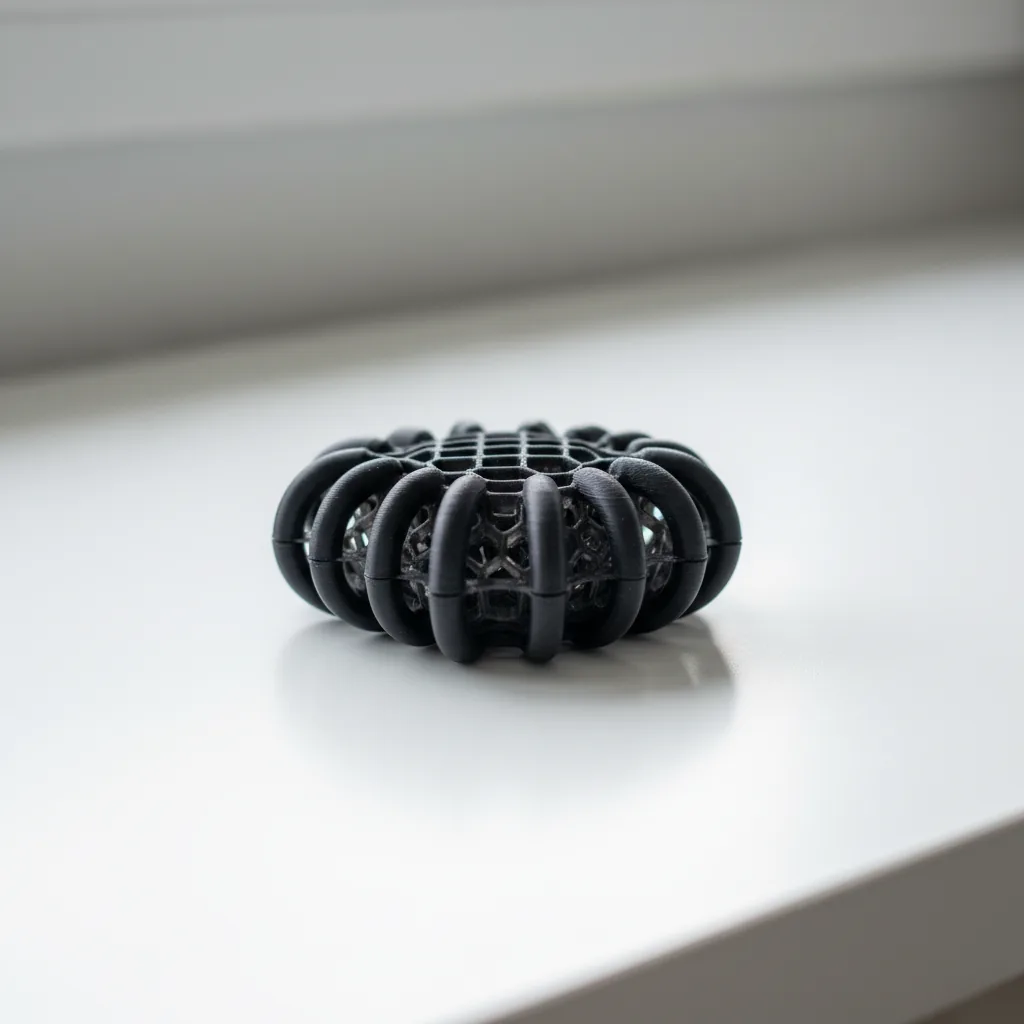
A 3D-printed black flexible TPU drone landing-gear shock-absorbing pad on a clean bench
Robotics · drones · industrial

Drone landing pads, robotics bumpers, drop-test cushions, fixture stops

The rubber-like matrix absorbs impact energy by deflecting rather than cracking. Drone landing gear cushions, robotic-arm impact pads, fixture end-stops, drop-test foot cushions · TPU bends and recovers where rigid filaments fracture. Direct CAD-to-part, no tooling lead time.

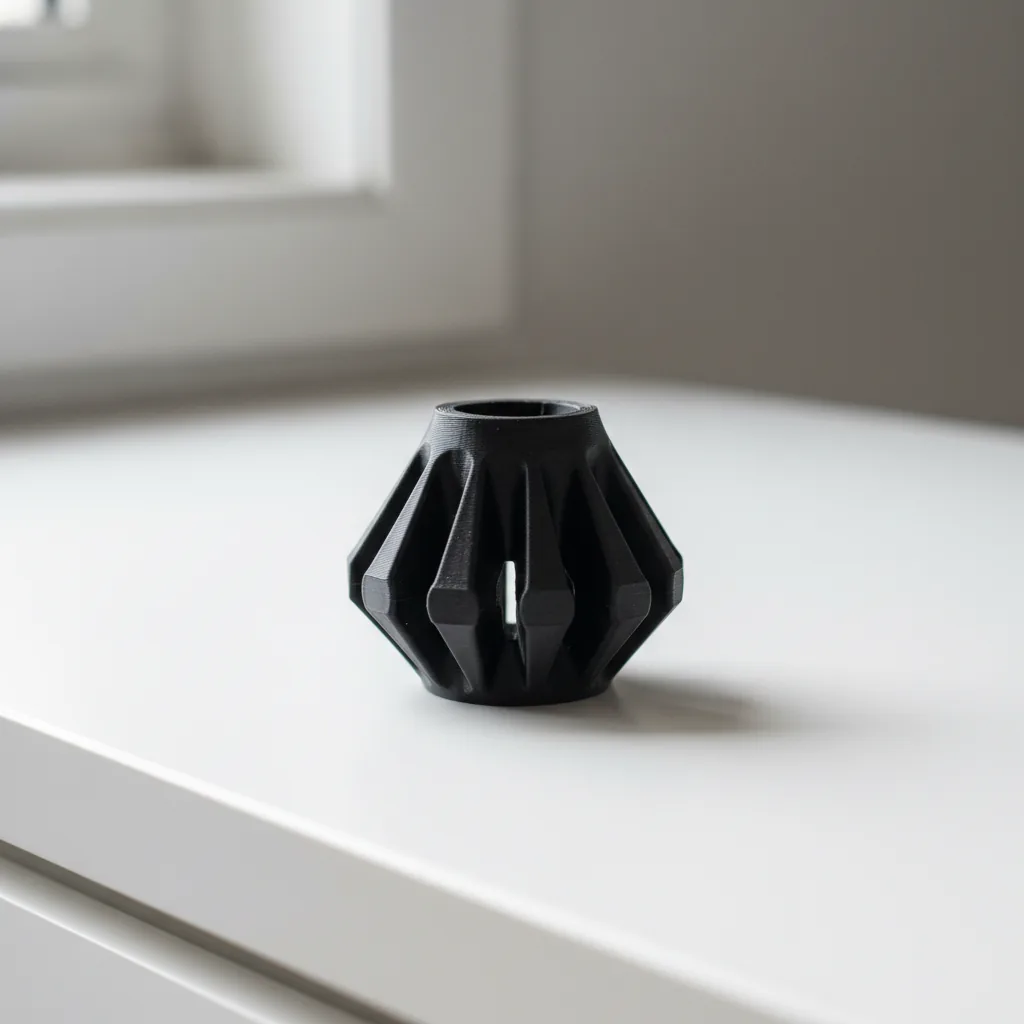
A 3D-printed black flexible TPU machine-foot vibration isolator mount on a clean bench
Industrial · instrumentation

Machine-foot mounts, sensor-mount dampers, panel isolators

TPU's viscoelastic matrix damps vibration that would otherwise transmit through rigid filaments. Machine-foot mounts, panel-mount sensor isolators, drum-and-fan vibration dampers, instrument-rack feet · prints in any geometry needed to fit the panel cutout or chassis pocket.

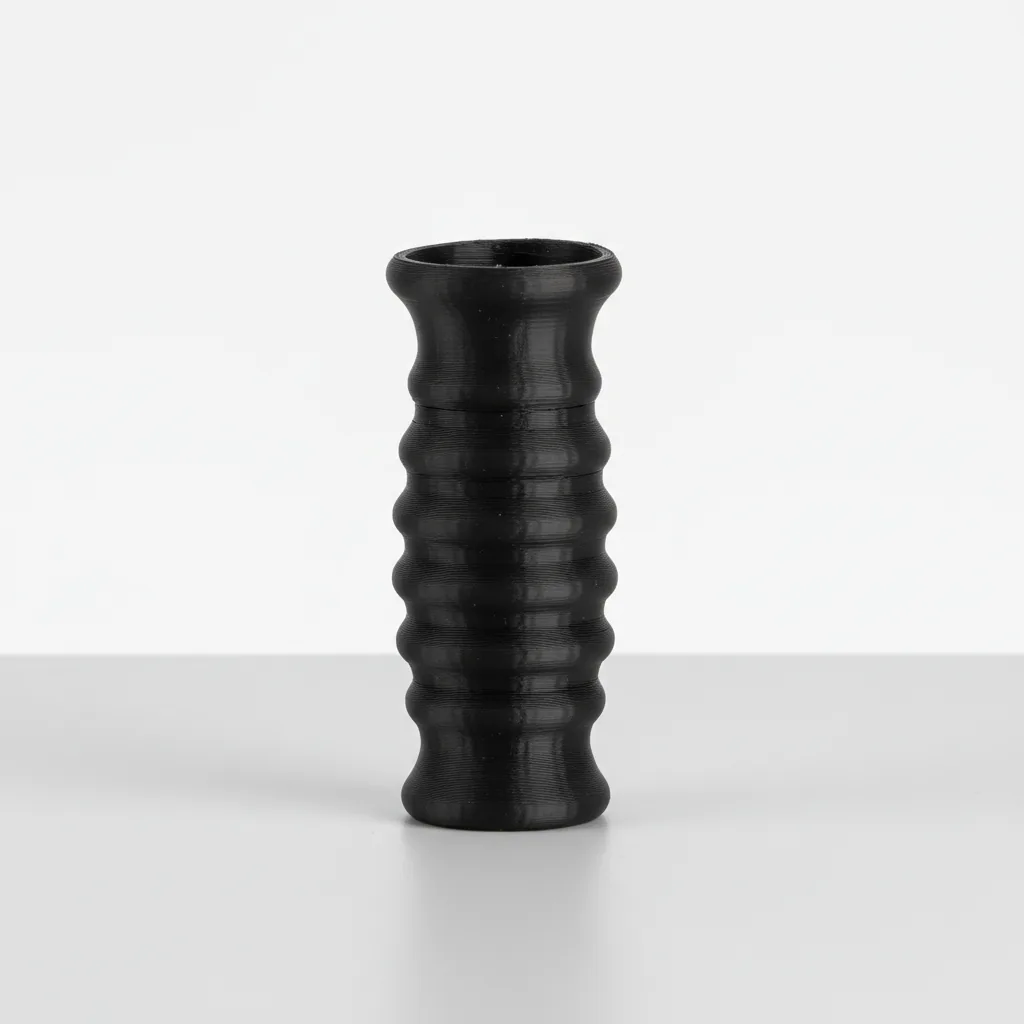
A 3D-printed black soft-touch flexible TPU ergonomic grip cover on a clean bench
Consumer · prosumer · medical-adjacent

Custom phone cases, tool grips, watch straps, robotic gripper jaws

Shore 95A matches commercial phone-case and ergonomic-grip hardness · soft to hold, grippy on glass and painted surfaces, won't damage delicate parts. Used for custom phone cases for odd or discontinued devices, ergonomic tool overgrips, robotic gripper jaws that hold without crushing.

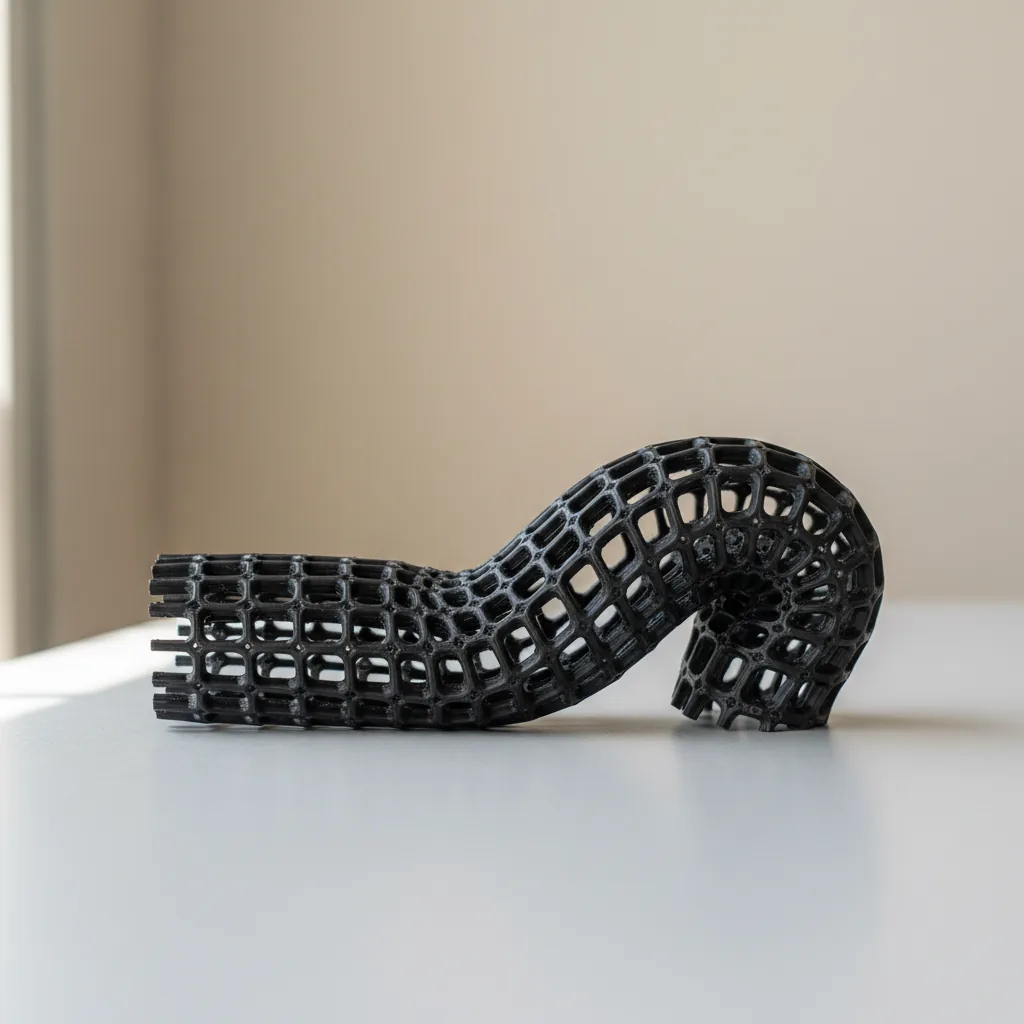
A flexible black 3D-printed TPU part shown bent and compressed to demonstrate its flexibility
Decision helper

TPU vs rigid filaments vs silicone · which to pick.

TPU is the flexible engineering polymer · rigid filaments and silicone are the two adjacent options engineers compare when picking it. TPU wins for low-volume flexible parts where moulding cost is not justified. Rigid filaments win for load-bearing structure. Silicone wins for extreme-temperature or chemical-service flexible parts (but needs injection-mould tooling).

Headline metric comparison chart · headline metric comparison TPU95 (here) TPU90 Silicone (moulded) ★ winner SHORE HARDNESS · Shore A scale 0 50 100ATPU95 95A ★ TPU90 90A Silicone 20-80AELONGATION AT BREAK · % 0 400 800TPU95 330% TPU90 640% ★ Silicone 200-700%SERVICE CEILING · CONTINUOUS · °C 0 125 250TPU95 ~80°C TPU90 ~80°C Silicone +250°C ★CHEMICAL RESISTANCE · OILS · ACIDS · ALKALIS Poor Moderate ExcellentTPU95 Oils OK · acids/alkalis no TPU90 Same as TPU95 Silicone Excellent ★TOOLING + LEAD TIME · LOW-VOLUME FLEXIBLE PARTS £0 tooling · days £10k+ tooling · weeksTPU95 £0 · 4-6 days ★ TPU90 £0 · 5-7 days Silicone £1k-50k · 4-8 weeks

TPU95 values from TDS V5.1 EN (ISO 37 rubber tensile, ISO 7619-1 Shore hardness). TPU90 values from TPU90 TDS. Silicone values from industry literature for general moulded silicone. Each material wins on one axis · TPU95 on cost/lead-time (no tooling, days not weeks), TPU90 on elongation (softer, more rubber-band-like), silicone on temperature range and chemical resistance. Pick TPU when the volume doesn't justify silicone tooling.

PropertyTPU95 (here)TPU90 (softer)Silicone (moulded)Rigid filament (PETG / PA12-CF)
Shore hardness95A · industrial-standard gasket hardness90A · softer, more rubber-band-like20A-80A typicalShore D · rigid (different regime)
100% modulus9.4 MPa6.2 MPa2-5 MPa typicalN/A · rigid plastics don't strain to 100%
Elongation at break330%600%+200-700%~3-10% (rigid)
Service temperature-20 to +80°C-20 to +80°C-60 to +250°Cvaries · PA12-CF 131°C HDT
Chemical resistancePoor · oils OK, acids/alkalis noPoor · same as TPU95Excellent · broadly resistantvaries · PPS-CF excellent
Tooling cost£0 · prints from CAD£0 · prints from CAD£1k-50k · injection mould needed£0 · prints from CAD
Lead time · 50-unit batch6-9 working days7-10 working days4-8 weeks (tooling) + 1 week (parts)3-5 working days
Creep under sustained load3-8% over 1,000h at 20°C5-10% over 1,000h at 20°CNear zero · best in classNegligible · rigid
Cost per kg (filament)£40-60£50-70£15-30 raw material + tooling£20-50 (varies)
Best forGaskets, seals, shock absorbers, soft-touch grips, vibration isolatorsUltra-flex hinges, wearable contact, watch strapsHigh-volume + extreme-temperature + chemical-serviceLoad-bearing structural parts, fixtures, brackets
If your row has a star, that's the right column · otherwise TPU is the default when the part needs to flex and recover. For sustained chemical or extreme-temperature elastomer service, silicone is the step-up (we don't print silicone but can advise). Send your brief and we'll confirm the right grade.
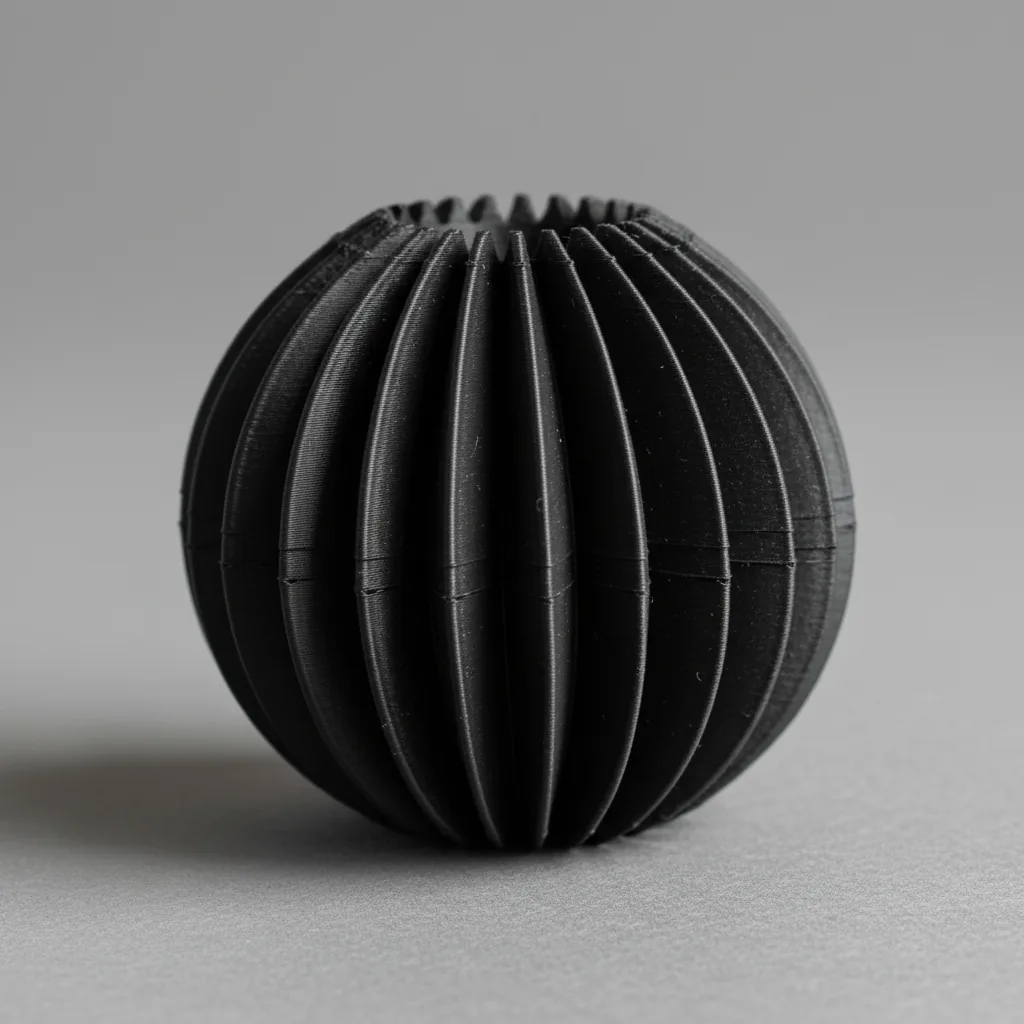
A single black flexible 3D-printed TPU bellows part with concertina folds
How we print it

Recommended print environment for TPU.

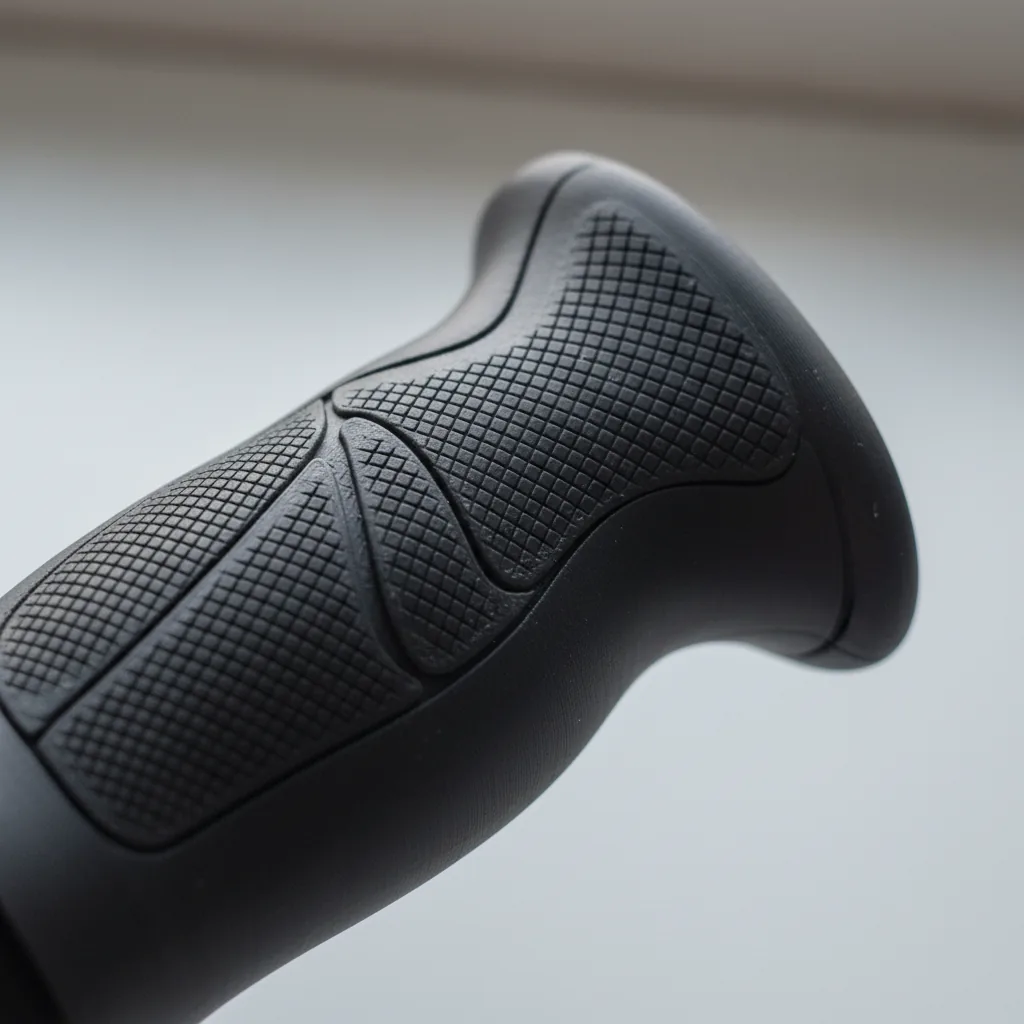
A black soft-touch 3D-printed TPU grip showing its textured ergonomic surface
From brief to dispatch

Our process · How a TPU order moves through our workshop.

01

Brief

File or sketch in. Tell us Shore hardness needed (90A / 95A), service load (static vs dynamic), temperature range, colour.

02

Quote

Reviewed inside 24 hours · per-unit cost + Shore hardness confirmation. Print time is the cost driver (TPU is slow).

03

DFM check

Seal face orientation in XY for layer cohesion, infill ≥100% on sealing surfaces, creep allowance for sustained-load parts, wall thickness for flex features.

04

Dry & print

Filament dried at 65-70°C for 4-6 hours (TPU is hygroscopic · surface bubbles if not dried) · direct-drive extruder · 210-230°C nozzle, 25-60°C bed, 20-40 mm/s.

05

Finish

Matt rubber finish off the printer · flexible primer + automotive flexible paint where colour matters. Sanding impractical (TPU clogs sandpaper).

06

Dispatch

Tracked UK courier, tracking number sent the moment it leaves.

Typical lead times · TPU
1-off prototype
4 to 6 working days
Quote inside 24h · drying adds ~5h, print time is 5-10× slower than rigid filaments
Batch of 10
6 to 9 working days
Slow print speed (20-40 mm/s) drives the schedule · multi-part bed packing helps
Batch of 100
10 to 14 working days
Splits across multiple direct-drive printers · QC sampled per print run · drying cycles parallelised
Rush turnaround
72h, on request
Drying time + slow extrusion are the floors · realistic for small gaskets / seals when filament is already conditioned · ask before quoting

Lead times start when CAD is signed off and Shore hardness + colour are confirmed. Shore 90A (TPU90) is stocked on request · adds 1-2 days for filament procurement if not already in. Direct-drive extruder is required · all our TPU prints run on direct-drive printers.

Case study
Custom flange gasketShore 95A · low-volume run
Mechanical · sealing

Custom flange-gasket batch run, TPU95.

Low-volume batch of custom-geometry flange gaskets printed in Shore 95A TPU · 100% infill on sealing surfaces, oriented with the seal face in XY for layer cohesion, matt rubber finish out of process. Replaces an injection-moulded gasket where the client could not justify tooling cost for a 50-unit run. Shore 95A is the industrial-standard flexible-service hardness for compression seals.

Material: TPU95 · Shore 95A · natural Finish: Matt rubber as-printed Read the full case study →
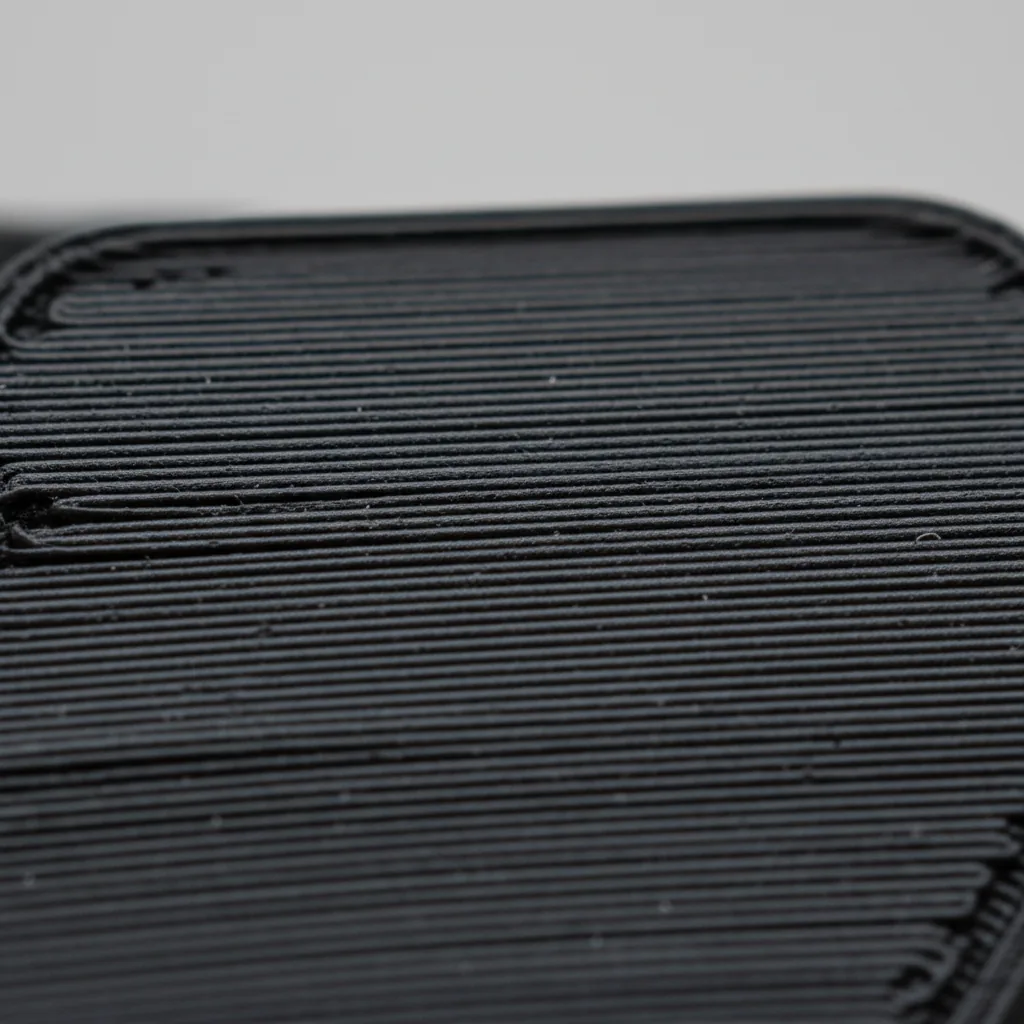
Extreme macro of the surface of a matt black flexible 3D-printed TPU part showing fine layer lines and a soft rubbery texture
Material science · why it behaves the way it does

What TPU actually is · and why that matters for your part.

Definition

TPU (Shore 95A) is thermoplastic polyurethane · a segmented block copolymer of rigid urethane "hard" segments and flexible polyol "soft" segments chemically bonded along one chain. The hard segments are formed from a diisocyanate (MDI in this grade) reacted with a short-chain diol; they crystallise into physical cross-links at room temperature, melt at ~200°C, and re-form on cooling · this is what makes TPU thermoplastic. The soft segments (polyester or polyether polyols) have Tg around -50 to -70°C and contribute elasticity. Shore 95A is mid-hardness · firm-but-compliant, the same hardness as commercial moulded gaskets. 100% modulus 9.4 MPa, Young's modulus 29 MPa, elongation at break 330% (ISO 37 · rubber tensile · two orders of magnitude lower stiffness than rigid filaments). Density 1.20-1.24 g/cm³, equilibrium water absorption 0.82%. NOT chemically resistant to acids or alkalis · good for oils and greases. Practical service envelope -20°C to ~80°C.

"TPU is the material I reach for when the part needs to flex and recover · gaskets, shock absorbers, soft-touch grips, vibration dampers. Shore 95A is the same hardness as commercial moulded rubber gaskets, but we print it from CAD without injection-mould tooling. Two things engineers underestimate: TPU creeps under sustained static load (a compressed seal won't fully spring back after weeks), and TPU is broadly NOT chemically resistant · oils and greases are fine, but acids and alkalis degrade it. For sustained chemical or high-temperature elastomer service the right call is silicone (which we don't print but can advise on). For the rest, TPU does the job direct from your CAD."

· 3D Printing Express engineering team · UK workshop

Three questions worth answering before specifying TPU · what the block-copolymer microstructure does, why it creeps under load, and where the 80°C service ceiling really matters.

From raw chemistry to part

Diisocyanate + polyol react into segmented TPU · prints into elastic parts

A diisocyanate (MDI in this grade · aromatic) reacts with a long-chain polyol to form alternating hard and soft segments along the polymer chain. The hard segments crystallise into physical cross-links at room temperature, melt at ~200°C, then re-form on cooling · this is what makes TPU thermoplastic. Print at 210-230°C, get rubber-like behaviour.

Stretch behaviour

9.4 MPa to 100% strain · 330% to break · two orders of magnitude more stretch than rigid filaments

TPU's stress-strain curve is the elastomer signature · gentle initial slope, plateau through hundreds-of-percent strain, recovery on unload. Rigid filaments break at low strain (~7% for PETG, ~6% for PLA). TPU95 reaches the same stress level (~9 MPa) at 100% strain that rigid filaments hit at break · then keeps going.

Creep behaviour

Sustained compression slowly takes a permanent set · TPU's Achilles heel

Under sustained static load, TPU's soft-segment chains slowly slide past the hard-segment cross-links · the compressed shape becomes the new shape. A Shore 95A seal compressed 20% creeps 3-8% over 1,000 hours at 20°C, 10-15% at 60°C. Dynamic / cyclic loads spring back fully · creep only affects sustained-static loads. Design for the deformed state, or step to silicone for zero-creep service.

What is TPU, chemically?

TPU is thermoplastic polyurethane · a segmented block copolymer of rigid urethane "hard" segments and flexible polyol "soft" segments chemically bonded along one chain. Hard segments are formed by reacting a diisocyanate (typically MDI · methylene diphenyl diisocyanate, aromatic, used in this grade · or HDI · hexamethylene diisocyanate, aliphatic, used in UV-stable grades) with a short-chain diol (1,4-butanediol typical). The hard segments crystallise into physical cross-links at room temperature, melt at approximately 200°C, and re-form on cooling.

Soft segments are long-chain polyols, typically polyester (poly-butylene adipate for abrasion resistance) or polyether (poly-tetramethylene glycol for hydrolysis resistance). They have Tg well below room temperature (-50 to -70°C) and contribute the elastic behaviour. The two segment types phase-separate at the nanometre scale (domain size 10-100 nm), producing a two-phase morphology that gives TPU its defining property: rubber-like elastic recovery from large strains, combined with melt-processability you can extrude through an FDM hot end. Shore hardness is controlled by the hard-segment / soft-segment ratio · TPU95 sits at approximately 40% hard content.

Why does TPU creep under sustained load?

Under sustained static load, soft-segment Brownian motion lets chain segments slide past the hard-segment physical cross-links, producing permanent deformation. A Shore 95A TPU gasket compressed 20% at room temperature creeps approximately 3-8% over 1,000 hours · meaning when you release the load the seal recovers most but not all of the original compression. At 60°C the same gasket creeps 10-15% over the same period, because the soft-segment motion accelerates with temperature.

Design implication: for sustained-load service, oversize the initial compression interference to account for expected creep. For zero-creep flexible service, specify silicone (chemical cross-linking eliminates the slip mechanism · but requires injection-mould tooling). For cyclic / dynamic loads, TPU springs back fully on each unload cycle · creep only accumulates under sustained static stress.

Why does TPU lose elastic recovery above 80°C?

The hard segments soften progressively as temperature rises. The hard segments are what hold the TPU network in place at room temperature · once they begin to flow, the soft-segment elasticity has nothing to spring against. The practical service ceiling is approximately 80°C continuous · above this, TPU stretches further under the same load and recovers less. By approximately 200°C the hard segments fully melt and the polymer flows as a thermoplastic (which is what makes it 3D-printable in the first place).

Steam autoclave at 121°C is well above the service ceiling · parts soften, lose elastic recovery, and the polyester polyol backbone is also vulnerable to steam hydrolysis. For sterilisation use EtO, gamma, or IPA wipe-down · all work at room temperature. For repeated steam autoclave service in flexible parts, specify medical-grade silicone (requires moulding tooling). For sustained outdoor service in direct sun, specify aliphatic HDI-based TPU (on request · UV-stable, separate SKU).

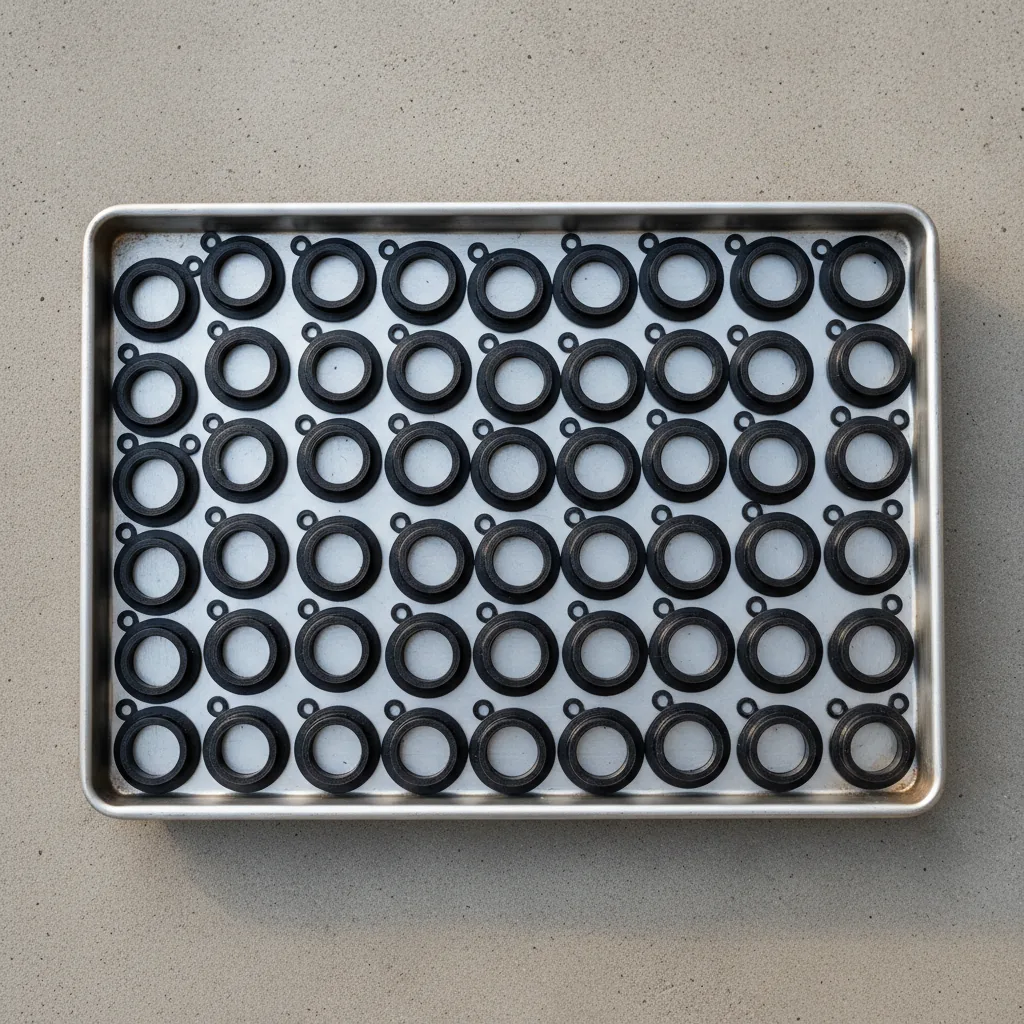
A neat tray of identical small black flexible 3D-printed TPU gaskets
Full material spec · ISO-referenced

TPU material properties · every number an engineer needs, in one table.

Values measured to the ISO standards cited in the right-hand column, on the manufacturer's own injection-moulded test specimens · directly comparable to other engineering thermoplastics.

PropertyXY · print planeZ · build axisUnitStandard
Mechanical · rubber tensile (ISO 37)
100% modulus (stress at 100% strain)9.4 ± 0.3N/AMPaISO 37
Young's modulus29 ± 2.8N/AMPaISO 37
Elongation at break330.1 ± 14N/A%ISO 37
Shore hardness95AShore AISO 7619-1
Tensile/flex Z-axis valuesN/A · TDS V5.1 publishes XY only··
Charpy / Izod impactN/A · ISO 179 not standard for elastomers··
Thermal · rubber elastomer · HDT-style tests do not apply
Heat deflection (HDT)N/A · rubber elastomer · rigid-plastic HDT does not apply·ISO 75
Glass transition (Tg)N/A · TDS does not publish · TPU literature soft-segment Tg approx -50 to -70°C·DSC
Vicat softeningN/A · TDS does not publish·ISO 306
Practical service temperature range-20 to +80°CTPU literature
Physical
Density1.20 to 1.24g/cm³ @ 23°CISO 1183
Equilibrium water absorption0.82%TDS V5.1
Melt flow rate3 to 6g/10 min210°C, 1.2 kg
Chemical resistance · manufacturer-rated · broadly NOT resistant
Weak acidsNot resistant·TDS V5.1
Strong acidsNot resistant·TDS V5.1
Weak alkalisNot resistant·TDS V5.1
Strong alkalisNot resistant·TDS V5.1
Oils and greasesGood · TPU literature·TDS gap
Alcohols (IPA, ethanol)Good · TPU literature·TDS gap
Petrol / aromatic hydrocarbonsPoor · swells polyester TPU·TPU literature
Cosmetic / supply
Stock colour range20+ colours (incl. translucent + clear grades)·workshop stock
Custom RAL matchYes (1-2 day procurement)·on request
Finish grades availableMatt rubber as-printed · sanding impractical (TPU smears); flexible 2K coatings only·workshop stock
Food-contact ratingNot food-contact certified · printed FDM grade not certifiable in this form·supplier disclaimer
Values from manufacturer-published ISO test specimens · directly comparable to other commodity thermoplastics Request full TDS by email →
Design for additive manufacturing

How to design a part that prints right in TPU.

Orientation

Print seal faces in XY · layer lines run parallel to the seal direction

For TPU gaskets and seals, orient the seal face in XY so layer lines run parallel to the sealing direction · this maximises layer cohesion at the wet-out interface. Loading across layer lines (Z direction) introduces leak paths between layers. TPU TDS V5.1 publishes XY values only · Z anisotropy is present but secondary to layer-orientation strategy.

Wall thickness

Thicker walls flex more compliantly · thin walls collapse under compression

TPU's compliance means thin walls deflect under finger pressure · for gaskets and structural seals, 1.2 mm structural / 2.0 mm for compression-loaded surfaces. For thin flex features (membrane keypads, sensor diaphragms), 0.8 mm is the floor before tearing. Hubs / Protolabs Network FDM minimums apply. We DFM-check wall thickness against the part's load case at quote stage.

Overhang behaviour

TPU bridges shorter than rigid filaments · the flexible melt sags more

45° is the slicer-default support threshold across every major FDM tool · TPU's flexible melt sags more under gravity than rigid filaments, so the practical bridging limit is shorter (typically 3-4 mm before support is needed vs 5 mm+ for rigid). The cooling fan helps but TPU can't be cooled aggressively without surface defects. We DFM-check overhangs at quote stage and recommend orientation.

Tolerance

TPU tolerance is wider than rigid filaments · the flexible matrix deforms under measurement load

TPU dimensional tolerance is wider than rigid filaments because the part itself deflects under calliper pressure. Standard FDM ± 0.5% / ± 0.5 mm envelope applies but for tight-fit features (seal interferences, snap-fits) we use no-touch optical measurement. Exact tolerance depends on part size, geometry, and load case · we confirm achievable tolerance against your CAD at quote stage.

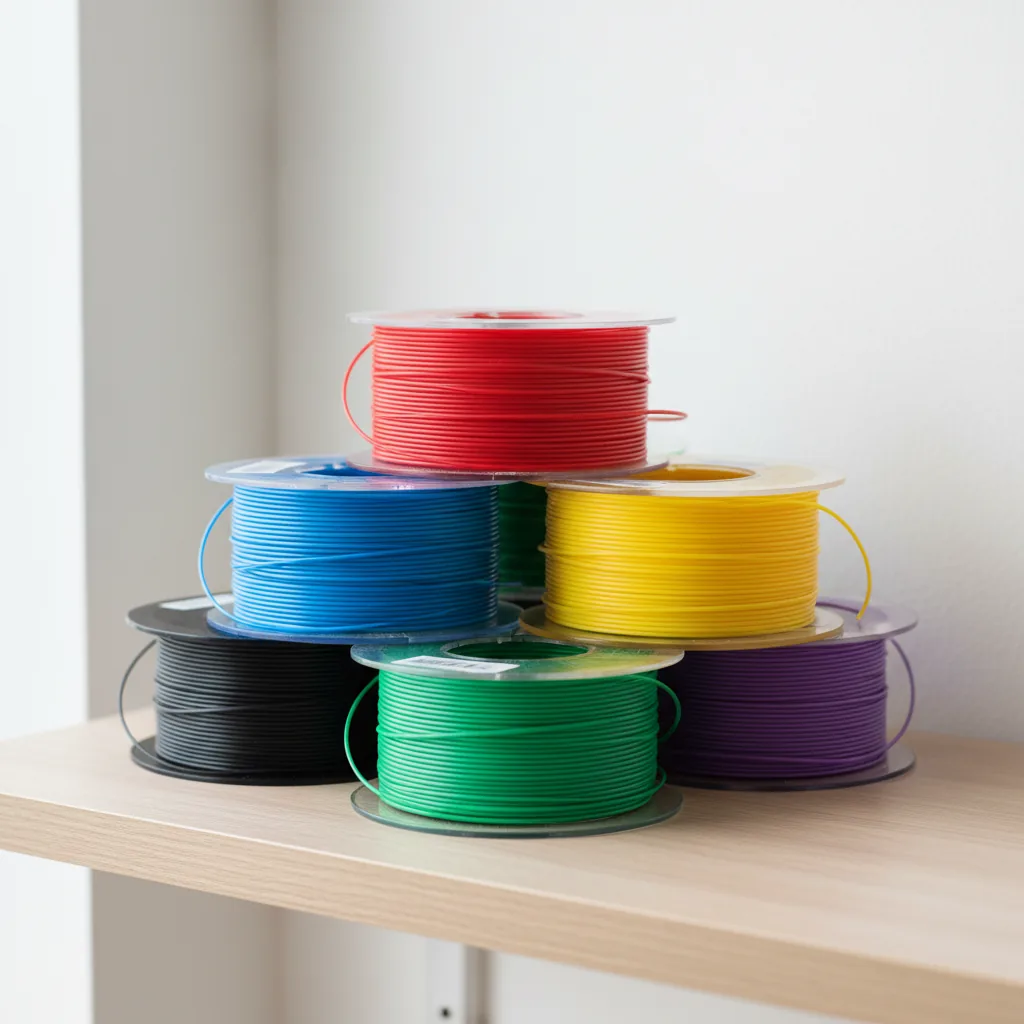
A stack of black and coloured flexible TPU filament spools on a shelf
Post-processing

Four routes to a finished surface.

Sanding · impractical for TPU

TPU clogs sandpaper · skip the sand

The flexible matrix balls up on sandpaper grit · sanding doesn't work as standard finishing. For smooth surfaces, plan for low layer height (0.1 mm) in the print and live with the matt rubber finish. The natural texture is usually acceptable for gaskets, grips, and shock absorbers.

Pre-print drying · mandatory

Dry every spool at 65-70°C for 4-6 hours · skip this and the part suffers

Wet TPU (the spool has been in humid air more than ~3 days) prints with surface bubbles, stringy extrusion, and reduced layer adhesion · TPU absorbs 0.82% water at equilibrium, higher than rigid filaments. We run this on every spool before the bed.

Flexible coating · for colour

Flex primer + flex paint · rigid 2K paints crack on TPU

Rigid 2K spray paints crack as TPU flexes · use flexible (rubber-bonding) primer + automotive flexible paint instead. Adds 0.05-0.10 mm per surface. Stock-coloured filament is the easier route · matt rubber finish off the printer is usually fine for industrial parts.

Anti-tack treatment · talc or PTFE dust

Reduces surface tack · easier handling, less dust pickup

Off-the-printer TPU has a slightly tacky matt rubber surface that picks up workshop dust. A light talc or PTFE-dust treatment (industrial standard for moulded elastomers) reduces tack and makes parts easier to install and inventory. Optional · most gaskets/seals don't need it but cosmetic and consumer-facing parts often benefit.

Why 3DPE for TPU

Four reasons engineers and product brands send us their TPU briefs.

ISO

ISO-referenced spec on every part

Every value on this page traces to an ISO test method · the manufacturer's TPU95 TDS V5.1 EN, cross-checked against the PDF in-session. ISO 37 (rubber tensile) replaces ISO 527 for elastomers · we don't quote derived numbers without naming the standard.

UK

Printed in the UK · direct-drive every TPU job

No offshore subcontracting. Files, prints, and couriers all stay in the UK · TPU runs on direct-drive extruders (Bowden tubes let TPU buckle and tangle) and every spool is dried at 65-70°C for 4-6 hours before the bed.

FIT

Material-fit check on every brief

Send three things: Shore hardness needed (90A vs 95A), load type (sustained-static / dynamic-cyclic / impact), and service temperature + chemistry. our team come back inside 24 hours · if silicone or a rigid material is a better fit, we say so.

JC
FB

Two engineers, named

our team review every brief before quote. No ticket queue, no account managers.

According to the PolyFlex TPU95 TDS, TPU95 delivers Shore 95A hardness (ISO 7619-1) with 551 ± 24% elongation at break and stress @300% of 21.0 ± 0.7 MPa · flexible elastomer, no Tg/Tm/HDT published.

FAQ

FAQ · Thirteen questions worth getting in writing before specifying TPU.

How do you print TPU? (flexible 3D printing)

TPU is our flexible 3D printing material. We print Shore 95A TPU at 210–230°C on a direct-drive extruder, slowly · flexible filament buckles in a Bowden path · with the spool dried at 65–70°C for 4–6h first or you get surface bubbles. The real lever on a flexible part is design, not just the material: wall count, infill density and pattern set how stiff or rubbery the finished part actually feels, and we tune those per part at quote stage.

What Shore hardness is 3DPE's flagship TPU?

Shore 95A. That is firm-but-compliant · squishy under a thumb, recovers instantly, similar feel to a hard rubber wheel or a tyre tread. Most commercial moulded gaskets and phone-case inserts sit at Shore 93-95A. For softer parts, 3DPE stocks Shore 90A on request (softer, more rubber-band-like, elongation 600%+). Shore A is the rubber hardness scale · rigid filaments (PLA, PETG, ABS) all sit at Shore D · a different mechanical regime.

How does TPU compare to silicone?

Both give elastomer behaviour. TPU wins on: no moulding tooling cost (FDM from CAD directly), geometry freedom (internal channels, lattices, complex shapes), fast lead time (no mould lead time), oil and grease compatibility. Silicone wins on: temperature range (-60°C to +250°C vs TPU's -20°C to ~80°C), chemical resistance (broadly resistant vs TPU broadly not), biocompatibility for medical, and lower creep under sustained load. For small-batch + custom geometry + room-temperature service, TPU. For mass-production + extreme-temperature + chemical service, silicone (we don't print silicone but can advise).

Will a TPU part creep under sustained load?

Yes · this is TPU's Achilles heel. Sustained static load causes slow permanent deformation. A Shore 95A TPU seal compressed 20% at room temperature creeps approximately 3-8% over 1,000 hours. At 60°C the same seal creeps 10-15%. The cause is the segmented block-copolymer microstructure · soft-segment Brownian motion lets chain segments slide past the hard-segment physical cross-links under sustained load. Design for the deformed state (over-size the initial interference), or step to silicone for true zero-creep service. For dynamic / cyclic loads TPU springs back fully · creep is only an issue for sustained static loads.

Is TPU UV-stable for outdoor service?

This grade · MDI-based aromatic TPU · yellows and embrittles over months of direct sun. Aliphatic HDI-based TPU is UV-stable but is a different SKU (on request, longer lead time). For short-term outdoor service (under 6 months) the aromatic TPU we stock holds up reasonably. For multi-year outdoor flexible parts, specify the aliphatic TPU on request, or UV-overcoat the part with a flexible primer.

Is TPU chemically resistant? · TDS compatibility table

Per the manufacturer TDS · NOT resistant to weak acids, strong acids, weak alkalis, or strong alkalis. Good for oils, greases, alcohols (IPA, ethanol). Poor for petrol, aromatic hydrocarbons, ketones. For sustained chemical service in flexible elastomers, specify silicone or fluoroelastomer (FKM) · we'll advise the right spec.

Chemical / familyResistanceNotes
Weak acids (acetic, citric, dilute organic)Not resistantManufacturer TDS rating · degrades polyester TPU backbone
Strong acids (sulphuric, HCl, nitric)Not resistantManufacturer TDS rating · rapid attack
Weak alkalis (dilute soap, mild bleach)Not resistantManufacturer TDS rating · hydrolyses ester bonds
Strong alkalis (caustic soda, ammonia)Not resistantManufacturer TDS rating · rapid hydrolysis
Oils, greases (mineral, motor, hydraulic)GoodTPU literature · why TPU is used for automotive seals
Alcohols (IPA, ethanol wipe-down)GoodSurface cleaning · sustained immersion limited
Cold water, sea water (cold)LimitedTPU absorbs 0.82% water · polyester TPU slowly hydrolyses in sustained water
Hot water (sustained > 60°C)PoorApproaches service ceiling · hydrolysis accelerates
Steam autoclave (121°C)FailsWell above ~80°C ceiling · parts soften and deform
Petrol, dieselPoorSwells polyester TPU · loses strength
Aromatic hydrocarbons (toluene, xylene)PoorSwells and degrades
Ketones (acetone, MEK)LimitedBrief OK · sustained attacks the polymer
Ozone (outdoor + electrical service)GoodTPU literature · resistant to ambient ozone
UV exposure (UK outdoor, aromatic MDI grade)LimitedYellows in months · multi-year requires aliphatic TPU SKU
Skin contact (short-duration)GoodOK for tool grips, watch straps · medical-grade requires certified TPU SKU

First five rows are direct manufacturer TDS ratings (TDS V5.1 EN). Remaining rows reflect industry TPU behaviour and 3DPE workshop experience · brief contact is always more forgiving than sustained exposure. For sustained chemical-service flexible parts the right call is silicone or FKM (which we don't print but can advise on).

Does TPU warp when printing?

No · the flexible matrix absorbs internal stress rather than locking it in. Bed adhesion on PVA glue, Magigoo, BuildTak, glass, or blue tape is generally good. The bigger print issue is wet filament producing surface bubbles, stringy extrusion, and reduced layer adhesion · TPU is hygroscopic (0.82% equilibrium water absorption) so every spool is dried at 65-70°C for 4-6 hours pre-print. The second print issue is filament buckling in Bowden tubes · TPU prints best on direct-drive extruders (we run direct-drive on every TPU job).

Why does TPU print badly when the filament is wet?

TPU is hygroscopic · equilibrium water absorption is 0.82% (per TDS V5.1). The segmented urethane matrix absorbs more water than rigid filaments. Water in the filament flashes to steam at the nozzle, producing visible surface bubbles, stringy extrusion, and reduced layer adhesion. Pre-print drying at 65-70°C for 4-6 hours is essential for production work · every TPU spool runs through a drier before the bed.

Will a 3D-printed TPU gasket seal as well as moulded silicone?

Usually yes, for short-term or room-temperature service. 3DPE prints with at least 100% infill on gasket sealing surfaces, oriented with the seal face in XY for best layer-cohesion. For sustained immersion, high pressure, or autoclave-cycle service, silicone is the right call. TPU's strengths over silicone: no tooling cost, geometry freedom, faster lead time, better oil/grease compatibility. TPU's weaknesses: lower service temperature, higher creep, broader chemical sensitivity.

Can TPU be solvent-bonded?

TPU bonds with TPU-specific cyanoacrylate (rubber-bonding grade) and with 2-part urethane adhesives. Acetone and most common solvents do not dissolve or fuse TPU. For elastomer-to-rigid bonds, primer-based urethane adhesives are the strongest joint. Heat-set inserts work but the flexible matrix tends to grip-and-relax over time · for permanent threaded inserts in TPU, consider overmoulding around rigid fasteners. Ultrasonic welding works but requires equipment that can accommodate TPU's compliance.

Can TPU be autoclaved at 121°C?

No. Steam autoclave at 121°C is well above TPU's ~80°C continuous-service ceiling · parts soften and deform, and the polyester backbone hydrolyses in steam. EtO sterilisation, gamma irradiation, and IPA wipe-down all work for TPU. For repeated steam-autoclave service in flexible parts, specify medical-grade silicone (requires moulding tooling).

What temperature does TPU actually fail at?

TPU has no formal HDT, Tg, Tm, or Vicat published in the TDS · rubber elastomers don't deform under load the same way rigid plastics do. Practical service envelope per TPU literature: -20°C to ~80°C continuous. Below -20°C, TPU stiffens significantly toward glassy. Above 80°C the hard segments soften and TPU loses elastic recovery. Engine-bay heat, direct summer sun on dark surfaces, and near-radiator service all push TPU past its envelope. For wider temperature elastomer service, silicone (-60°C to +250°C) is the step-up.

How much does TPU cost vs other materials?

Filament cost is roughly £40-60/kg for stock-colour TPU95 · above PETG and PLA, similar to ASA, well below PA12-CF (£90-130/kg). Print time is the bigger cost driver · TPU prints at 20-40 mm/s vs 50-100 mm/s for rigid filaments. For a typical gasket or shock-absorber prototype, material is 10-20% of the unit cost and print time is the rest. Send the brief and we'll quote the actual job.
Glossary

Engineering terms used on this page.

TPU (thermoplastic polyurethane)
A segmented block copolymer of rigid urethane "hard" segments and flexible polyol "soft" segments. The hard segments form physical cross-links at room temperature that melt at ~200°C · which is what makes TPU thermoplastic. The soft segments contribute elasticity. The 95A grade is mid-hardness · the same Shore hardness as commercial moulded gaskets.
Shore hardness A
The standard rubber hardness scale, measured with an ASTM/ISO Shore A durometer (ISO 7619-1). TPU95 = Shore 95A (firm, gasket-grade), TPU90 = Shore 90A (softer, rubber-band-like). Rigid filaments like PLA and PETG sit at Shore D · a separate scale entirely.
100% modulus (rubber tensile)
The stress required to stretch a rubber specimen to 100% of its original length (ISO 37). The rubber-tensile counterpart to "tensile strength" for rigid plastics. TPU95 = 9.4 ± 0.3 MPa. Higher modulus means stiffer (less stretch under load).
Elongation at break
How far a specimen stretches before failure, as a percentage of original length (ISO 37). TPU95 = 330%, TPU90 = 600%+. Rigid filaments break at 3-10%. This is the headline TPU metric · the part can deflect by 3× its size and recover.
Creep
Slow permanent deformation under sustained static load. TPU's Achilles heel · a Shore 95A gasket compressed 20% creeps 3-8% over 1,000 hours at room temperature, 10-15% at 60°C. Design for the deformed state, or step to silicone for true zero-creep service.
Viscoelastic hysteresis
Energy loss as heat on each load cycle in viscoelastic materials. TPU exhibits measurable hysteresis · in high-cycle-rate vibration isolators (>50 Hz sustained) parts can warm noticeably. Design heat dissipation paths or step to silicone for zero-hysteresis service.
Block copolymer
A polymer where two distinct chemical segments alternate along the chain. TPU's hard/soft block structure phase-separates at the nanometre scale producing a two-phase morphology. This microstructure is what makes TPU both thermoplastic (you can melt-extrude it) and elastomeric (it springs back).
MDI vs HDI
The diisocyanate that forms TPU's hard segment. MDI (methylene diphenyl diisocyanate · aromatic) is what this grade uses · lower-cost, mechanically tougher, but UV-yellowing over months. HDI (hexamethylene diisocyanate · aliphatic) is UV-stable but a different SKU · on request for outdoor service.
Direct-drive extruder
An extruder configuration where the filament drive gear sits immediately above the hot end · used for flexible filaments like TPU. The alternative (Bowden, with the drive gear remote and the filament fed through a tube) lets TPU filament buckle and tangle. 3DPE runs direct-drive on every TPU job.
Hygroscopic
A material that absorbs water from humid air. TPU's equilibrium water absorption is 0.82% (per TDS V5.1) · higher than rigid filaments because the segmented urethane matrix absorbs more. Pre-print drying at 65-70°C for 4-6 hours is essential to prevent surface bubbles.
Compression set
The permanent deformation remaining in an elastomer after sustained compression (ISO 815). Lower is better. TPU has measurable compression set under sustained load · silicone has near-zero. Specify the cycle behaviour required (dynamic vs sustained-static) before choosing TPU vs silicone.
FDM (Fused Deposition Modelling)
Filament-extrusion 3D printing. Distinct from SLS/MJF (powder-bed) and SLA (resin). TPU is FDM territory · TPU powder-bed (MJF) exists for higher-volume runs but is a different process with different surface finish and economics.
TPU · SHORE 95A FLEXIBLE · UK PRINTED

Got a brief that calls for flexible TPU? Tell us Shore hardness, load (static vs dynamic), and where the part lives.

You'll hear back from our team within 24 hours · with material-fit check (TPU90 vs TPU95 vs silicone-step-up advice), creep allowance for sustained-load parts, lead-time confirmation, and Shore-hardness coupon if it'd help confirm the feel before printing.

Send your brief Browse other materials Email for full spec