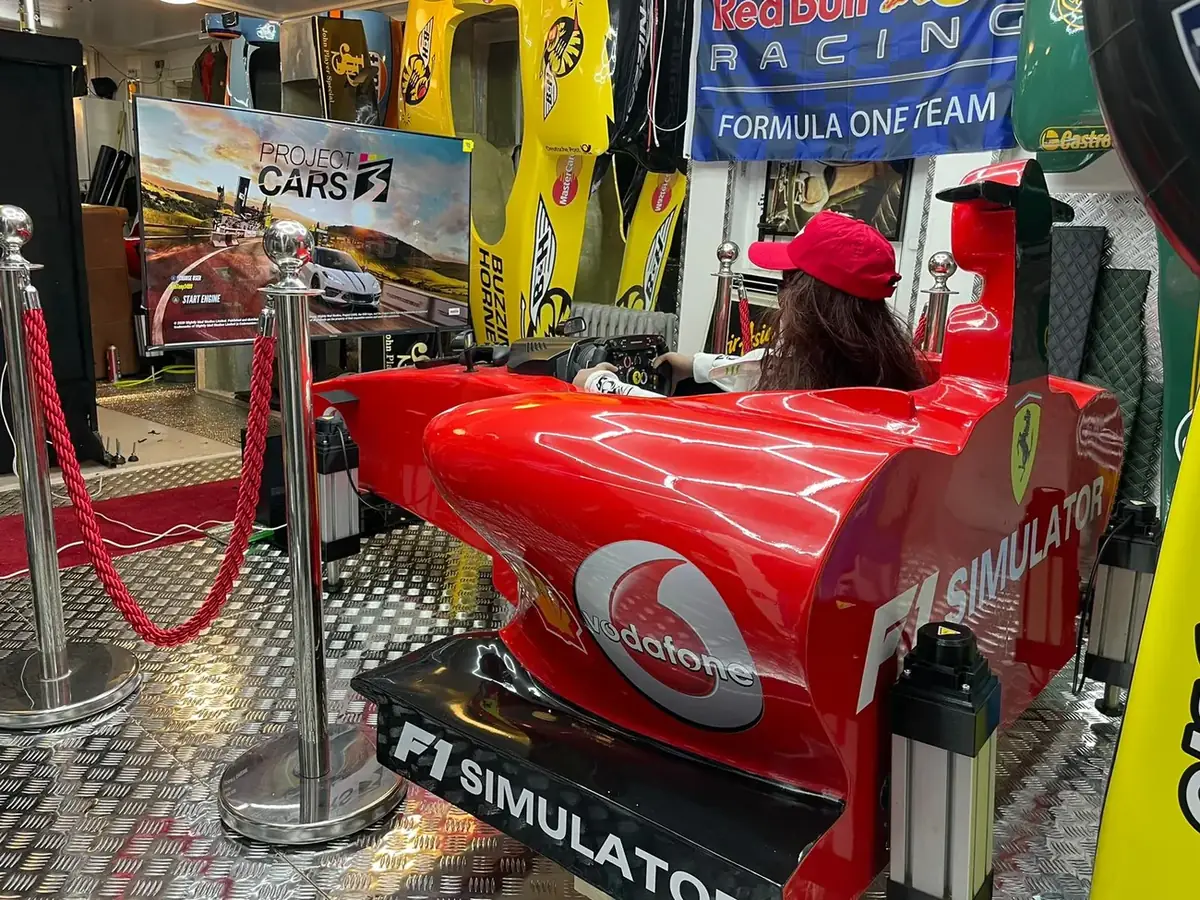
How do you 3D print a life size F1 car for an exhibition racing simulator, and install it on site?
A motorsport experience brand needed a showstopper for their exhibition stand: a life size replica of the middle section of an F1 car, built into a working racing simulator. We took it from CAD to finished build, 3D printed the bodywork (mostly PLA), designed the simulator electronics and the pedals, had it vinyl wrapped in full race livery, then delivered and installed it on site. It draws a crowd at every event, and the client now reuses it right across their exhibition calendar.
A showstopper for the stand
Our client runs motorsport experiences at exhibitions and events, and wanted a centrepiece that would stop people in the aisle and pull them onto the stand. The idea: a life size replica of the middle section of an F1 car, in full race livery, that visitors could actually climb into and drive as a racing simulator. It had to look the part from across a busy hall, work reliably all day, and be something they could take from event to event.
A life size F1 car, printed in sections, that had to ship and install on a live stand.
A prop this size is not something you print in one go. The F1 bodywork had to be modelled at full scale and split into sections that would print on our machines and then line up perfectly once assembled, with no visible joins under the wrap. It also had to be light enough to move, ship and lift onto a stand, yet solid enough to take people climbing in and out of it all day.
On top of the shell, this was a working racing simulator, so the electronics, screen, steering and pedals all had to be designed and built in, not bolted on as an afterthought. And it all had to arrive and go together on site, to an exhibition deadline that does not move.
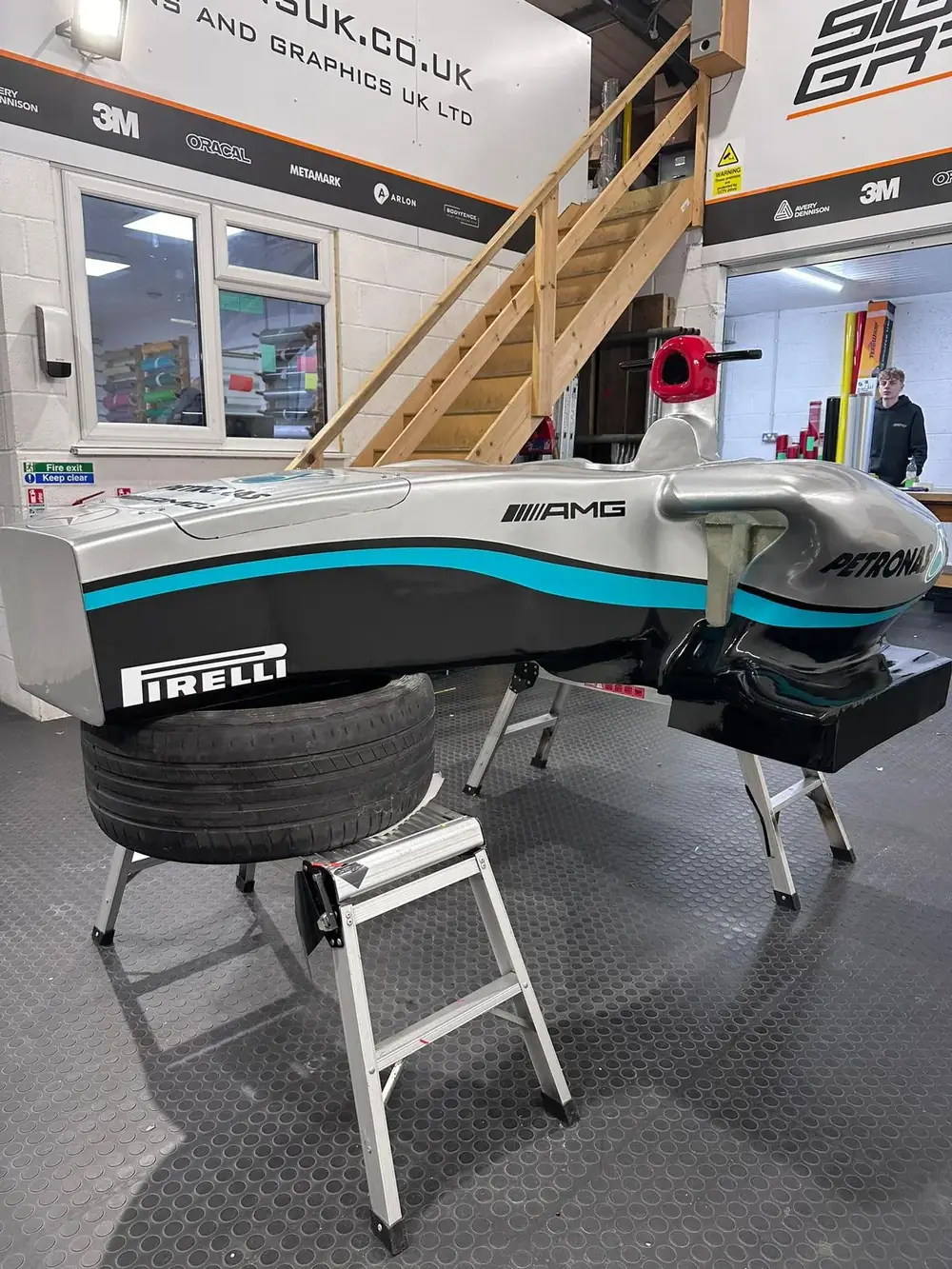
CAD to a printed body, a built simulator, and a full race wrap.
We modelled the F1 mid section at life size and split it into large sections that print cleanly and key together. The bodywork came off our Poole machines mostly in PLA, then it was bonded, smoothed and prepped. Inside, we designed and fitted the simulator: the screen, the racing wheel, the electronics and a set of custom pedals, so a visitor sits in a real cockpit rather than a static shell. Then the whole body went for a professional vinyl wrap in full race livery, so it reads as a genuine F1 car from right across the hall. We delivered it and installed it on the client's stand ourselves. Because it is printed and wrapped rather than moulded, they can re-livery and reuse the same build for different events.
From CAD to a car on the stand. Here's how we ran it.
A build this size runs on the same structured process as every job at our Poole workshop, just at a much bigger scale.
CAD and scale
We modelled the F1 mid section at life size and split it into printable sections that key together with no visible joins.
Step 1Large format print
The bodywork printed in sections at our Poole workshop, mostly PLA, then bonded, smoothed and prepped for wrapping.
Step 2Simulator and wrap
We designed and fitted the screen, wheel, electronics and pedals, then had the shell vinyl wrapped in full race livery.
Step 3Deliver and install
We shipped it and installed it on the client's exhibition stand ourselves, ready for visitors to jump in and race.
Step 4
A stand magnet they reuse event after event.
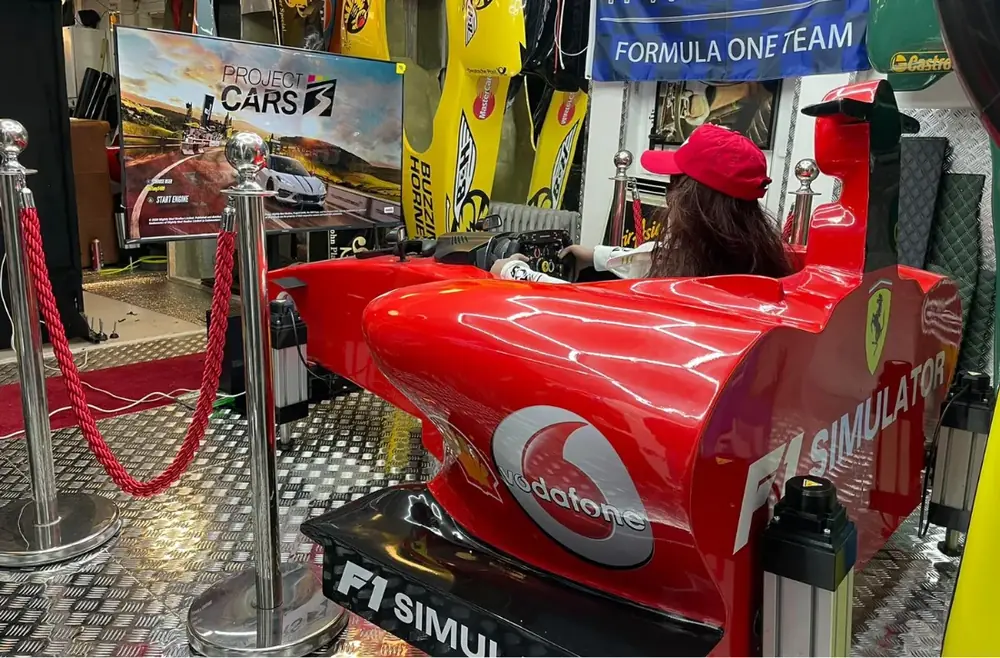
The finished simulator is the centrepiece of the stand: a life size F1 car people queue up to sit in. It pulls visitors in and keeps them there. Because it is 3D printed and wrapped rather than moulded, the client re-liveries and reuses the same build across their exhibition calendar, so it keeps earning its keep long after the first event.
| 3D Printing Express (what we did) | Traditional moulded prop | |
|---|---|---|
| Cost and lead time | Printed to shape, no moulds, ready for the event | Fibreglass tooling: slower and more costly |
| Changing the livery | Re-wrap and reuse for any event | Refinish or rebuild |
| Built-in simulator | Screen, wheel, pedals and electronics designed in | Static prop only |
GalleryFrom the project
3 photos · 3D Printing Express, PooleQuestions about 3D printed exhibition props, displays and event builds
Common questions about large format 3D printing for exhibitions, events and brand activations. Our workshop is in Poole, Dorset, and we build and install for clients across the UK.
Can you 3D print large props and displays for exhibitions?
Yes, it is one of the best uses of 3D printing. This project was a life size F1 car for an exhibition racing simulator. We print large pieces in sections, bond them and finish them, so there is no tooling to pay for and no minimum run. Tell us the size and the event date and we will tell you what is possible.
How big can a 3D printed part be?
Much bigger than a single printer bed. We design large items as sections that print separately and key together, then bond and finish them so the joins disappear under paint or a wrap. A life size car is well within reach. The limit is the design, not the machine.
Can you build interactive displays, not just static props?
Yes. This F1 car is a working racing simulator: we designed and built in the screen, the steering wheel, the electronics and the pedals, so visitors actually sit in and drive it. We can build interactivity into a display rather than leaving it as a shell.
Do you deliver and install for events?
Yes. We shipped this build and installed it on the client's stand ourselves, and they now reuse it across their events. We handle delivery and on-site install so it is ready before the doors open.
Planning a showstopper for your stand or event? Send us the brief.
We design, 3D print and install large format props, displays and interactive builds from our workshop in Poole, Dorset, for exhibitions and events across the UK. Concept to on-site install, handled by the two founders, not a form reply.