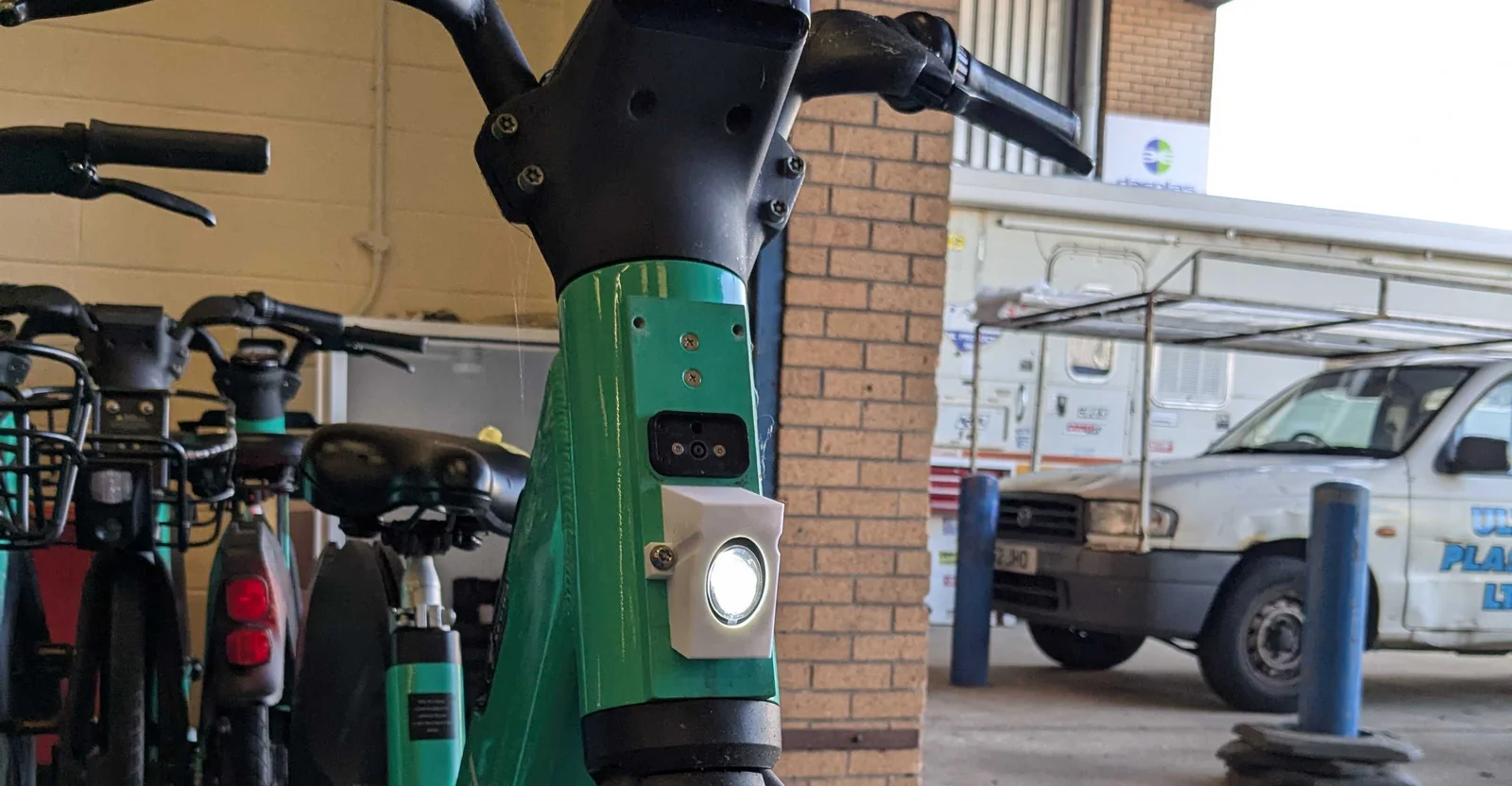
How do you build a branded light mount tough enough for a shared e-bike fleet, then cut the cost per unit at volume?
Beryl, the UK shared e-bike and e-scooter operator, needed a front-light mount their fleet could rely on. We prototyped it, dialled in the fit and the printed-in branding with their engineer, and worked through three materials to a glass-fibre PET-GF that passed Beryl's own bench testing. The result is a production-ready, brand-marked mount, signed off by their team, with a per-unit cost that drops sharply at production volume and no tooling to pay off.
Who is Beryl?
Beryl is a UK B-Corp that runs shared e-bike and e-scooter schemes for towns and cities across the country. Their vehicles live outdoors and get ridden hard by thousands of different riders, so every part on the bike has to survive weather, knocks and constant use. When their engineering team needed a front-light mount that could be precisely fitted, brand-marked, and eventually produced at fleet volume, they sent the brief to our Poole workshop, just along the coast from the Bournemouth streets their bikes run on.
Visit BerylA light mount that had to fit exactly, carry the brand, and take a beating.
A light on a hire e-bike leads a hard life. It is ridden in all weathers, parked outside every night, knocked in the racks and handled by thousands of riders who do not own it. Beryl needed a front-light mount that clamped precisely onto the bike's head stem, sat at exactly the right angle, and carried the Beryl name and logo, not a generic bracket that fits nothing in particular.
Underneath the fit sat a harder question: which material survives that life without going brittle or dull, and can it be made repeatably at fleet volume without the cost of injection-mould tooling? The early prototypes proved the concept, but the brand detail and the finish around the fixings had to be right before Beryl would commit to a production run.
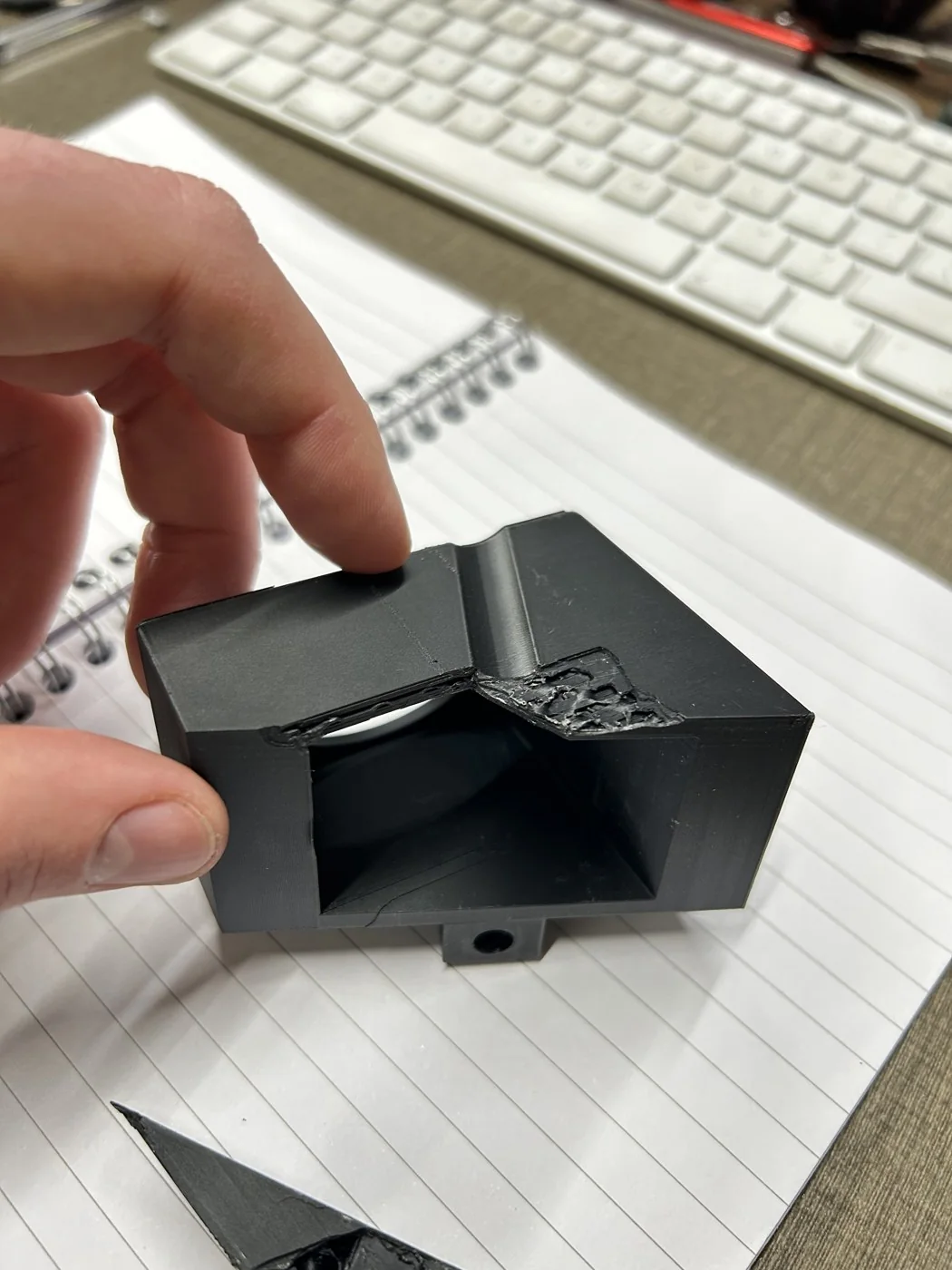
A glass-fibre PET-GF mount, brand printed in, proven over real prototypes.
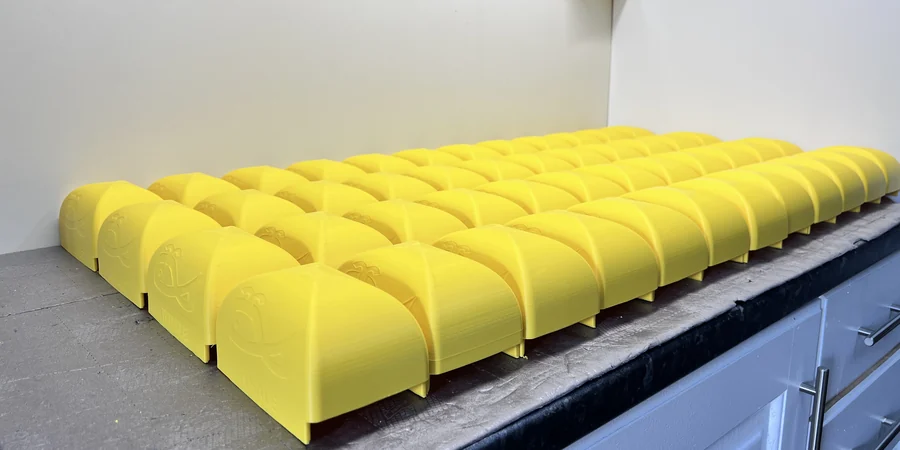
We ran the mount through real prototypes with Beryl's engineer, posting parts back for fit testing on actual bikes rather than guessing on screen. The fit and angle were right early, which is the hardest part to nail. From there it was detail: we traced the finish around the bolt holes to the support interface and adjusted orientation and supports, and when the printed logo came up soft we enlarged it so it renders crisply, which in turn let the micro-fillet go to 0.4mm for a cleaner edge. On material, we moved from ASA to a glass-fibre PETG, and finally to PolyMaker's Fiberon PET-GF, a stiffer, glass-fibre-reinforced grade. Beryl bench-tested the samples themselves and chose PET-GF on how it looked and how it held up. One design, brand marked, ready to repeat at volume.
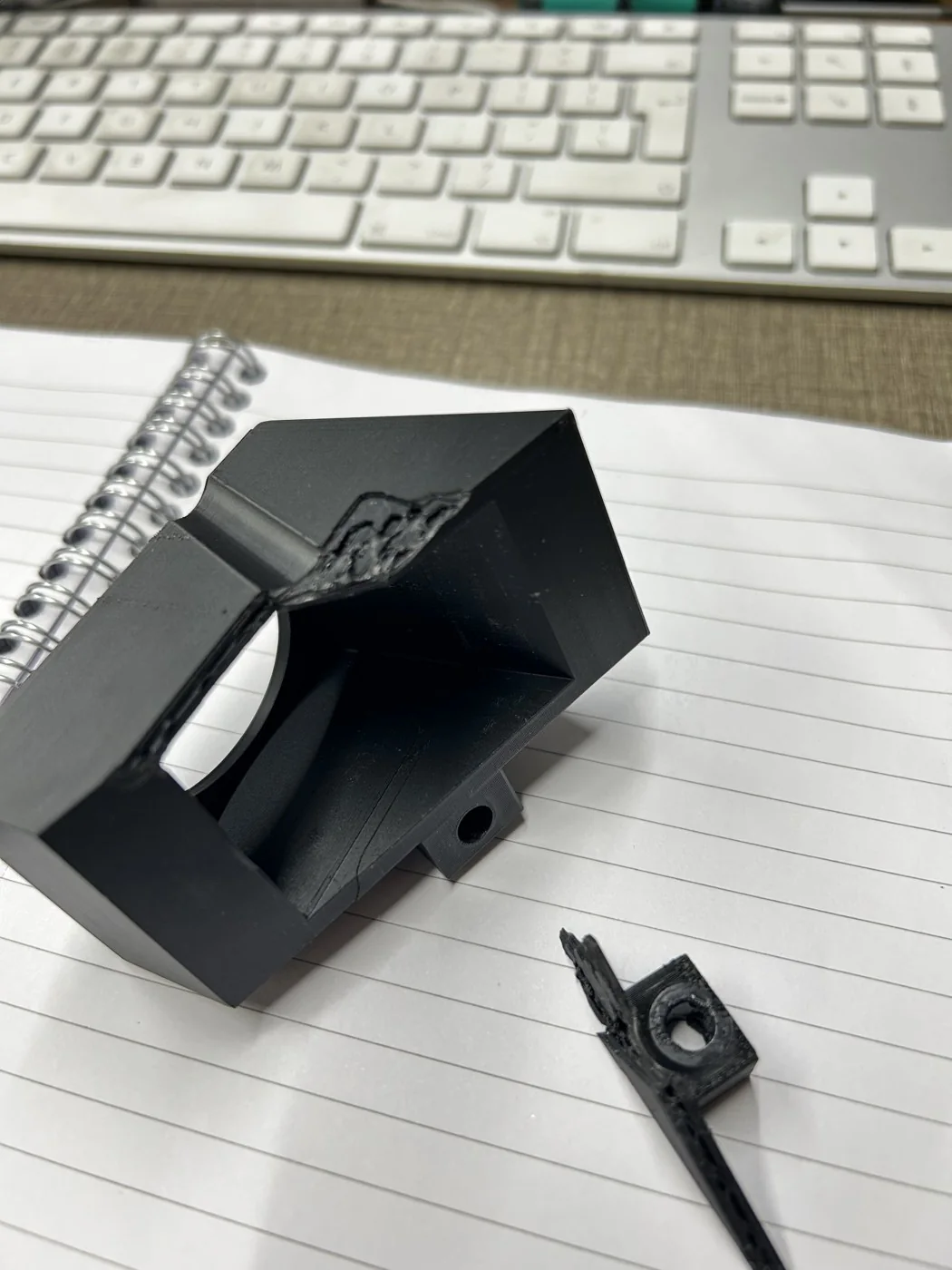
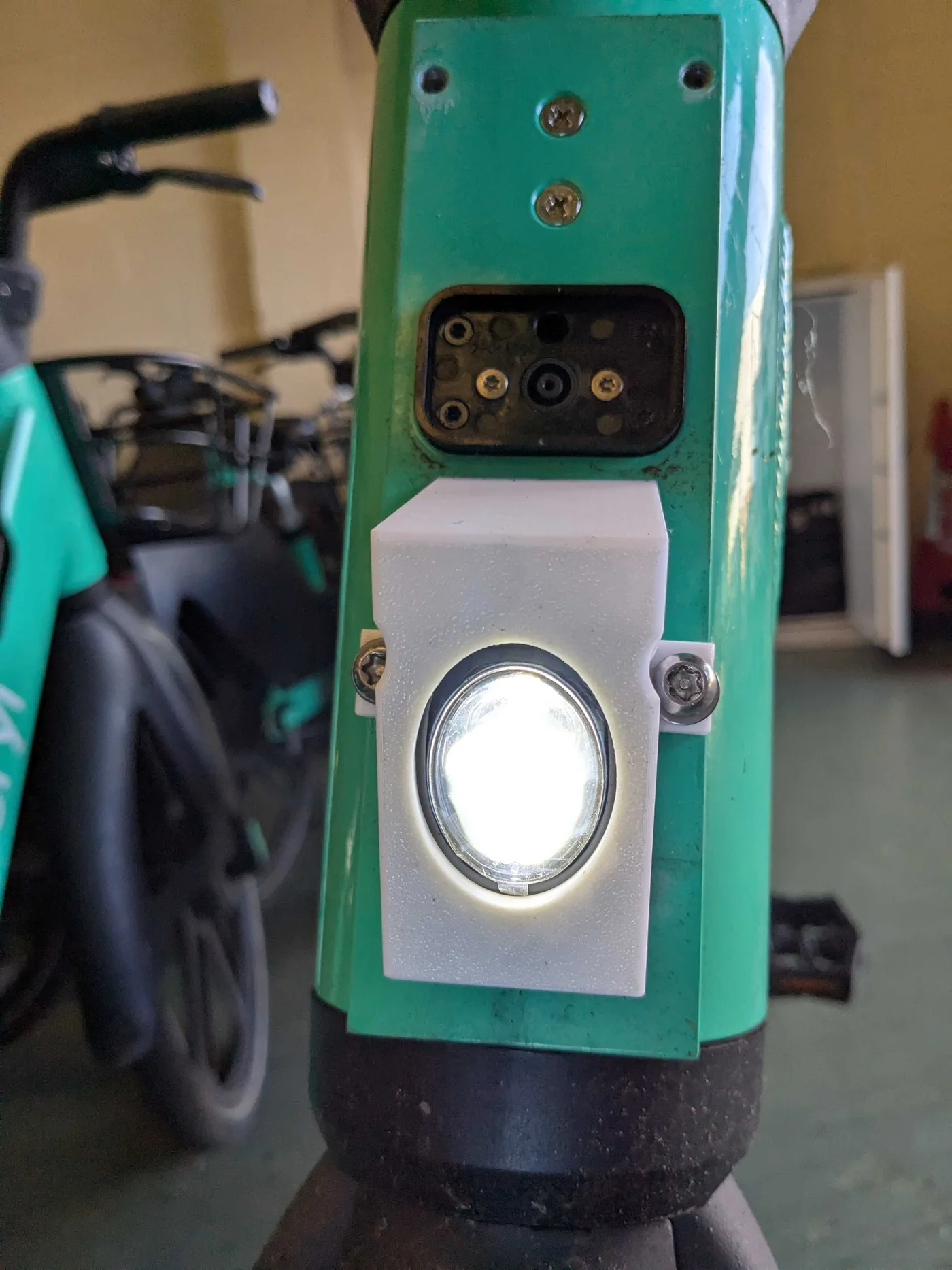
From first prototype to a signed-off, production-ready part.
Every project at our Poole workshop follows the same structured process. Prototype, test on the real thing, refine, then prove the material before anyone commits to a run.
Brief + first prototype
Beryl sent the mount concept and their bike interface. We printed the first prototypes and posted them up for a real-world fit check on the bike.
PrototypeFit + brand dialled in
Fit and angle confirmed on the bike. We enlarged the printed logo, took the micro-fillet to 0.4mm, and cleaned up the finish around the fixings.
IterationMaterial proven
Samples in PETG-GF and PET-GF sent for Beryl to bench-test. They chose the stiffer glass-fibre PET-GF on both looks and performance.
TestingProduction-ready
Final design signed off, and a one-off at optimum print settings delivered. Volume pricing set from 100 to 1,000 units, ready for the batch.
Sign-off
Signed off by Beryl's engineer, and priced to scale.
Beryl's team confirmed the final part needed no further changes, and we set production pricing across the fleet volumes they will order in. Because it is 3D printed, there is no tooling to pay off, so the price moves with quantity rather than a mould, and the CAD is on file for the moment the batch order lands.
| 3D printing (what we did) | Traditional tooling route | |
|---|---|---|
| Per-unit cost at volume | Falls with quantity, printed to order | Tooling to pay off before unit one |
| Your branding on the part | Logo + wordmark printed in | Extra tooling detail or a secondary process |
| Changing material after a bench test | Switch filament and reprint | Re-tool for the new material |
We are extremely happy with the product and need no further alterations.
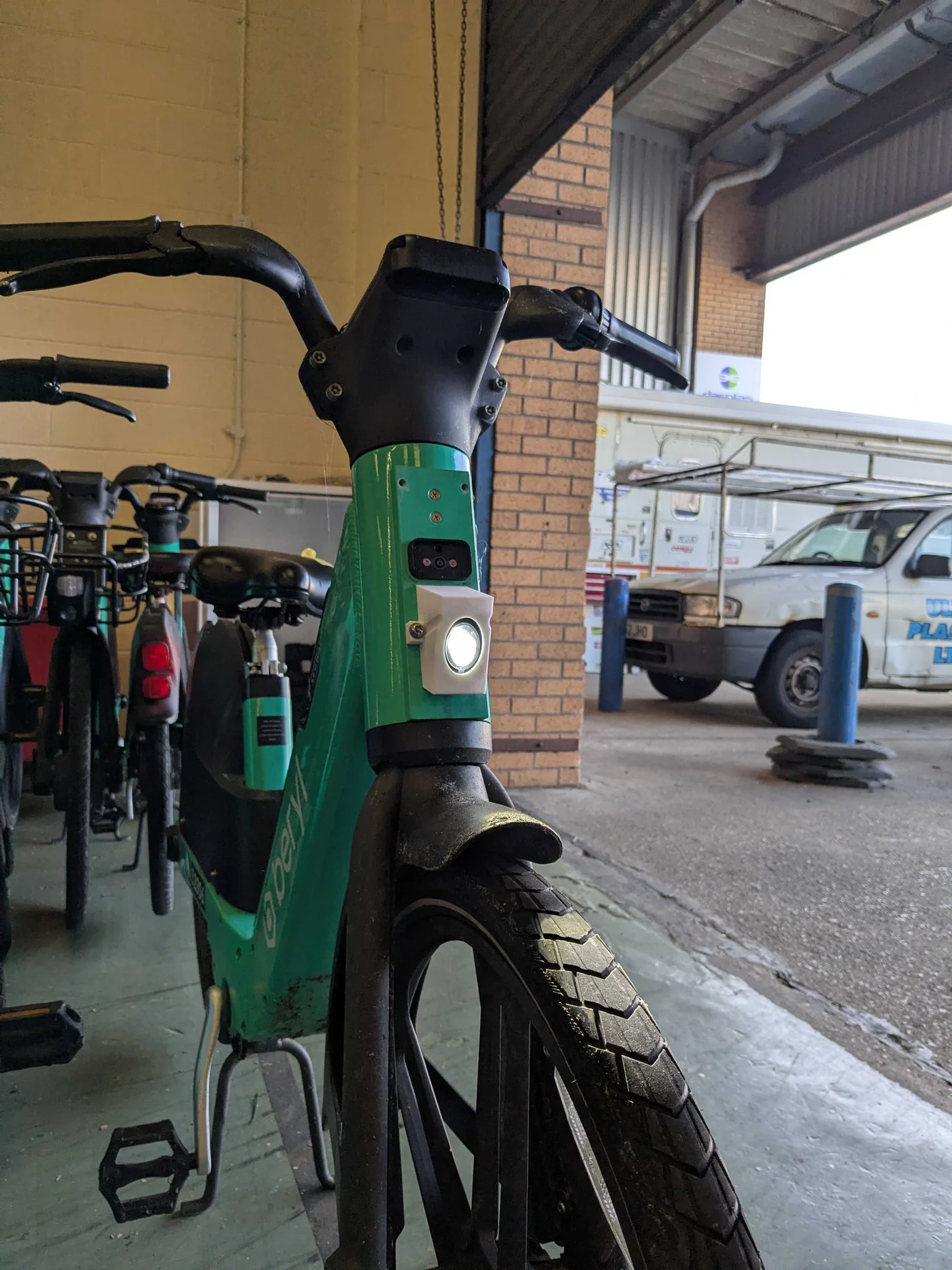
GalleryFrom the project
3 photos · 3D Printing Express, Poole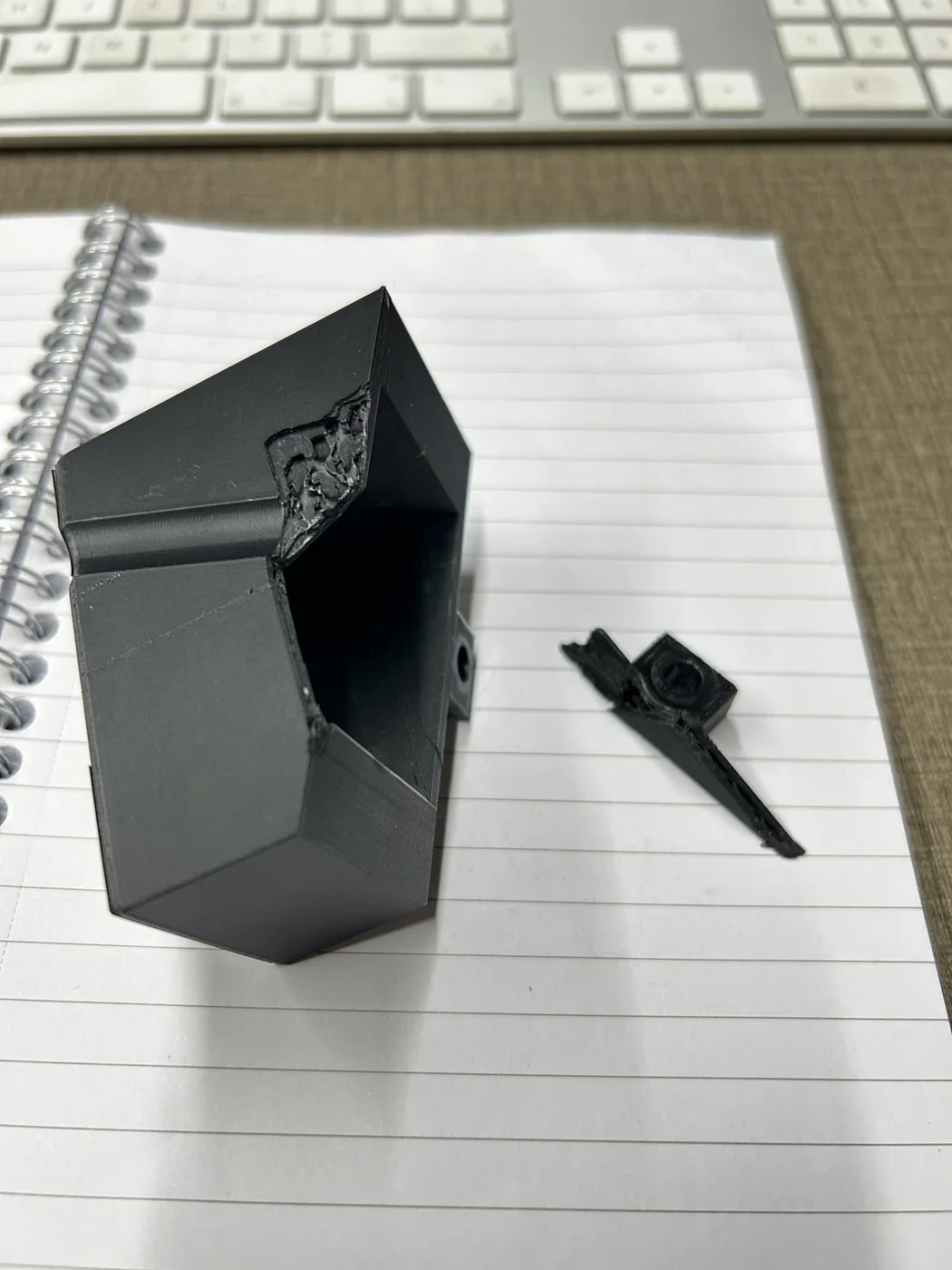
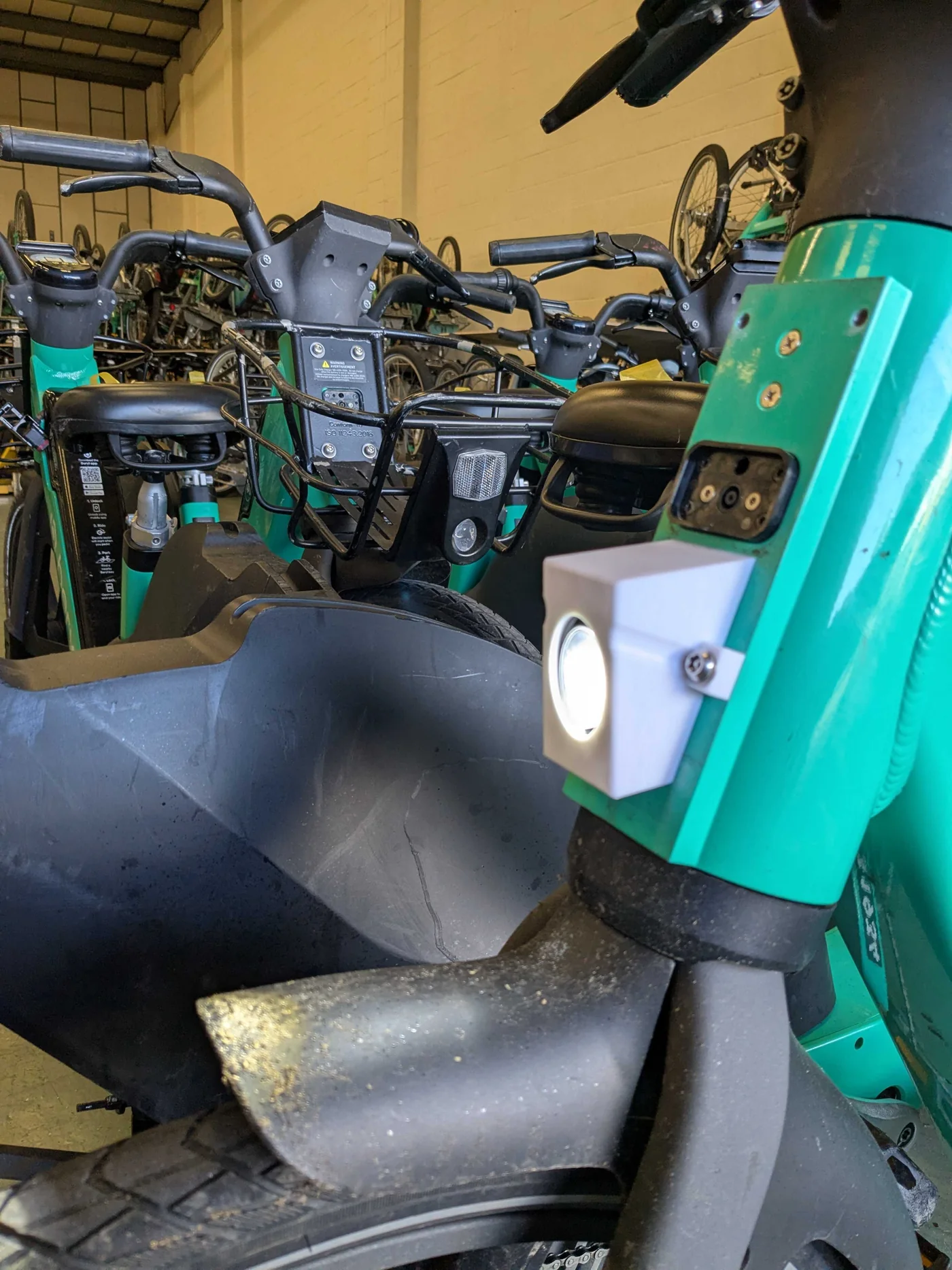
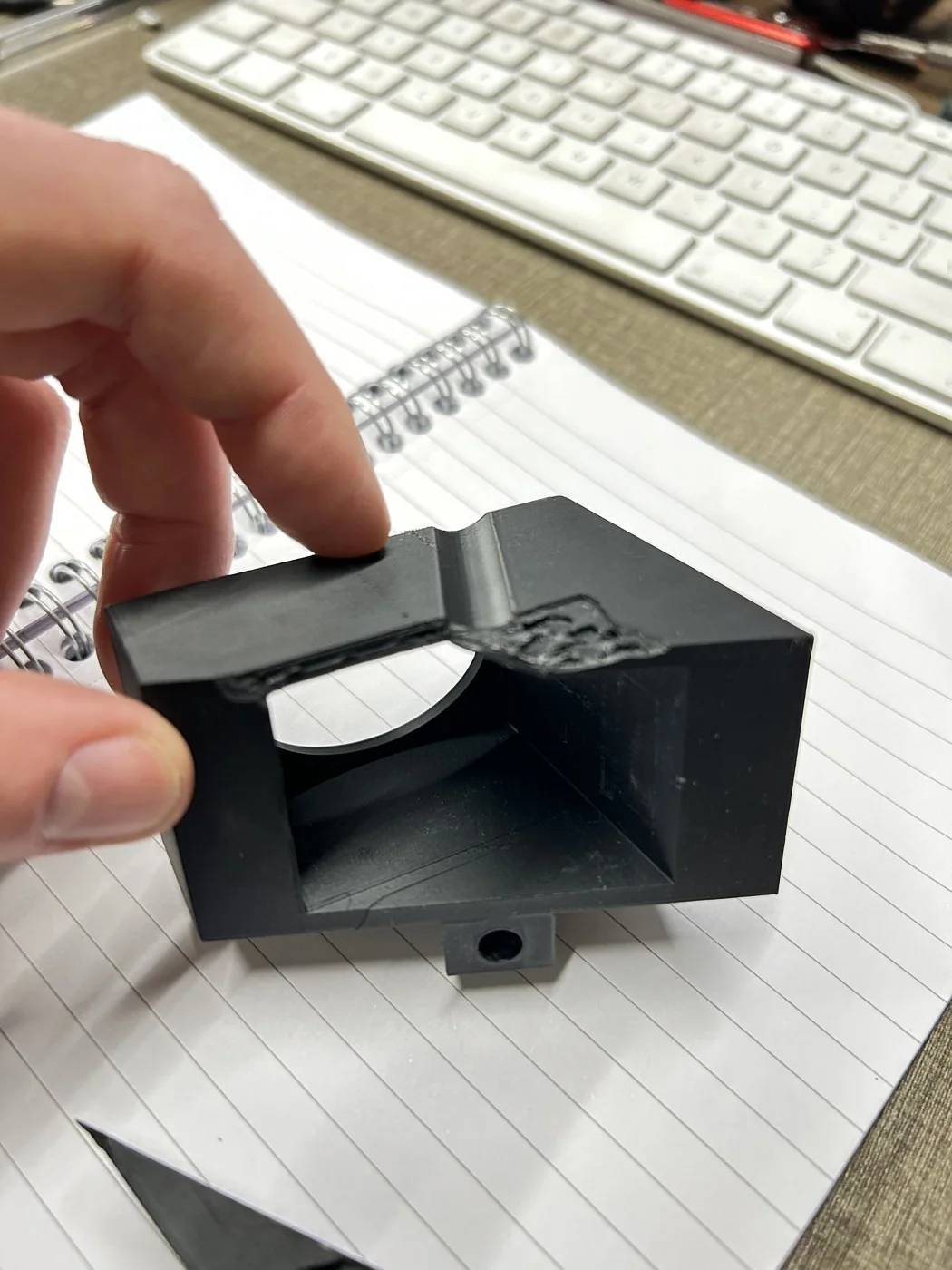
Questions about 3D-printed parts for fleets and products
Common questions we get about projects like this one. Our workshop is in Poole, Dorset, and we serve clients across Bournemouth, the South Coast, and the whole of the UK.
What is PET-GF, and why use it for fleet parts?
PET-GF is PET reinforced with chopped glass fibre. The glass makes it noticeably stiffer and more dimensionally stable than standard PETG, which is why it suits parts that get handled and knocked constantly, like a shared-bike light mount. For this project Beryl bench-tested a glass-fibre PETG against PolyMaker's Fiberon PET-GF and chose the PET-GF on both finish and performance.
Can you 3D print production runs, not just prototypes?
Yes. This mount went from prototype to a production-ready part with per-unit pricing set from 100 up to 1,000 units. With 3D printing there is no tooling to pay off, so you pay per part from the first one and the price falls with quantity. On this project the per-unit cost drops substantially from the one-off prototype rate once you are into production volumes of 100 to 1,000 units.
Can you print our logo or branding into a part?
Yes. The Beryl name and logo are printed straight into the mount. When the fine logo detail first came up soft, we enlarged it and adjusted the print settings so it renders cleanly on every part, with no stickers and no secondary process.
Do you keep our files for reorders?
We hold the signed-off CAD on file, so a repeat order or a design tweak is one email, not a new project. That matters for a fleet that grows and replaces parts over time.
Got a part that has to survive real-world use? Send us the brief.
We design and 3D print functional, production-ready parts from our workshop in Poole, Dorset,shipping to clients across Bournemouth, the South Coast, and throughout the UK.You'll hear from our team, the two founders, not a form reply.