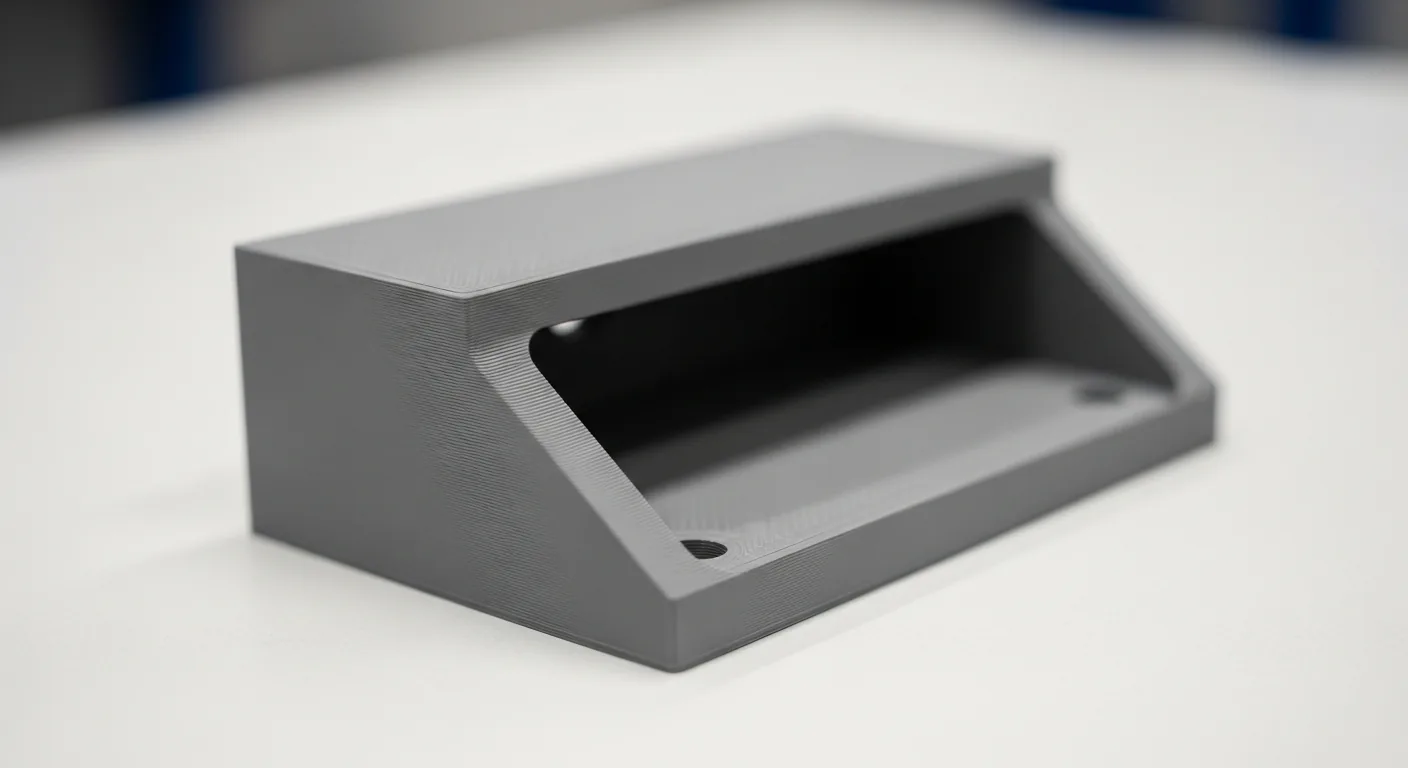
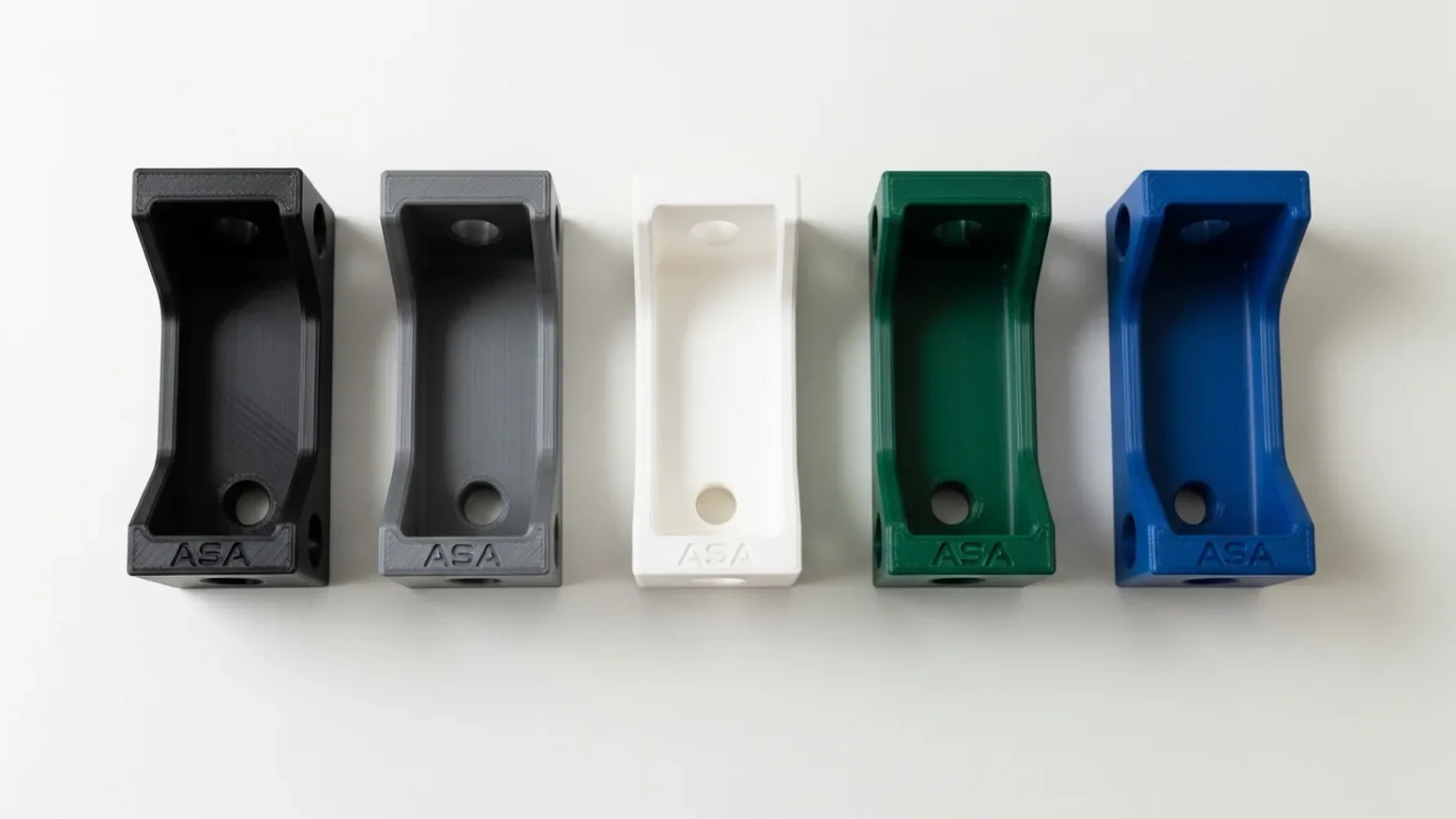
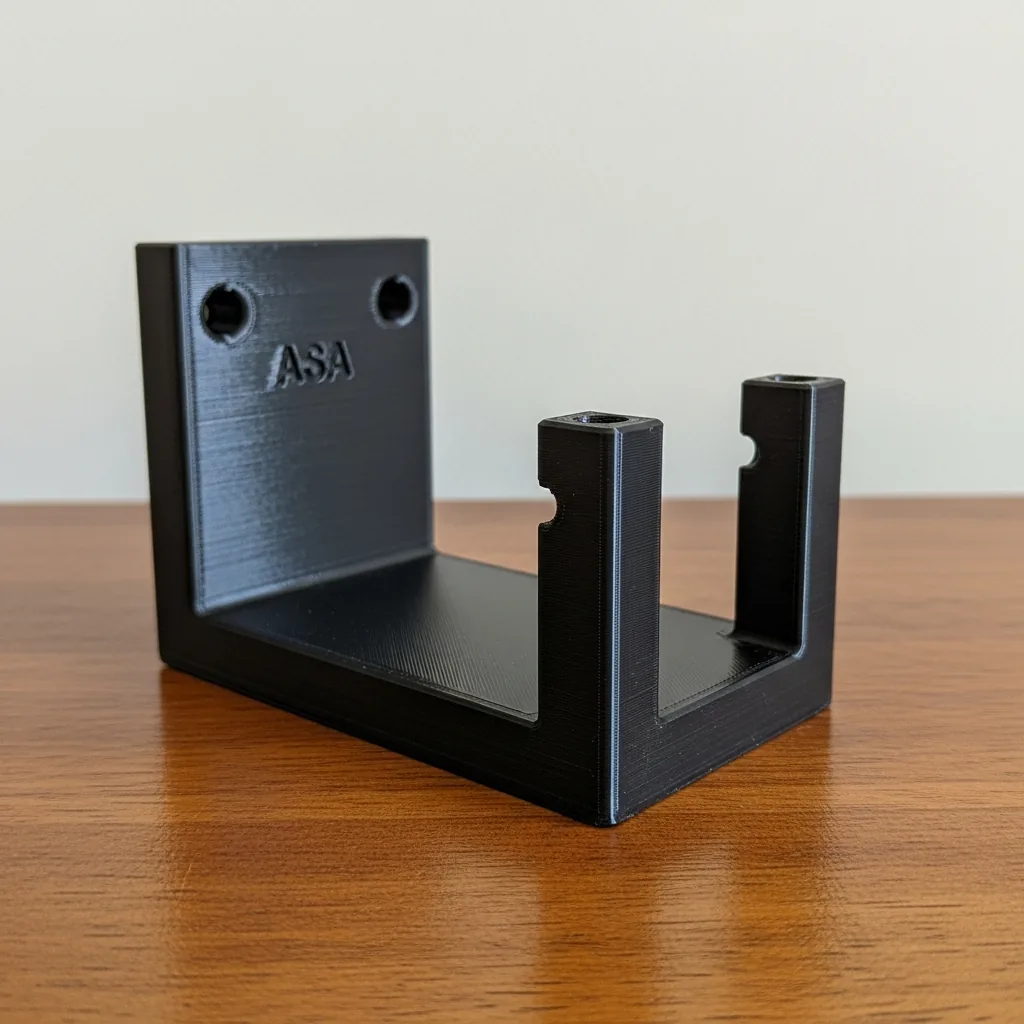
What is ASA, and how is it different from ABS?
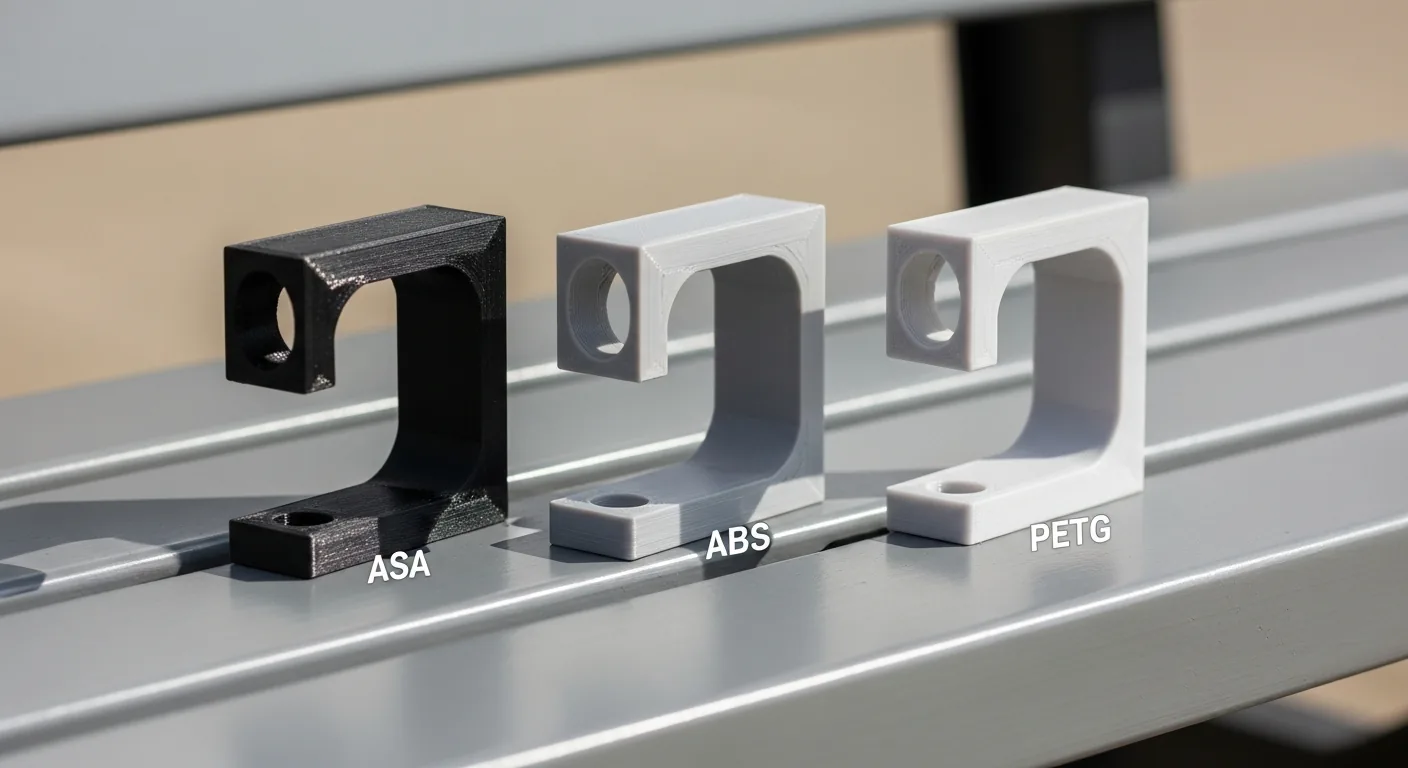
ASA is acrylonitrile styrene acrylate · the UV-stable cousin of ABS. The chemistry is nearly identical except the butadiene rubber phase used in ABS is replaced with a polyacrylate rubber phase. Butadiene has reactive carbon-carbon double bonds (C=C) in every repeat unit · UV-B radiation snaps those bonds, the rubber phase oxidises, and ABS yellows and surface-cracks within months outdoors. Acrylate has no C=C bonds in its backbone, so the polymer survives years of direct sunlight. ASA keeps the impact toughness, stiffness, and heat resistance of ABS (43.8 MPa tensile, 103°C HDT, 10.3 kJ/m² Charpy notched · all per TDS V5.4) and loses the single feature that made ABS unsuitable outdoors.
How long does ASA last outdoors?
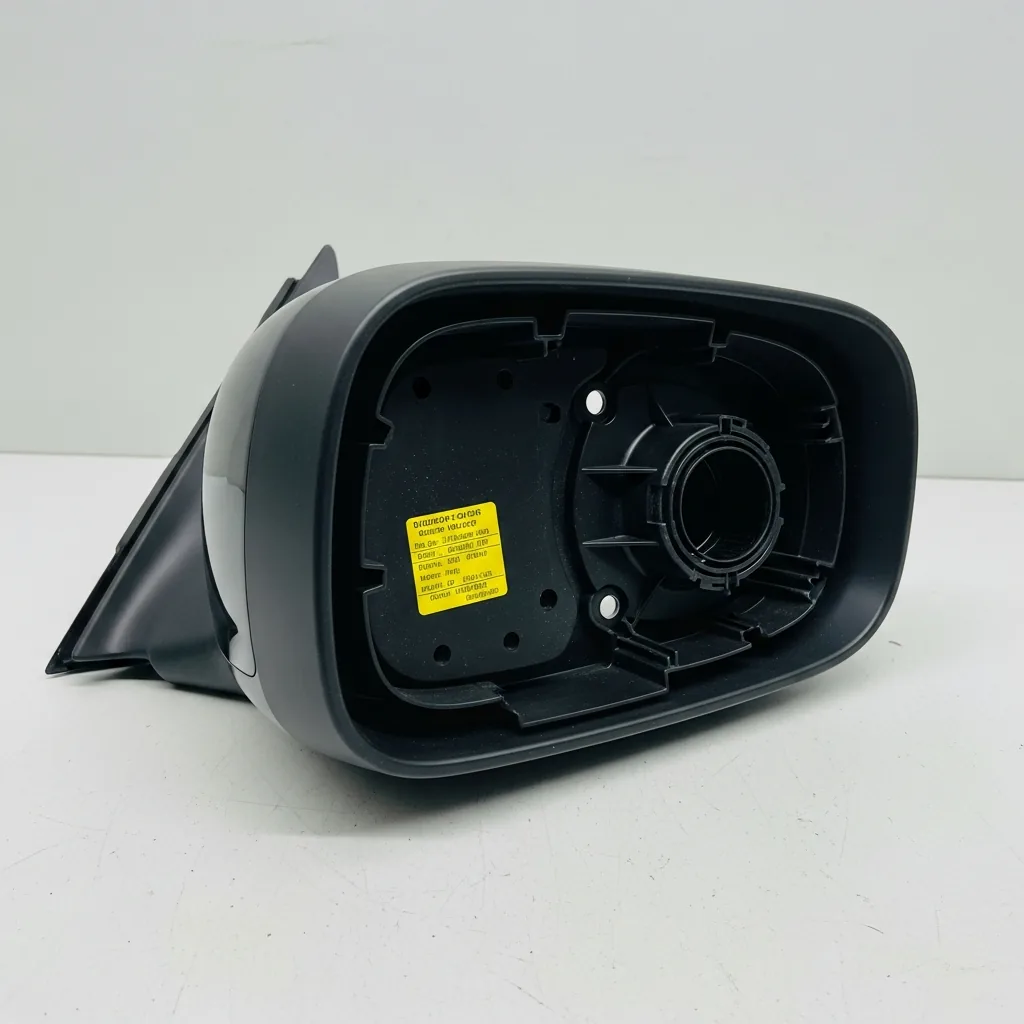
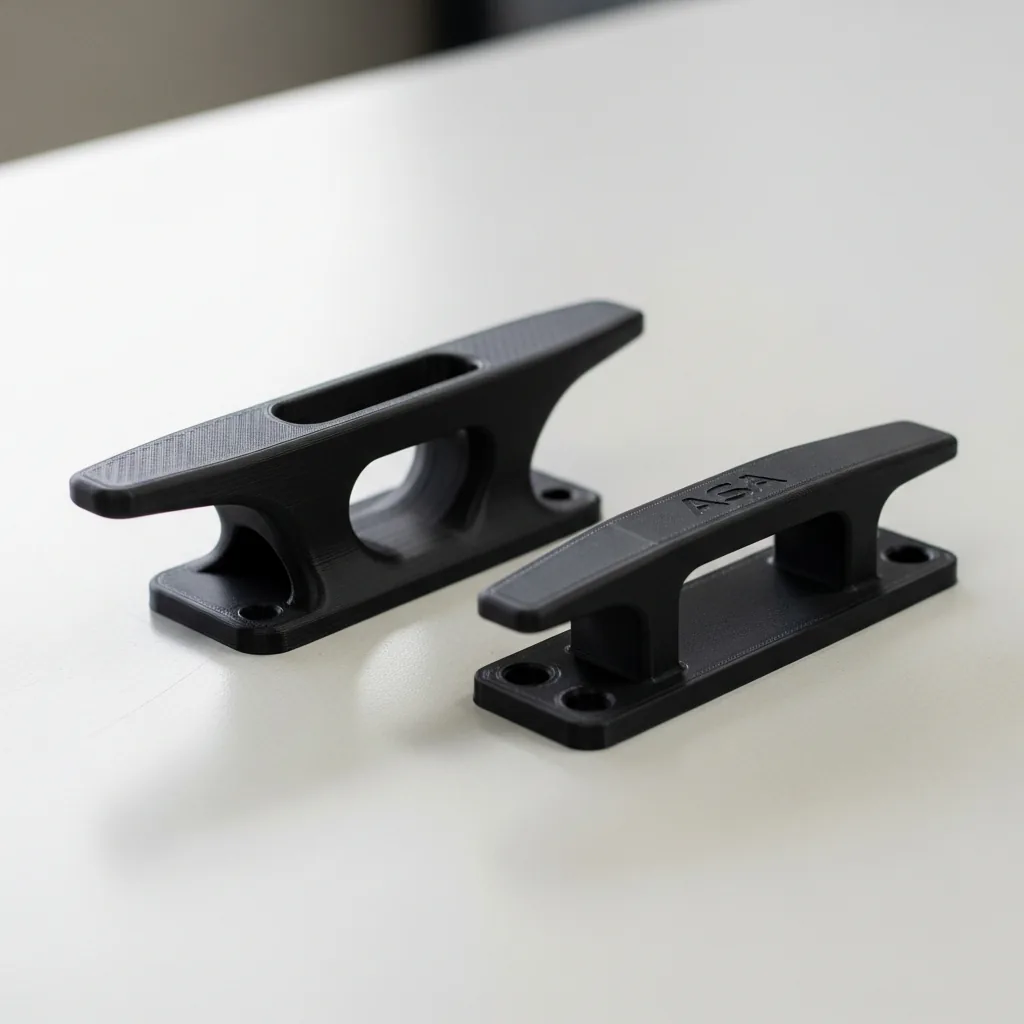
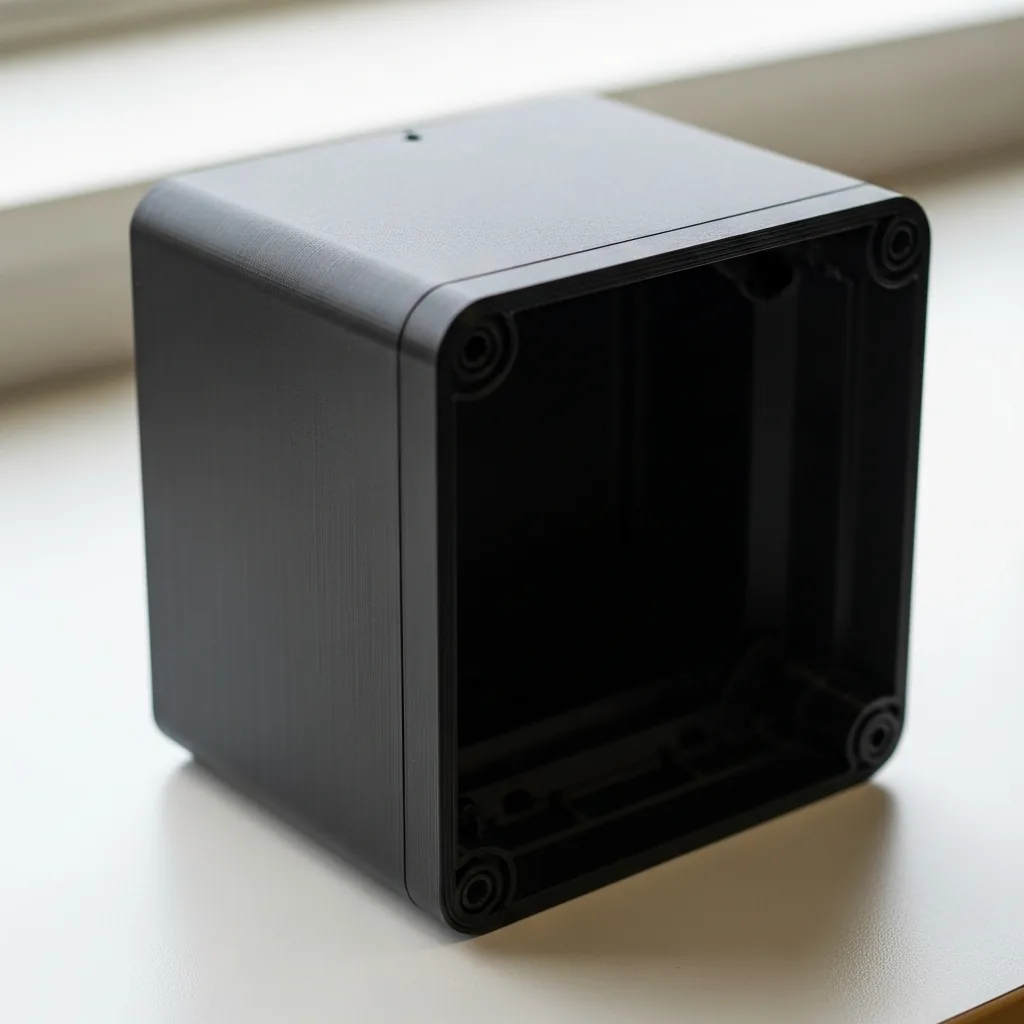
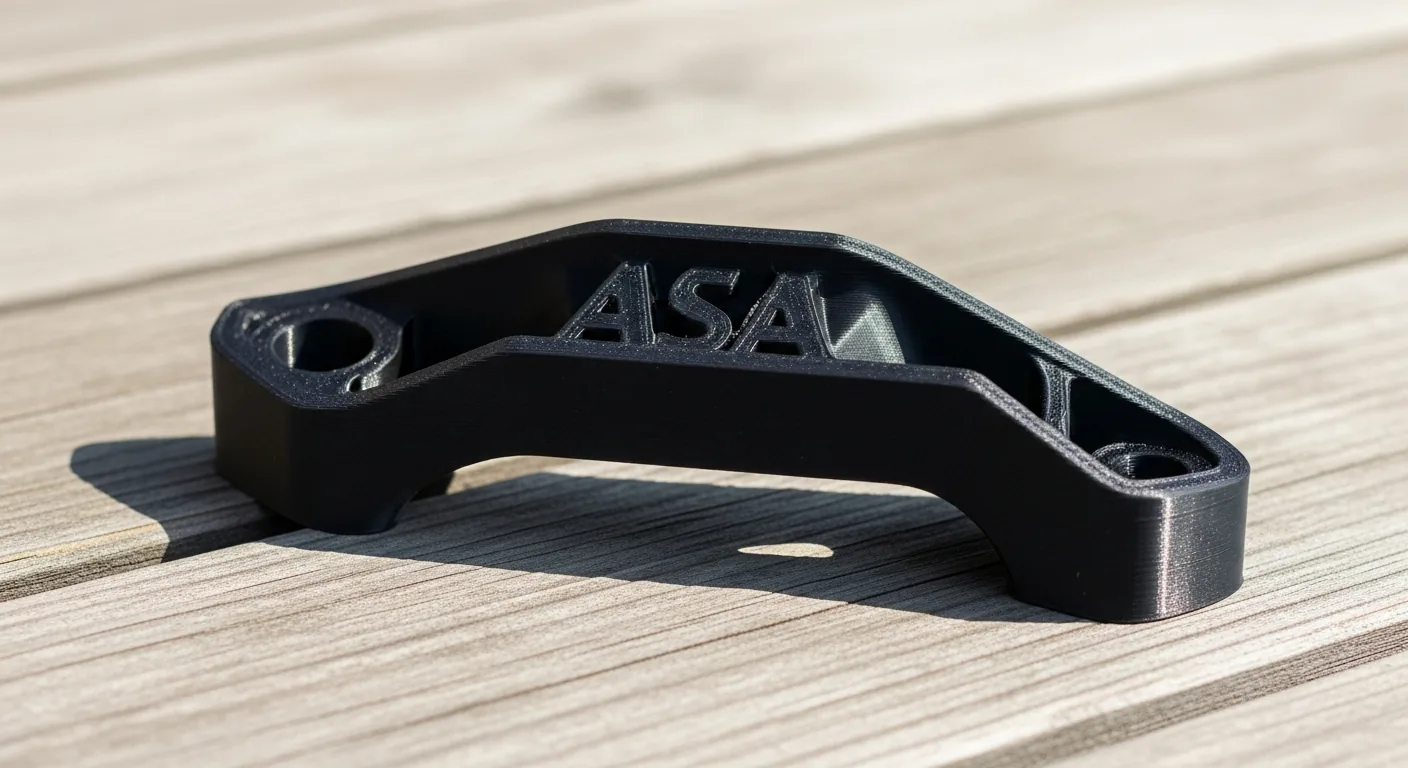
Multi-year. ASA is the engineering-commodity default for sustained outdoor service. Industry use cases include automotive exterior trim (door mirrors, grilles), outdoor signage, marine fittings, garden equipment housings, satellite dish components. The TDS doesn't publish a specific outdoor lifetime, and we use the qualitative "multi-year" language rather than quote unverified specifics. For comparison: ABS yellows within months in UK summer sun · ASA stays colour-stable across years.
Is ASA stronger than ABS?
ASA is meaningfully stronger in tensile and stiffness · TDS V5.4 ASA vs V5.5 ABS: tensile 43.8 vs 33.4 MPa (31% higher), Young's modulus 2379 vs 2247 MPa (5% higher), flexural strength 73.4 vs 56.2 MPa (31% higher). ABS wins on impact toughness (Charpy notched 18.0 vs 10.3 kJ/m² · 75% higher). Heat resistance is comparable (ASA HDT 103°C vs ABS 100°C). Pick ASA for strength + outdoor; pick ABS for maximum impact (or for acetone-smoothing, which ABS does cleaner).
Can ASA be acetone-smoothed?
Partially. ASA's styrene component dissolves in acetone like ABS does, but the polyacrylate rubber phase responds differently · the result is a less uniform finish than acetone-smoothed ABS. Vapour smoothing works (cleaner) than brush application. For glass-smooth ASA we typically sand-and-paint rather than acetone-smooth · the result holds the multi-year UV-stable surface intact, where acetone smoothing can compromise the surface chemistry slightly.
What temperature does ASA fail at?
Tg sits at 98°C · comparable to ABS's 101°C. HDT is 103°C at 0.45 MPa and 100°C at 1.8 MPa per TDS V5.4. Vicat softening 105°C. An ASA part in a hot car dashboard (~70°C in summer) holds its shape comfortably; outdoor sunlit surfaces in the UK (60-70°C summer max) sit well within envelope. Engine-bay parts above 110°C creep · for that switch to PC, PC-ABS, or PA12-CF (HDT 130°C+ class).
Is ASA safe to print? · the fumes question
ASA emits styrene and other VOCs at print temperature (230-260°C). Similar VOC profile to ABS · higher than PLA or PETG. We print ASA in an enclosed chamber with extraction ventilation · this is the workshop reason chamber printers exist. For a hobbyist printer in a flat without ventilation, PETG or PLA is the safer choice. ASA's environmental advantage isn't VOC reduction · it's UV stability of the finished part.
Why does ASA need a heated chamber?
ASA prints at 230-260°C and cools rapidly as each layer extrudes · same warping mechanism as ABS. An enclosed chamber holds ambient temperature at 40-50°C for small parts and 60+ for large parts, slowing cooling and equalising the thermal gradient. The TDS lists "Closure Chamber Needed (ambient temperature)" as a recommended printing condition. Open-bed ASA warps badly · this is the most common DIY failure mode.
Is ASA chemical-resistant? · TDS compatibility table
Mixed, comparable to ABS. Per TDS · GOOD against weak acids, weak alkalis, and oils/grease. FAIR against strong alkalis. POOR against strong acids. ASA dissolves in acetone, MEK, and chlorinated solvents (same as ABS). For sustained chemical-service parts use PA12 or PP. ASA's design wedge isn't chemical resistance · it's UV stability.
| Chemical / family | Resistance | Notes |
|---|
| Weak acids (acetic, citric, dilute organic) | Good | Manufacturer TDS rating |
| Strong acids (sulphuric, HCl, nitric) | Poor | Manufacturer TDS rating · polymer chain breakdown |
| Weak alkalis (dilute soap, mild bleach) | Good | Manufacturer TDS rating · short-cycle wash-down |
| Strong alkalis (caustic soda, ammonia) | Fair | Manufacturer TDS rating · short-term only |
| Oils and grease | Good | Manufacturer TDS rating · sustained contact OK |
| Cold water | Excellent | Low water absorption (0.40% equilibrium) |
| Hot water (sustained > 80°C) | Limited | Approaches HDT · creep over months |
| Steam autoclave (121°C) | Fails | Above HDT · parts deform · choose PEEK / PPSU |
| Salt water / marine spray | Good | UV-stable polymer + low water absorption · marine-fitting grade |
| Alcohols (IPA, ethanol) | Good | Surface cleaning, brief contact safe |
| Acetone, MEK (ketones) | Dissolves | Same chemistry attack as ABS |
| Toluene, xylene (aromatic hydrocarbons) | Dissolves | Strong attack |
| Petrol, diesel (brief) | Limited | Brief contact OK · sustained attacks the polymer |
| Chlorinated solvents (DCM, chloroform) | Dissolves | Industrial solvents |
| UV exposure (UK outdoor, years) | Excellent | The ASA wedge · polyacrylate rubber has no UV-reactive C=C bonds |
| UV exposure (intense / equatorial) | Good | Multi-year service in higher-UV environments · pair with UV-clear topcoat for sign-grade longevity |
| Outdoor sheltered | Excellent | Indoor / weather-protected service trivial |
| Food contact | No | Styrene migration concern · use PETG with food-safe overcoat for food-adjacent |
First five rows are direct manufacturer TDS ratings. Remaining rows reflect industry-typical ASA behaviour and 3DPE workshop experience. For sustained chemical service beyond water and oils, switch material to PA12 or PP depending on the exposure.
ASA vs ABS for outdoor signage?
ASA wins decisively for outdoor. The butadiene rubber phase in ABS contains carbon-carbon double bonds that absorb UV-B radiation, snap, and oxidise. The result on ABS exposed to UK summer sunlight: yellowing within months, surface chalking by year 1, micro-cracking by year 2. ASA's polyacrylate rubber phase has no C=C bonds; the polymer stays colour-stable and structurally intact for years. For outdoor signage, garden fittings, satellite dishes, automotive exterior · ASA is the engineering-commodity default.
Can ASA be bonded?
Yes · ASA bonds well like ABS. Solvent welding with acetone works (less perfectly than ABS due to the acrylate phase, but the joint is still stronger than mechanical fastening). 2-part epoxy, cyanoacrylate, polyurethane adhesives all work cleanly. Mechanical fasteners with heat-set inserts (≈ 260°C iron temp per CNC Kitchen) for assemblies. For multi-part outdoor assemblies, paint over the joint to protect from UV exposure at the seam.
How much does ASA cost vs other materials?
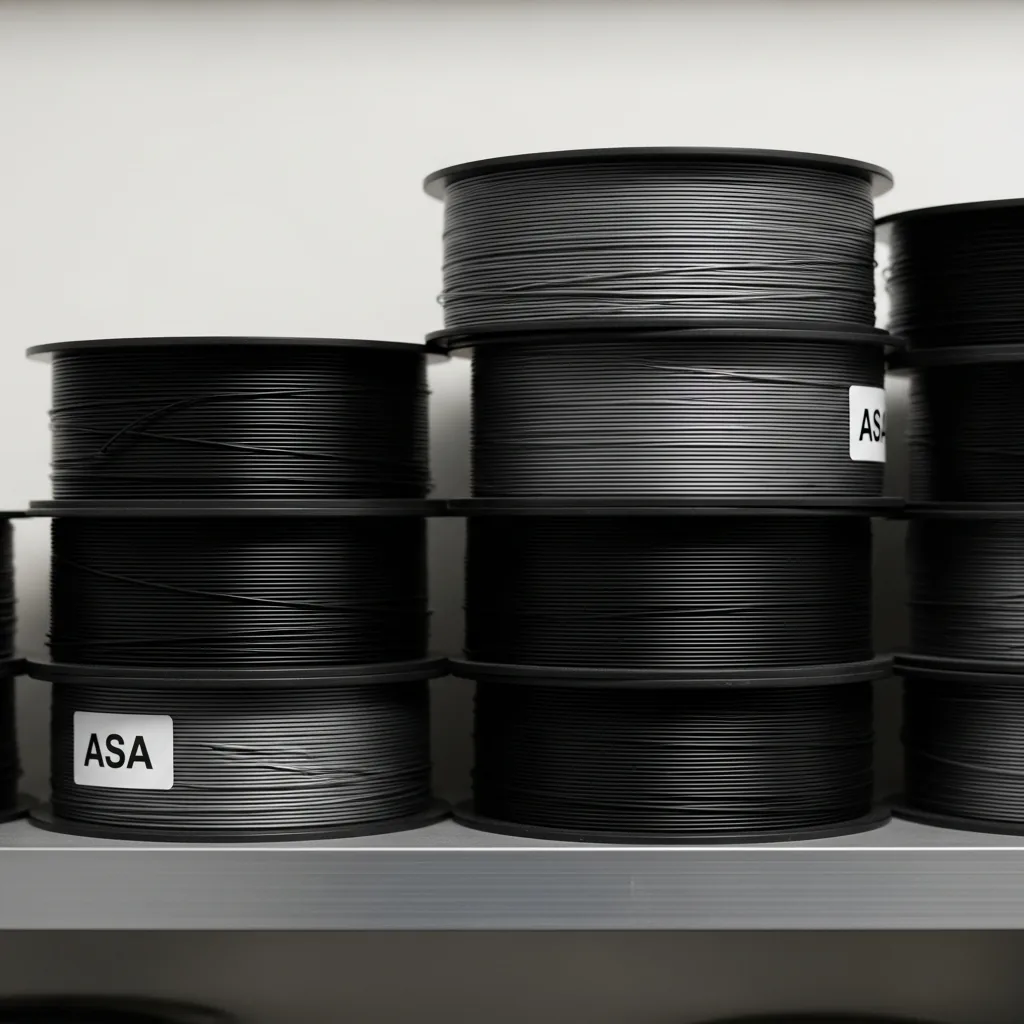
Filament cost is roughly £35-50/kg for stock-colour ASA · slightly above ABS (£30-45/kg) due to the more complex polyacrylate-rubber chemistry. Still well below engineering composites like PA12-CF (£90-130/kg). The total quote depends on print time + post-processing more than filament cost · ASA chamber-printer time runs comparable to ABS. For UV-stable production parts, ASA's price premium pays back in service life vs painted ABS that needs repainting every 2-3 years.
How does ASA compare to PC for outdoor work?
Different tradeoffs. ASA is the commodity outdoor default · multi-year UV stability, easy to print (in chamber), 103°C HDT, paintable. UV-stabilised PC is the engineering outdoor upgrade · higher HDT (~130°C), clearer/transparent grades possible, much higher impact toughness, but harder to print (260-290°C nozzle, larger chamber required). For most outdoor service parts ASA is the right answer; pick PC when you also need engineering-grade impact or optical clarity.